
Uber and British autonomous driving company Wayve began offering rides in self-driving vehicles in London on September 3. This is the first time an autonomous ride-hailing service has been opened to the general public in the UK. There is no separate app and no extra fare, riders simply request a car in the usual Uber app. For now, though, a person still sits behind the wheel, and the service starts in a supervised phase.
It Blends Into the Uber App You Already Use
Rather than arriving as a standalone product, the service slips quietly into the existing dispatch flow. Riders in London who request an UberX, Uber Electric or Uber Comfort may be matched with a Wayve vehicle. No extra charge applies, and the fare is confirmed upfront in the app exactly as before.
It is worth noting that the choice stays with the rider. Before the car arrives, riders can accept the autonomous ride or switch to a car with a human driver, every single time. Those who actively want to try it can opt in through the Trip Preferences section of the app settings to improve their chances of being matched, and more than 140,000 Londoners have already done so.
What happens after the car pulls up is also familiar. Riders unlock the doors from the Uber app and start the trip there. Inside, an interactive screen designed by Uber supports 64 languages and shows the route the vehicle intends to take. The service area covers all of London, with airports as the only exclusion.
Starting Supervised, With a Person in the Driver's Seat
Autonomous driving tends to conjure images of empty front seats, but this initial phase is supervised autonomy. A trained private hire driver licensed by Transport for London (TfL) rides along in the driver's seat and oversees the trip. Uber requires any autonomous vehicle on its network to meet the company's safety guidelines, and this deployment follows those conditions.
Both companies are also cautious about fleet size. The initial phase starts with a small number of vehicles and will expand gradually in line with rider demand, operational readiness and regulation. In the run-up to this launch, TfL granted private hire vehicle licences to Wayve's autonomous vehicles in August, meaning actual passenger rides began roughly a month later.
Wayve's Bet on Driving Without Maps
Wayve was founded in London and is headquartered there. Since 2018 it has trained its AI on what many consider one of the most complex driving environments in the world. CEO Alex Kendall has emphasised that the first public deployment is happening in the company's home city, and framed it as the starting point of a global rollout with Uber.
The technical distinction lies in what the company calls AV2.0. Instead of relying on high-definition 3D maps or vast sets of hand-coded rules for each situation, the AI Driver learns from experience much as a human driver does. Because map coverage is not a prerequisite, Wayve argues it can move into new cities faster. The system is also designed to be agnostic to vehicle platforms and sensor configurations.
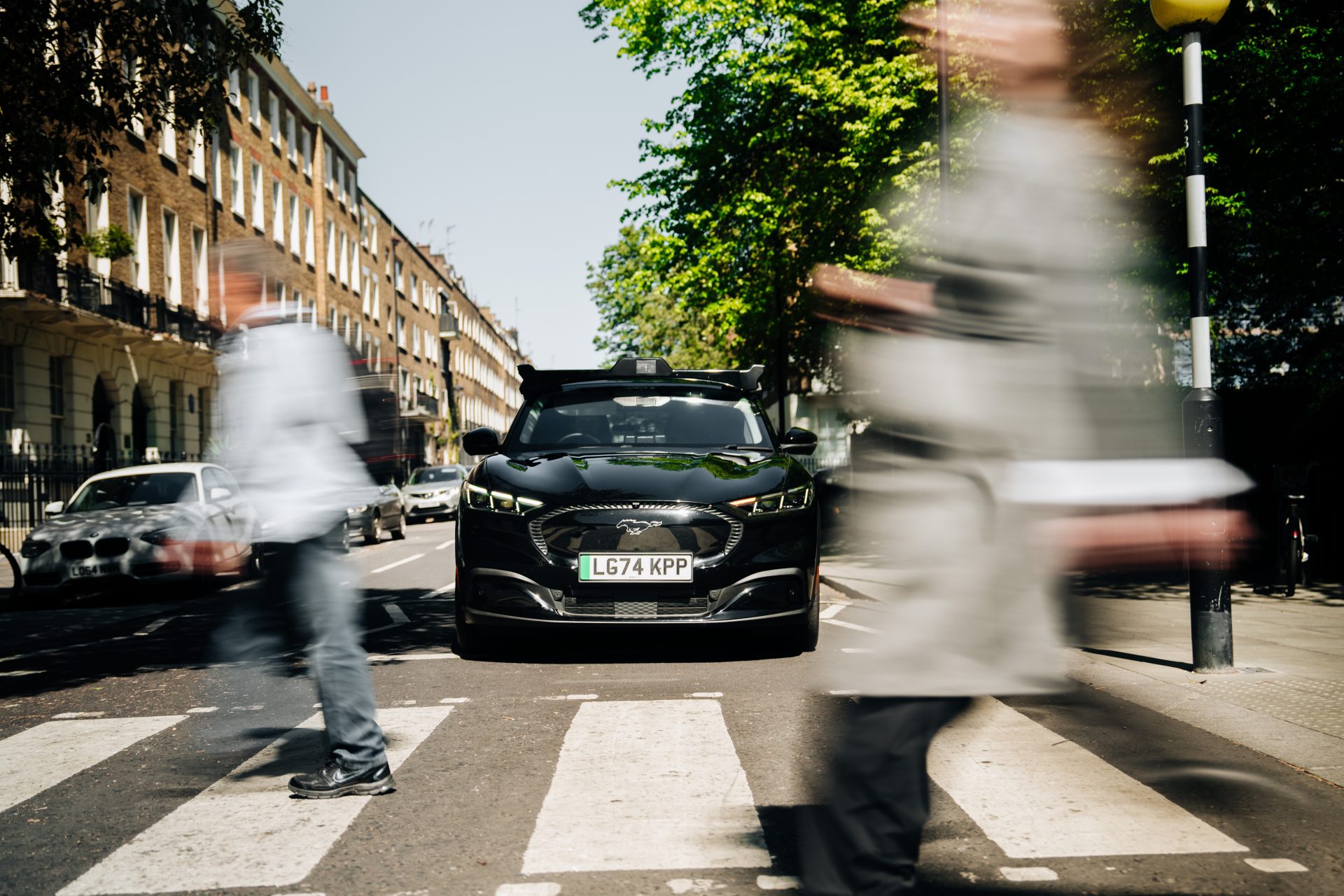
The cars now running in London are all-electric Ford Mustang Mach-E vehicles, fitted with the Wayve AI Driver and surround sensors.
Tokyo Is Next, With the Nissan LEAF
London is only the first city. The Uber and Wayve partnership includes an investment from Uber and a plan to put Wayve-powered vehicles on the Uber network in 12 markets worldwide. London is the opening move.
The next city named is Tokyo. Later this year, the Nissan LEAF running the Wayve AI Driver on NVIDIA DRIVE Hyperion is set to join the service. British AI riding in a Japanese car on Japanese roads is closer than it sounds.
Government reaction has been positive. Transport Secretary Heidi Alexander called British technology reaching public roads a milestone for the future of transport, and Business Secretary Jonathan Reynolds described it as evidence that the UK can lead the world in AI. The Transport Secretary also added that she wants to recognise the continuing role of people working in the sector today, a nod to concerns about existing driver employment.
With safety operators onboard and vehicle numbers deliberately limited, the streets will not change overnight. Still, choosing to fold the service into an app people already use, rather than requiring a dedicated app and a trip to a special zone, feels like a realistic way to enter practical deployment.
Summary
Uber and Wayve launched the UK's first autonomous ride-hailing service in London on September 3. Riders on UberX, Uber Electric and Uber Comfort may be matched with a self-driving Ford Mustang Mach-E at no extra cost, covering all of London except the airports. The initial phase is supervised, with a licensed driver onboard and a small fleet that will expand in stages. Tokyo is next, with a Nissan LEAF deployment planned for later this year.