
SpaceXAI has released Grok Bot, a family of always-on AI agents, as an early beta. Each Bot gets its own computer in the cloud and signs into the applications and services employees already use, working inside them the way a person would. The company describes them as AI teammates you can hand real work to. Running until something actually needs approval, rather than stopping at the end of a single prompt, is what separates this from a conventional chat assistant.
Built for tools that were never designed for automation
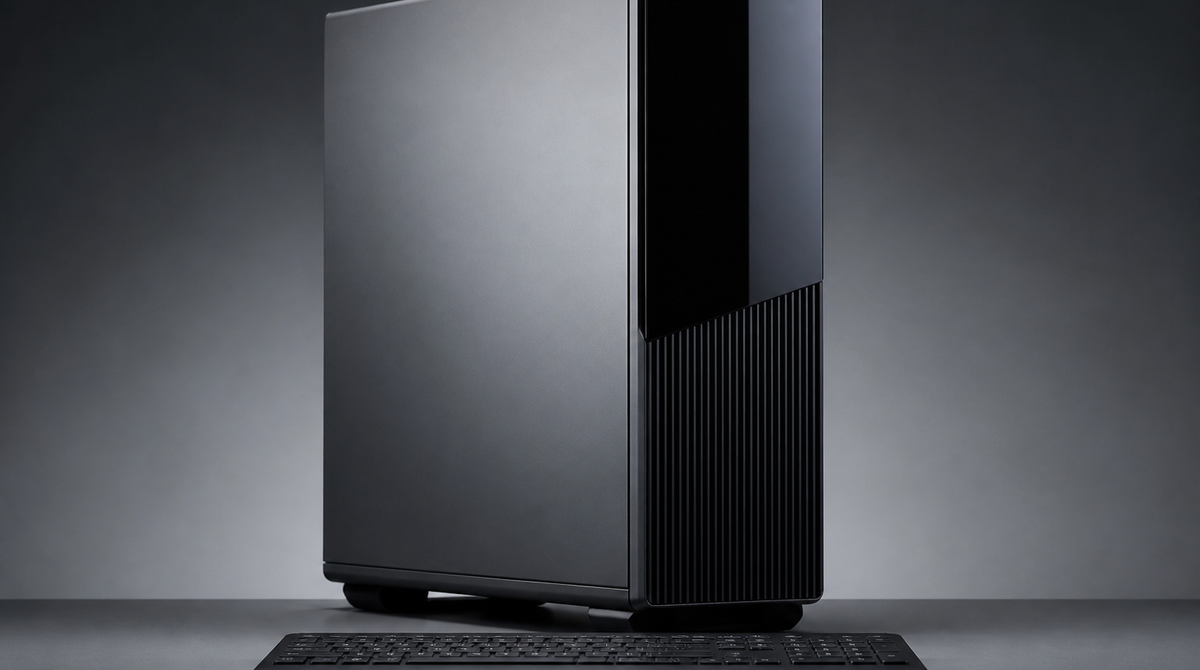
The core decision behind Grok Bot is giving each agent an entire computer environment of its own. From there a Bot signs into the tools it needs and operates their interfaces directly. Work does not stall when you close your laptop, and Bots keep going around the clock.
That architecture matters most for services that never exposed a clean API or MCP endpoint. The old assumption was that an agent could only touch systems with a formal integration point. If a login screen is enough, the picture changes. Legacy internal systems and the sprawl of department-by-department SaaS accounts, both of which tend to be left out of automation projects, come back into scope.
According to SpaceXAI, Grok Bot began as an internal prototype and spread across the company from there. Teams assigned Bots to sales outbound, marketing campaigns, office operations and bug fixes, and the product being released now is that internal workflow repackaged for outside users.
Teaching by demonstration rather than configuration
Getting started is almost anticlimactic: you message a Bot the way you would message a colleague. There is no workflow to assemble first, and the same thread carries over between phone and desktop.
To teach a Bot a procedure, you ask it to follow along the next time you do the job yourself. It saves the sequence as a routine, absorbs your corrections, and runs the same process on its own afterwards. That skips the usual automation chore of specifying every branch in advance.
Memory is not limited to a single session either. Bots retain earlier conversations, pick up preferences such as your writing voice and the edge cases you care about, and get better at judging when to interrupt for approval. They are also meant to revisit dropped threads and nudge handoffs that have stalled.
Bots that pass work to each other
Running several Bots at once is a central part of the design. Inside SpaceXAI, people place specialist Bots on inbox management, expenses, recruiting, operations and bug fixes, then put a single coordinating Bot above them.
Bots can message one another and share context within a thread. Drop several of them into a group chat and they assign ownership, pass work between themselves, and pull a human back in only for judgment calls. SpaceXAI's argument is that the user no longer has to act as the relay between every specialized agent.
The launch materials do not include benchmarks, however. They also do not identify which underlying models the system uses or how tasks are routed between them, so any deployment that depends on selecting or pinning a specific model is difficult to plan today. Once agents are touching production systems, permission boundaries and escalation rules become the reliability story.
Pricing and platforms
Grok Bot is available in beta to subscribers of SuperGrok, SuperGrok Plus and SuperGrok Heavy, as well as Cursor Pro, Pro+ and Ultra, and Cursor Teams Standard and Premium. It runs on desktop and iOS, and enterprise customers can join a waitlist.
For individuals, Cursor Ultra costs 200 USD per month (about 32,000 yen) and includes a computer for Grok Bot, access to your tools and scheduled routines. For organizations, Cursor Teams Premium runs 120 USD per seat per month (about 19,000 yen) and adds centralized billing and settings, a team marketplace for skills and plugins, shared usage analytics, and SAML and OIDC single sign-on. SuperGrok Heavy subscribers, at 300 USD per month (about 48,000 yen), also get access.
※1 USD = 160 JPY (as of September 1, 2026)
Grok Bot also comes with its own usage allowance, separate from existing Grok and Cursor plans, so work handed to a Bot does not eat into normal quotas. Cursor was acquired by SpaceX in June 2026 for 60 billion USD (about 9.6 trillion yen), which is why Cursor's plans appear alongside SuperGrok in the eligibility list.
Summary
Grok Bot is designed less as a tool you prompt and more as something you assign a role and hand work to. Its distinguishing move is packing a dedicated computer, persistent memory and bot-to-bot coordination behind an interface that feels like a messaging app. In a market now crowded with agent products, permission handling and execution reliability look more likely to decide the winner than raw model intelligence, and how much can actually be delegated will depend on reports from real deployments.