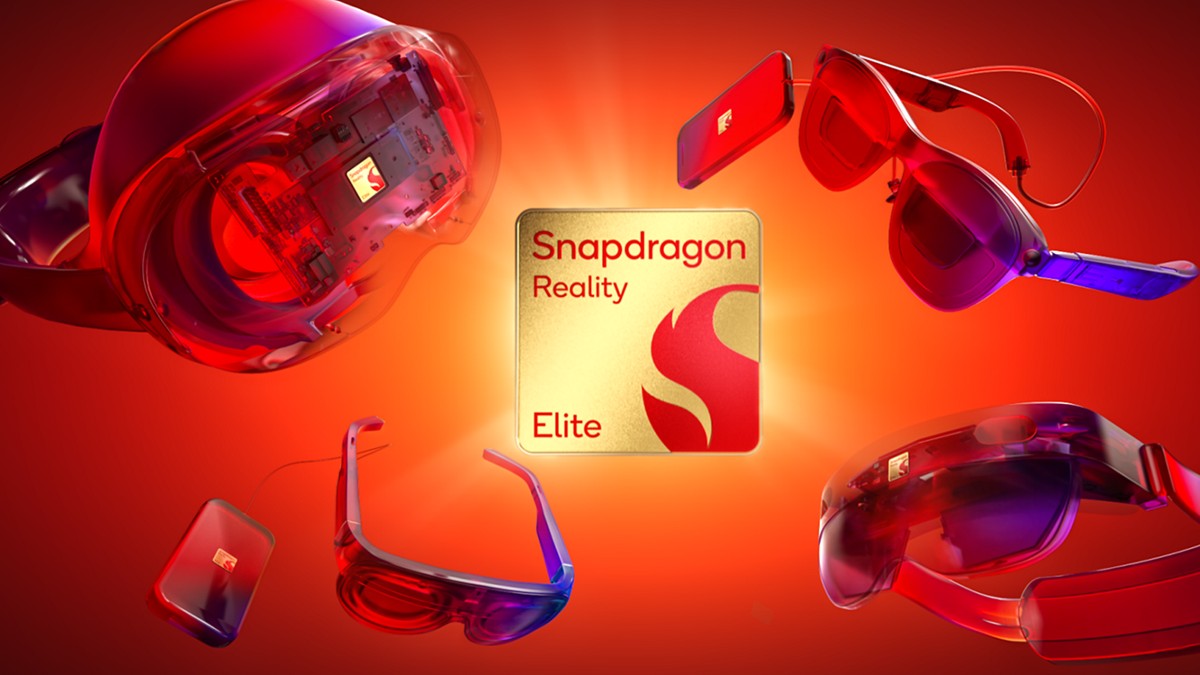
Qualcomm has announced Snapdragon Reality Elite, a new processor for AR and MR (mixed reality, where digital images are layered onto the real world) devices. Revealed during a keynote at the Augmented World Expo (AWE), the chip is the foundation for making the next generation of AR glasses and headsets smaller and more power-efficient. Qualcomm put up to 4.4K-per-eye visuals and fully on-device AI processing front and center, and it also showed off START, a new platform for quickly building glasses-type devices.
A Top-Tier Chip That Lifts Both Visuals and AI
Snapdragon Reality Elite sits at the top of Qualcomm's lineup of XR (an umbrella term covering VR, AR, and MR) chips. On the display side, it supports up to 4.4K resolution per eye at 90 fps, improving both sharpness and latency over the previous flagship, the XR2+ Gen 2.
The performance gains are large as well. Qualcomm says that, compared with the XR2+ Gen 2, GPU performance is up to 60 percent higher, CPU performance up to 30 percent higher, and the NPU (neural processing unit, which handles AI workloads) up to 160 percent higher. Power consumption is kept in check at the same time: battery life is extended by up to 20 percent, and the chip runs up to 12 degrees Celsius cooler under load. By raising performance while holding down heat and power draw, Qualcomm aims to make it easier to build compact devices that stay comfortable to wear for long stretches.
The XR2+ Gen 2 has powered headsets such as SAMSUNG's Galaxy XR, sold for 1,800 USD (about 290,000 yen). Snapdragon Reality Elite succeeds it as the option for devices that demand a higher tier of processing.
※1 USD = 161 JPY (as of June 22, 2026)
Generative AI That Runs Entirely on the Device
What stands out most with this chip is on-device AI (AI that runs entirely on the device without relying on the cloud). The NPU reaches 48 TOPS (48 trillion operations per second) and can run large language models and large vision models, which handle images, directly on glasses and headsets.
That opens the door to uses such as generating photorealistic avatars on the spot, or running agent features that read a situation and assist with tasks right on the device. The chip also includes a dedicated block called EVA that handles computer vision (technology that reads objects and situations from imagery), and it improves hand and head tracking as well as the accuracy of optical see-through (a method of viewing the outside world directly through the lenses) that blends visuals naturally into the real scene.
Support From Standalone to Tethered, Puck-Connected Designs
Snapdragon Reality Elite supports both standalone headsets that run on their own and tethered devices that connect by cable to a small separate computer (a compute puck). The first device announced with the chip is Xreal's Aura glasses. Aura is a tethered device that adopts Google's Android XR (the platform software for glasses and headsets), and it made its official debut on the AWE stage.
START, a Way to Build Glasses-Type Devices Quickly
Separately from the new chip, Qualcomm also announced START (Scalable Turnkey AI Ready Toolkit), a platform for bringing smart glasses to market quickly. It is an off-the-shelf development kit aimed at companies that want to build AI-enabled wearables.
START bundles a dedicated module carrying Qualcomm's AR1+ chip together with software, including companion apps for iOS and Android. It supports everything from audio-only frames to versions with in-lens displays, and companies can use the provided designs as-is or tailor them to their needs. The first partner is the UK eyewear company Inspecs, which makes glasses for brands such as O'Neill, Barbour, and Superdry. It looks set to become an entry point for adding AI features to existing eyewear.
Summary
Snapdragon Reality Elite is Qualcomm's top-tier XR chip, built around 4.4K-per-eye, 90 fps visuals and on-device generative AI driven by a 48 TOPS NPU. While the GPU is up to 60 percent faster and the NPU up to 160 percent faster than the previous generation, battery life is extended by up to 20 percent and heat is held down, helping push compact, practical AR glasses forward. The first device to use it is Xreal's Aura, and together with the newly announced START kit, it stands out as a move to widen the field for AI glasses.