NVIDIA announced that 74 of its papers were accepted at ICML 2026, one of the top international conferences in machine learning. Roughly 2,000 of all accepted papers cite NVIDIA GPUs, and 145 cite the company's open model family Nemotron as the foundation for new research, highlighting how open models and open infrastructure have become the bedrock of modern AI science[1]. ICML 2026 is being held in Seoul, South Korea, from July 6 to 11[2].
About 2,000 Accepted Papers Cite NVIDIA GPUs
ICML (International Conference on Machine Learning) is one of the premier conferences where AI researchers from around the world present their latest work. According to NVIDIA, this year's accepted papers reveal a clear direction: open frontier models and open AI infrastructure have become foundational to how modern AI research gets done[1].
The numbers make that presence unmistakable. While NVIDIA itself had 74 papers accepted, approximately 2,000 accepted papers cite NVIDIA GPUs, and 145 cite the open model family Nemotron as the foundation for new research. Hundreds more draw on open model families such as NVIDIA Cosmos for physical AI, NVIDIA Isaac GR00T for robotics, and BioNeMo for drug discovery and life sciences, spanning fields from robotics and autonomous vehicles to biomedical research[1].
Robot World Models and Life Sciences Emerge as New Trends
In terms of research themes, established areas such as vision and video generation, reinforcement learning for large language models (LLMs) and agent training, and AI inference remained prominent, while several new fields also broke through[1].
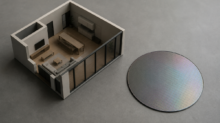
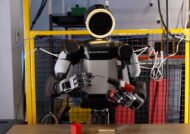
Robot world models drew particular attention. A representative example, DreamDojo, learns how the physical world behaves from human video and builds on Cosmos open frontier models to predict how a robot would handle objects in environments it was never trained on. Because researchers can evaluate policies, plan actions, and even teleoperate a virtual robot entirely in simulation, development can be accelerated without the costs and risks of physical deployment[1].
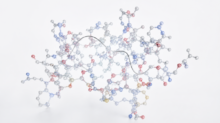
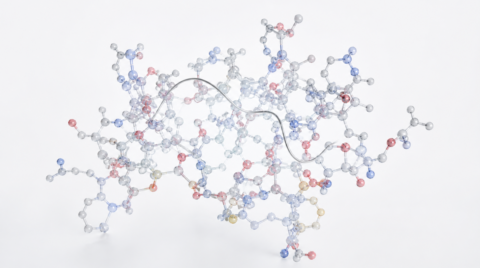
Life sciences research is also thriving. Highlights include FLIP2, a public benchmark for measuring how accurately AI predicts the effects of protein mutations, and KERMT, a new BioNeMo open model for predicting molecular properties important to drug discovery. NVIDIA also notes that synthetic data generation (SDG) drew growing interest this year as a way to scale training without relying solely on human-labeled data[1].
From One-Off Model Releases to a Research Stack
NVIDIA observes that Nemotron is now being used less like a single model release and more like a research stack. That is because it ships as a bundle of three layers: open weights to evaluate against, open datasets to train and adapt with, and open recipes for reasoning, tool use, safety, data curation, and efficient inference[1].
The surrounding tooling has matured as well. Alongside NeMo Curator, which gives researchers a reproducible foundation for training data curation, the Cosmos 3 family of open frontier omnimodels supports the development of robots, autonomous vehicles, and vision AI that can perceive, reason, plan, and act in the physical world. Other open model families, including Alpamayo for autonomous vehicle development, Isaac GR00T for robotics, and BioNeMo for biomedical research, are helping accelerate R&D across industries[1].
From Sakana AI to NAVER: Open Model Adoption Spreads
The ecosystem's momentum extends beyond NVIDIA's own research labs. Basecamp Research developed EDEN, a DNA foundation model that helps researchers interpret and design genetic sequences. Pharmaceutical giant Merck & Co. uses KERMT to predict how potential drug molecules may behave in the body[1].
Japanese AI startup Sakana AI built its Fugu and Fugu-Ultra models directly on Nemotron 3 Ultra, using the open foundation to advance its work on AI research automation. Coding service KiloCode integrated Nemotron into its code-routing architecture (assigning models according to the nature of each task) and reported token cost reductions of up to 90 percent. South Korea's NAVER developed its own model using the Nemotron architecture to extend the foundation for Korean-language AI research, while Together AI hosts Nemotron models on its platform[1].
In the humanoid robotics field, Humanoid, LG Electronics, NEURA Robotics, and Noble Machines are adopting Isaac GR00T to accelerate industrial deployments, while companies such as 1X, Agility, and Boston Dynamics are building next-generation humanoids using Cosmos world models together with the Isaac Sim and Isaac Lab simulation environments[1].
Summary
The accepted papers at ICML 2026 make one trend unmistakable: open models and open datasets are becoming the common language of AI research. NVIDIA is deepening its reach into the academic community not only as a GPU hardware supplier but also as the provider of open research stacks such as Nemotron, Cosmos 3, and BioNeMo, with companies like Sakana AI building applied research on top of that foundation. As a way to combine reproducibility with development speed, the presence of open models looks set to grow even further.
Source: https://blogs.nvidia.com/blog/open-models-icml-2026/
Source: https://icml.cc/