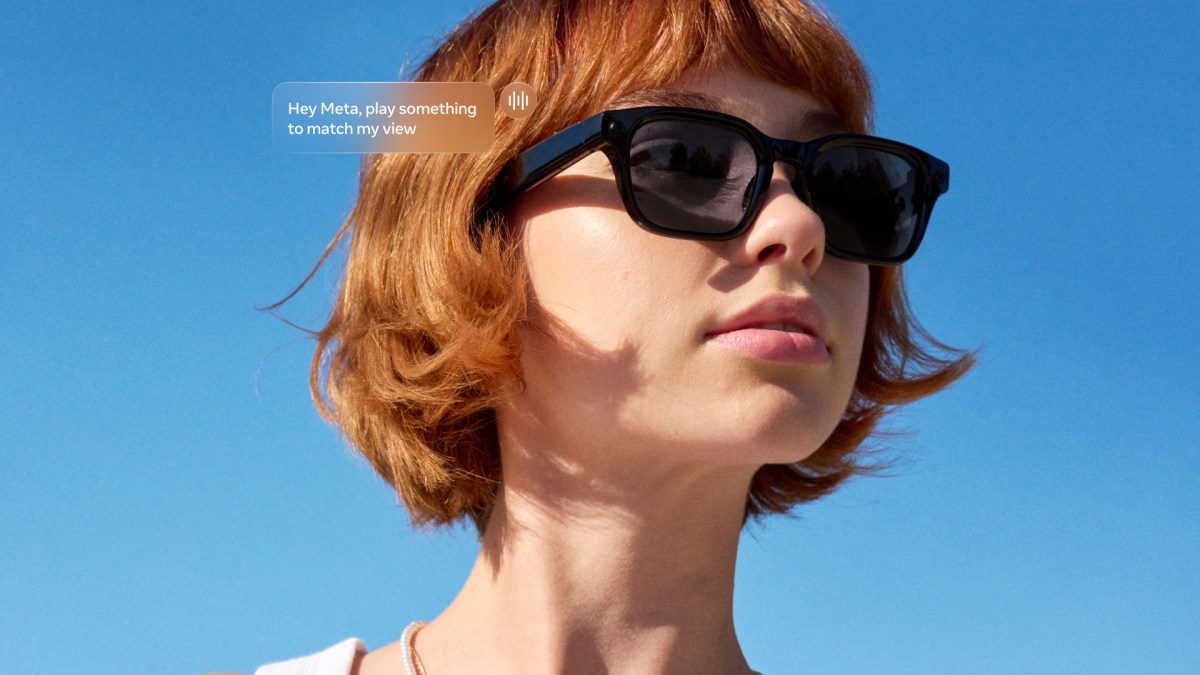
Meta has unveiled Meta Glasses, the first smart glasses sold under its own brand rather than Ray-Ban or Oakley. The standard Meta Adventurer and Meta Fury start at 299 USD (about 48,000 yen), a lower price than the existing Ray-Ban Meta lineup. A model co-designed with Kylie Jenner rounds out the range, as Meta moves to widen its early lead in the category before Apple enters the market.
※1 USD = about 161 JPY (as of June 23, 2026)
Stepping away from the Ray-Ban name to go own-brand
Until now, Meta's smart glasses carried eyewear names such as Ray-Ban or Oakley. This launch breaks from that framework, putting Meta's own name on the product. Meta designs the glasses in-house, while EssilorLuxottica, the parent company of Ray-Ban and Oakley, handles manufacturing. Both the Meta and EssilorLuxottica logos appear on the temple arms and packaging.
The pricing is aggressive, too. The Adventurer and Fury start at 299 USD, 80 USD (about 13,000 yen) less than the second-generation Ray-Ban Meta Wayfarer that launched last year. By keeping the price accessible, Meta aims to broaden its user base and cement its lead across the category.
Three models, three aims
The Meta Adventurer is a clean, rectangular shape available in standard and large sizes. The Meta Fury shares a similar silhouette but with a bolder, thicker frame. The "Meta Glasses by Kylie," co-designed with Kylie Jenner, takes a slimmer oval shape inspired by her personal style and is priced at 399 USD (about 64,000 yen). It is reported to feature a small gemstone on the lens near the camera and a metal nose pad designed to resist makeup residue, giving it a more fashion-forward feel. Buyers can also set a recreated version of Jenner's voice for the AI assistant and onboarding prompts.
All three styles add a three-way adjustable nose pad, adjustable temple tips, and hinges that flare out slightly to fit wider head shapes, allowing for a finer fit. The Adventurer and Fury alone offer 26 color and lens combinations, including tortoise, black, and green finishes, plus transition, polarized, and clear lenses. They also support prescription lenses across a wide range, from -12 to +2.25.
Camera and battery carry over from the current generation
The core hardware carries over from the existing Ray-Ban Meta Gen 2. The 12-megapixel camera, 3K video capture, five-microphone array, and roughly eight hours of battery life all remain the same. The bundled charging case adds about 40 more hours, as before. Meta is also offering a separate charging stand that works with the new models as well as the Ray-Ban Meta and Oakley Meta HSTN lines.
Meta AI powered by "Muse Spark" and new features
The new glasses ship with Muse Spark, described as the first model from Meta Superintelligence Labs. Beyond improving response quality, it adds 14 new languages to real-time translation, bringing the total to 20. The new languages include Japanese, Chinese (Mandarin), Korean, and Hindi. For photos, a new "Dynamic Photo" feature captures a burst and automatically picks the best shot. Pedestrian turn-by-turn navigation, which first appeared on display glasses, is also slated to roll out to the camera-equipped lineup.
Meta has hinted at a possible camera-free model focused on audio. Narrowing the use case to calls, media playback, and AI interaction would mean fewer components, making it easier to lower the price and explore new designs. Meta also said it explored facial recognition to identify people the wearer knows, but has held off on active development while it works through privacy and societal concerns.
A competition shaped by Apple's looming entry
Meta also addressed Apple directly this time. A company executive called Apple a "formidable" presence and praised its strengths in hardware and design. The executive candidly acknowledged that, for experiences tied to a paired phone, Meta may not match the same quality in every area — a sign that it is keenly aware of where Apple could hold an edge.
Apple is widely expected to launch its first smart glasses in 2027, designed in-house. They are likely to forgo a built-in display and center on a camera, microphones, and Siri-driven AI, setting up a head-to-head matchup with Meta's camera-equipped models. The three new models are already on sale, starting the same day as the announcement, in several countries through retailers including Meta.com, Best Buy, Amazon, LensCrafters, and Sunglasses Hut.
Summary
Meta has launched its own-brand Meta Glasses from 299 USD, putting the Muse Spark AI assistant and 20-language real-time translation — Japanese included — front and center. Dropping the Ray-Ban name and competing on low prices and broad variety reads as groundwork laid ahead of Apple's expected 2027 entry. It signals that smart glasses are finally reaching mainstream price points.