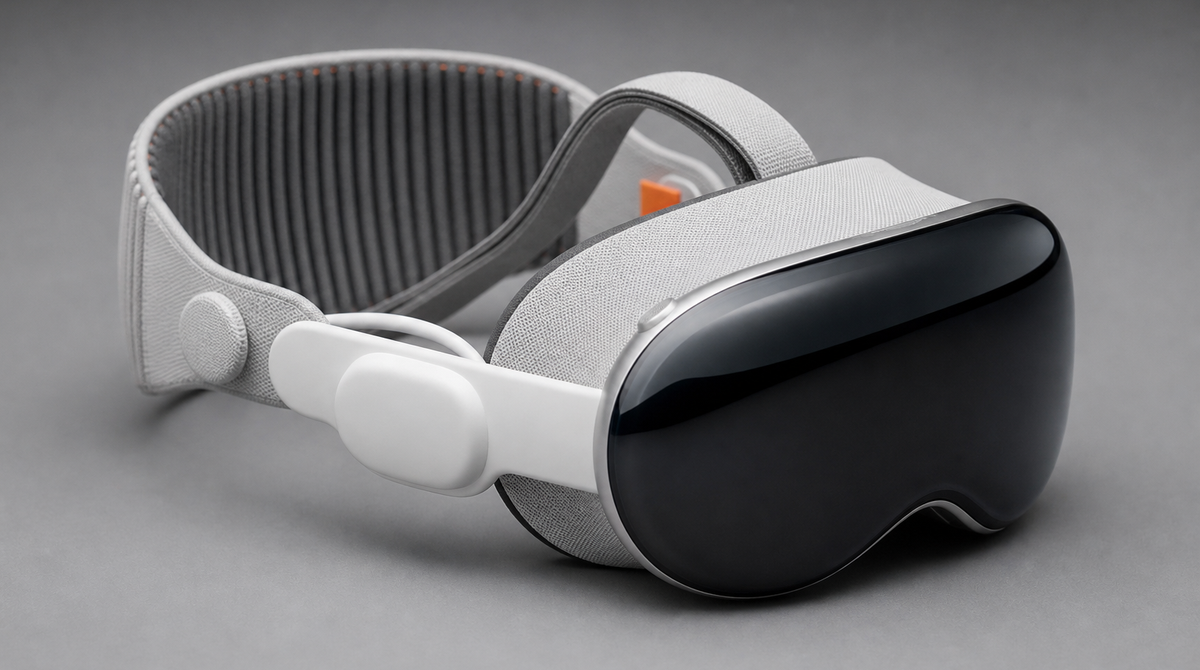
Apple has announced visionOS 27, the next operating system for Apple Vision Pro, at WWDC26. The update centers on a new Siri AI that you can pin in space and summon with your gaze, alongside Visual Intelligence that lets you ask about whatever you are looking at and a feature that turns photos into immersive spatial scenes. The developer beta is available now, a public beta arrives next month, and the final release is expected this fall. Here is a look at the changes set to reshape how Vision Pro feels to use.
A new Siri AI you place in space and talk to with your gaze
The biggest shift in visionOS 27 is the AI experience on Vision Pro. The revamped Siri AI can be placed anywhere in your space as a bauble. From there, you simply look at the icon and start speaking to control it, with no need to say "Hey Siri" and wait. It is a way of summoning the assistant built specifically for a headset, combining gaze and voice.
The new Siri AI runs on the next generation of Apple Intelligence, a foundation that incorporates Google Gemini technology. Because of this, it can respond while taking into account your situation and the information shown on screen. Siri AI will arrive later this year as a beta feature and will support English only at first, with other languages, including Japanese, expanding over time.
Ask about whatever you are looking at
The other highlight is the deeper tie-in with Visual Intelligence. Whether it is a physical object in front of you or something shown on an app screen, you can ask about it directly.
In Apple's demo, a user looked at a backpack displayed in Safari and asked whether it could be carried on board for an upcoming trip. Siri AI answered based on typical airline rules and the user's travel plans. When the user followed up about a pair of hiking boots on the same screen, asking whether they would fit in the bag, the assistant kept the context and responded. As on iPhone and Mac, Vision Pro also gains tools that help with writing and editing text, and you can fine-tune the pitch, speaking speed, and tone of spoken audio.
Photos and spatial expression evolve, too
Features beyond AI are steadily expanding. Spatial Panoramas converts the panoramic photos you have taken into three-dimensional spatial scenes, and the scenes you create can be used directly as Vision Pro Environments. A new environment, the Icelandic valley of Thórsmörk, has also been added.
For photo editing, Spatial Reframing handles repositioning the subject, cropping, and filling in missing background, all with AI. It makes it easy to draw out the kind of immersive feel unique to spatial content from your own photos.
A refreshed interface and window display
Areas that affect everyday use have been reworked as well. You can expand a notification just by looking at it, making gaze-based control more comfortable. Control Center has been reorganized into three sections covering notifications and playback, key system settings, and environment settings, so the item you want is easier to reach.
App windows gain Curved Windows, which let you bend the display like an actual curved screen so the edges are easier to see. Support starts with Safari, Freeform, and Apple TV's Multiview before expanding further. In addition, Wi-Fi connection speeds are up to 3 times faster, and Mac Virtual Display can now connect quickly even to a closed Mac. Safari supports immersive web experiences that make use of a website's 360-degree backgrounds, and widgets gain a new Extra Small size.
Developer enhancements and a look ahead
Developer tools have been beefed up as well. You can now preview and edit Mac 3D models inside the space on Vision Pro, and Quick Look adds wireframe display, UV map display, and annotations. For people who create content in space, the cycle of checking and adjusting becomes far smoother.
Vision Pro is a product whose sales struggles have been widely noted. Even so, visionOS 27 further sharpens its strengths in eye tracking, spatial awareness, and Visual Intelligence. These technologies look set to become a foundation that also leads into the Apple smart glasses rumored for a future launch, making this an update that carries meaning beyond the Vision Pro hardware alone.
Summary
visionOS 27 binds spatial computing and AI more closely together, built around a Siri AI you summon with your gaze and a Visual Intelligence that lets you ask about what you see. Everyday usability, from Spatial Panoramas to the reworked window display, has been lifted as well. The developer beta is already available, and the final release is expected this fall.