OpenAI is discontinuing ChatGPT Atlas, the web browser it built around ChatGPT. The browser is scheduled to stop working on August 9, 2026, following an announcement on July 9. Rather than keep developing a standalone browser, OpenAI is moving the agentic capabilities it built there into ChatGPT itself and into Codex, its coding assistant. The wind-down window is roughly 30 days, and bookmarks will not carry over on their own.
Folding a standalone browser back into ChatGPT
Atlas launched in October 2025, so this is a retreat after less than a year. Reading OpenAI's explanation, though, the company is not throwing the functionality away. Agent-style browsing stays; what changes is where it lives.
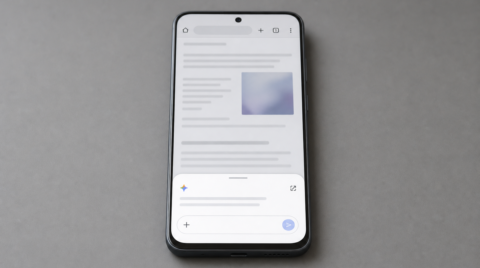
The main destination is the ChatGPT desktop app. Building on what it learned from Atlas, OpenAI says ChatGPT will support more browser-like behavior, including multiple tabs, downloads, improved navigation, and account login support. The company notes that availability varies by plan, region, device, and workspace settings, so not everyone will see the same experience right away.
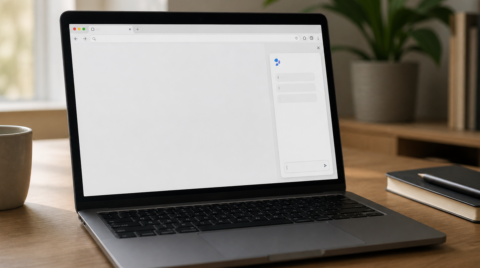
For people who want to stay on Chrome, OpenAI points to the ChatGPT Chrome extension or sidebar. That puts things back in a familiar shape: Chrome handles the browsing, and ChatGPT sits alongside it.
Your data will not move automatically
This is the part with the most practical bite. OpenAI states plainly that most of what accumulated inside Atlas does not transfer on its own.
Bookmarks will not carry over. The documented path is to run an export from the Atlas bookmark manager, save the result as an HTML file, and import that file into another browser such as Chrome. In Chrome, that means opening More, then Bookmarks and lists, then Import bookmarks and settings, and selecting the exported HTML file.
Open tabs and browsing history are in the same position. Anything worth keeping needs to be bookmarked or copied out as a URL. For cookies, OpenAI says export options will be offered where available, but they cannot simply be imported into another browser, and it warns that cookie and session files should be treated as sensitive data.
ChatGPT conversation history is separate from Atlas browser data. Those conversations remain usable in ChatGPT, subject to your plan, workspace settings, and account access.
Security is the reason for a hard deadline
Why set a date instead of quietly letting the product drift? OpenAI points to the nature of browsers. A browser requires ongoing security maintenance, and the company says it does not want people staying on a discontinued browser that may degrade or stop receiving security updates.
The window is about 30 days, from the July 9 announcement to the August 9 shutdown, deliberately set aside for moving data out. After that date, Atlas may no longer open, browse, or support agentic workflows, so anything left behind may become hard to retrieve.
Organizations have their own checklist. OpenAI asks workspace admins to review whether members are using Atlas and share the guidance, to have users export bookmarks and save important pages before the deadline, to confirm whether the desktop app and the Chrome extension or sidebar are enabled for their workspace, and to update any internal documentation or onboarding material that still refers to Atlas.
Was the AI browser the wrong shape?
Retiring Atlas reads as OpenAI revising its own answer to a question: where should AI capability live? Building an entire browser means controlling the page and the interactions, but it also means owning browser-grade polish and maintenance indefinitely. The straightforward reading is that the company decided the burden was not worth the return.
The direction itself has not changed. If anything, consolidating into two front doors, the desktop app and Codex, keeps engineering effort from splitting. How far the ChatGPT desktop app grows toward being a browser is the thing worth watching next.
Summary
ChatGPT Atlas stops working on August 9, 2026, and browser-based agentic features move to the ChatGPT desktop app and Codex. The announcement came on July 9, leaving roughly 30 days. Bookmarks, open tabs, and browsing history do not transfer automatically, so they need to be exported, for example as an HTML bookmarks file, before the deadline. ChatGPT conversation history is unaffected. If you use Atlas daily, it is safer to move now than to wait for August 9.