Chinese in-house processor maker Zhaoxin showcased AI PCs and education devices built on its own ZX86 instruction set, together with ecosystem partners, at the 87th China Educational Equipment Exhibition held in Chengdu from April 24 to 26, 2026[1]. The exhibits centered on devices powered by Zhaoxin's KaiXian KX-7000 PC processor and on AI PCs that can run domestic large language models locally[1]. The push reflects the company's aim to bring "self-controlled computing power" that does not depend on foreign vendors into the classroom.
A Joint Showcase With Partners in Chengdu
At the West China International Expo City in Chengdu, Zhaoxin teamed up with partners including Lenovo's Kaitian brand, Seewo, Lianshuo Hongdao, Honghe, and iFlytek to present a full lineup of computing solutions on its own platform, ranging from AI PCs and desktop terminals to notebooks and interactive whiteboard-style panels[1]. As a company that has long worked on "education xinchuang" — replacing IT in education with domestic products — Zhaoxin used the event to display the breadth of its products and solutions at once[1].
KX-7000 AI PCs and Local LLM Support
The biggest draw was the device lineup gathered under the joint theme with Lenovo Kaitian, "ZX86 AI in Real Use"[1].
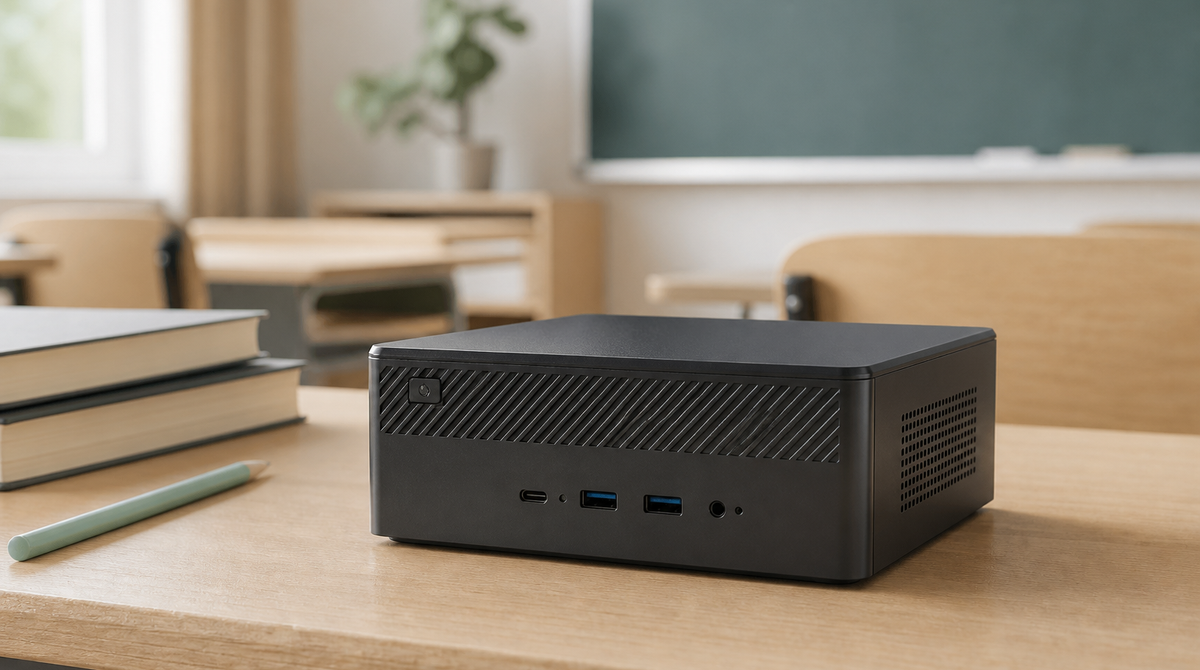
Kaitian's AI mini workstation adopts a domestic dNPU (a proprietary neural processing unit) and supports major large language models such as Qwen3.5, Qwen3, and GPT-OSS[1]. A key feature is its support for running these models locally on the device rather than relying on the cloud, allowing it to serve as a secure intelligent assistant and to automate tasks[1].
The Kaitian AI PC, meanwhile, is built on the KaiXian KX-7000 processor platform and combines it with a dedicated GPU design that accelerates AI processing[1]. It can handle local large models and knowledge bases, and by carrying Lenovo's Tianxi AI agent, it aims to deliver an AI work environment that does not depend on external services[1].
A Growing Ecosystem for Education
The KX-7000 also appeared in other companies' exhibits. Honghe presented new desktop terminals built on the KaiXian KX-7000 platform alongside its interactive panels and teaching software, broadening its product range for education digitalization[1].
iFlytek exhibited the "iFlytek Spark AIPC," which uses a Zhaoxin processor[1]. Centered on the company's Spark large model, it adopts a device-cloud collaboration approach that runs small models on the device and large models in the cloud, and it supports domestic operating systems such as UnionTech and Kylin[1]. Seewo and Lianshuo Hongdao likewise showed desktop terminals, notebooks, and large interactive displays on the Zhaoxin platform, demonstrating use cases such as electronic classrooms and AI-assisted classrooms[1].
"Full-Stack Domestic" Built Around ZX86
What Zhaoxin places at the foundation of all this is ZX86, the instruction set it defines and extends in-house[1]. The company highlights as a strength that it keeps compatibility with mainstream software such as x86 while holding the intellectual property in-house, making it easier to meet the requirements of domestic-substitution policy[1]. By lining up everything from chips to finished machines, software, and applications, Zhaoxin says it has built a setup that allows migration while continuing to use existing education software and peripherals[1].
Behind this lies China's policy of moving education from "digitalization" toward "intelligent digitalization" that incorporates AI, as well as "self-sufficiency" through domestic products[1]. Under the "Plan for Building a Strong Education Nation" and the "AI Plus Education" guidelines, building a self-controllable and highly secure information technology system is positioned as a challenge for the education industry[1].
Summary
The exhibits showed that Zhaoxin is trying to expand AI PCs capable of running LLMs locally into the education market, with its own KX-7000 CPU and the ZX86 platform at the core. Teaming up with partners such as Lenovo Kaitian and iFlytek, the company makes clear its stance of providing everything from devices to the cloud in combination with domestic operating systems and education software. How far it can make a computing foundation that does not depend on foreign processors practical in the AI-era classroom is likely to be the focus going forward.
Source: https://www.zhaoxin.com/news_view.aspx?nid=2&typeid=289&id=2031