
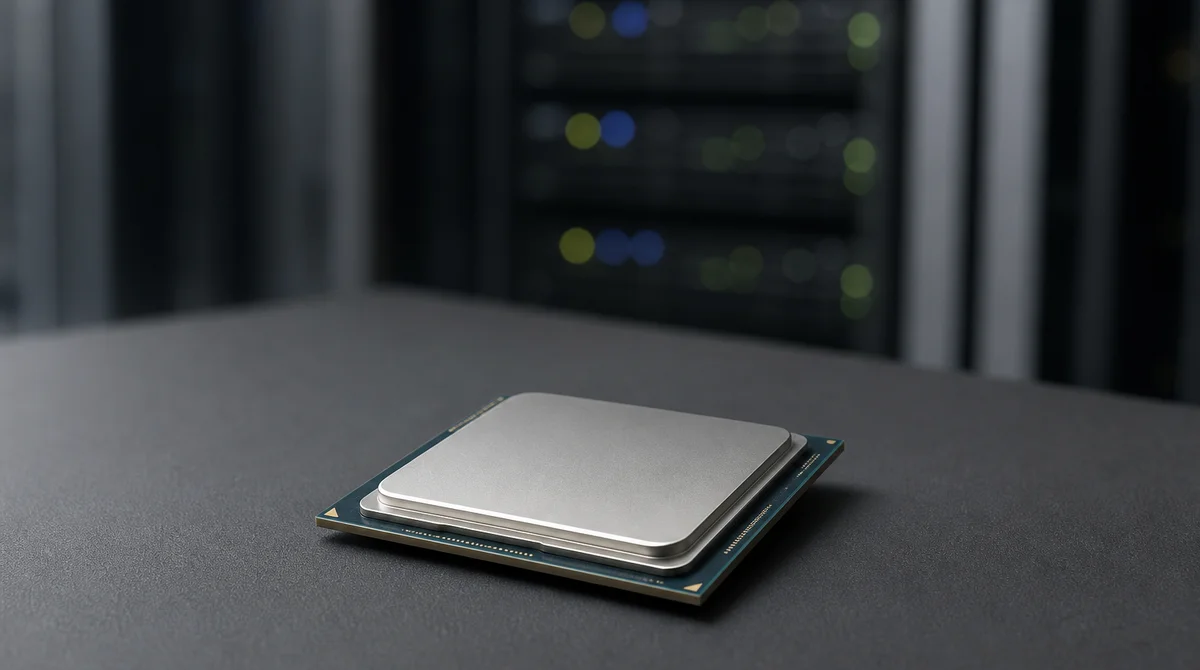
Zhaoxin, a Chinese maker of in-house designed processors, showcased a product lineup centered on its new-generation server processor "KaiSheng KH-50000" at the 2026 Mobile Cloud Conference, held in Suzhou, Jiangsu Province from May 7 to 9[1]. In a dual-socket configuration, a single machine reaches up to 192 cores, and the chip natively supports international-standard interfaces such as DDR5 memory and PCIe 5.0[1]. The exhibition highlighted the current state of the company, which positions itself around "self-controlled computing power" that does not depend on overseas vendors.
What Zhaoxin showed at the Mobile Cloud Conference
The 2026 Mobile Cloud Conference is an annual event hosted by telecom giant China Mobile. This year, under the theme "Mobile Cloud, Intelligent New Space," it focused on AI, computing power, and token-based applications[1].
At the venue, Zhaoxin presented two lines of computing chips as its core — the server-oriented "KaiSheng KH-50000" and the PC and embedded-oriented "KaiXian KX-7000" — alongside new-generation AI and high-performance servers, a full-stack dedicated cloud, and chip-level security solutions[1]. The aim was to demonstrate its processing technology and mass-production track record to the industry partners and engineers in attendance[1].
Inside the server-oriented "KH-50000"
The KaiSheng KH-50000 server processor, the centerpiece, is built around high compute density, flexible expansion across multiple sockets, and a fully renewed set of high-speed I/O[1]. To meet the surging demand for computing power and storage in the AI era, it is designed to serve as the foundation for a wide range of configurations, from general-purpose servers to AI training and inference servers and high-density storage servers[1].
In terms of performance, the company says it delivers a several-fold improvement over the previous-generation platform in database processing and virtualization[1]. For AI use, it natively supports mainstream I/O such as DDR5 and PCIe 5.0, and by deeply integrating with GPUs and AI accelerator cards from major domestic brands, it is said to support large language model training and inference as well as the operation of large models in local environments[1]. Even in scenarios with massive concurrent access, the per-machine IOPS (storage input/output performance) is said to reach the order of 10 million[1].
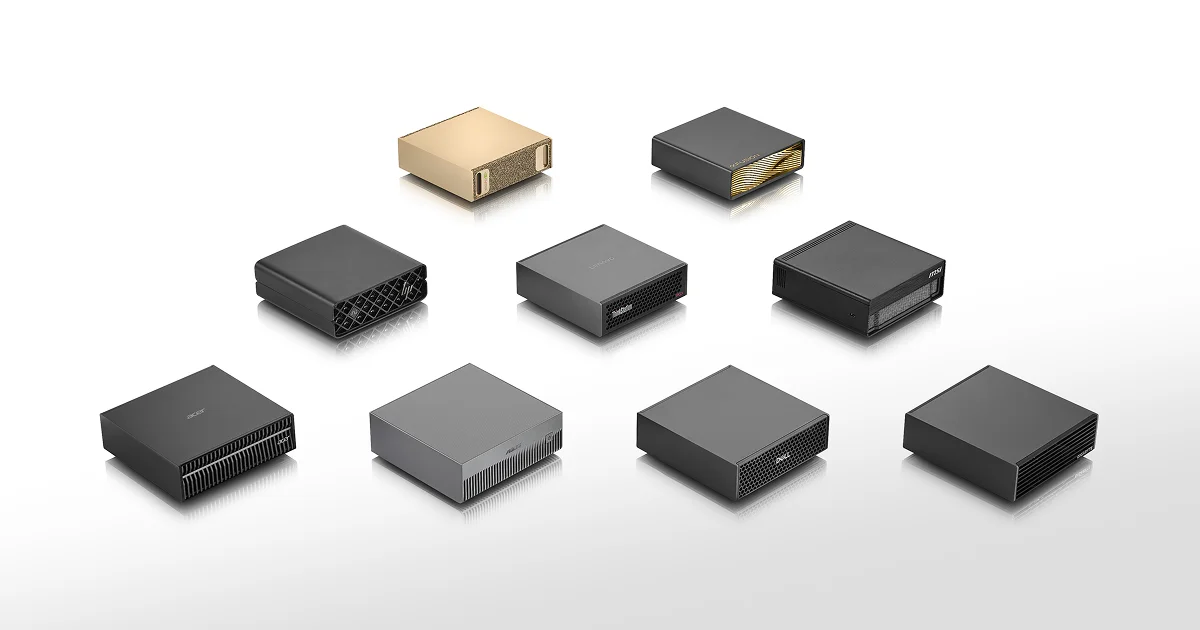
At the venue, several vendors lined up servers that adopt this KH-50000[1]. Lenovo's "KaiTian KR722z G3" mounts two KH-50000 units to achieve 192 cores in a single machine, comes with 24 DDR5 memory slots, and supports hot-swapping[1]. The AI-oriented "2S4U AI server" carries two KH-50000/96 units for 192 cores and can expand to up to 13 full-height, full-length PCIe 5.0 slots[1]. In addition, multiple self-controlled computing platforms from partner companies were on display, including general-purpose servers, storage servers, and a workstation with standard water cooling[1].
The ZX86 instruction set and national-cryptography security
At the technical core of Zhaoxin is "ZX86," an instruction set the company defined and extended in-house[1]. The company says it has built a structure that maintains compatibility with mainstream software including x86 while allowing it to keep improving on its own without external dependence, expressing this with the principle "innovate independently but not in isolation; stay compatible with the mainstream but not subordinate to it"[1]. By offering both the KaiSheng series for servers and the KaiXian series for PCs and embedded use, it aims to cover everything from cloud to edge to device in a consistent way[1].
For security, the company says it has built acceleration instructions for China's own cryptographic schemes (national cryptography algorithms) such as SM2, SM3, SM4, SM9, and ZUC into the CPU, and has obtained the country's commercial cryptography certification[1]. All products also support full memory encryption, secure boot, and trusted computing, building a security mechanism that spans from system startup through computation to data storage[1].
Expansion into cloud PCs and a dedicated cloud
The KH-50000 is not limited to standalone servers; deployment into cloud infrastructure was also shown[1]. In a "full-stack dedicated cloud" jointly built by China Mobile, Zhaoxin, and others, the KaiSheng series serves as the backbone for general-purpose computing power, with the project said to reach a scale of 6,400 cores[1]. It is positioned as a foundation that provides application compatibility testing, performance comparison, and migration-path simulation for state-owned enterprises in Shanghai[1].
For cloud PCs, a configuration was also introduced that pairs a platform using two KH-50000 units with two "S3000" GPUs from Moore Threads[1]. By partitioning physical GPUs as needed and dynamically allocating virtual resources, it aims to improve tasks that tend to stutter on cloud desktops, such as displaying documents and playing high-definition video[1]. On the device side, cloud PC terminals built around the KaiXian KX-7000 series handle the work[1].
Summary
This exhibition presented Zhaoxin's offering as a single system, centered on the KaiSheng KH-50000 for servers and extending to the KaiXian KX-7000 for PCs, the ZX86 instruction set, national-cryptography security, and a dedicated cloud. The support for DDR5 and PCIe 5.0, along with 192 cores in a dual configuration, reflects a direction of assembling a domestic computing foundation while taking in international-standard interfaces. How far it can close the performance gap with overseas x86 players will depend on future benchmarks, but it was an announcement that confirmed the spread of a computing ecosystem completed within China.
出典:https://www.zhaoxin.com/news_view.aspx?nid=2&typeid=289&id=2033