Xiaomi launched the Pad 9 Pro Max, its largest tablet yet at 13.3 inches, in China on September 7. It pairs a 3.4K panel in a 3:2 aspect ratio with the company's own Xring O3 processor and a USB Type-C link that turns the tablet into a second display for a PC. Pricing starts at CNY 4,799 (about $715) for the 8GB/256GB model. Rather than simply scaling up a tablet, Xiaomi is aiming it at work that normally happens on a computer.
A 13.3-inch 3:2 panel built for documents
The display is the first thing Xiaomi highlighted. It measures 13.3 inches diagonally, runs at 3.4K resolution with a 144Hz refresh rate, and uses a 3:2 aspect ratio. That shape is taller than the 16:9 format used for video, which makes documents and web pages easier to take in on a single screen. Peak brightness is quoted at up to 1,000 nits, with a Delta E of around 0.47. Delta E measures color deviation, and anything below 1 is generally indistinguishable to the human eye. Xiaomi describes the panel as suitable for running PC-class applications.
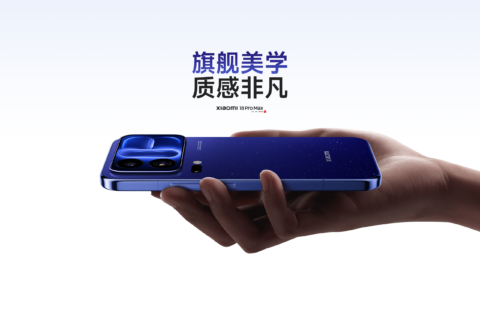
The body is a metal unibody measuring 5.67mm thick and weighing 645 grams, offered in deep red, silver, and black. Higher-end configurations can be ordered with a nano-textured Soft Light Screen that cuts glare. A magnetically attached floating keyboard is sold separately.
The in-house Xring O3 reaches a tablet for the first time
The biggest internal change is the Xring O3, Xiaomi's own flagship silicon, appearing in a tablet for the first time. The CPU uses a 10-core all-big-core layout with a maximum clock of 4.35GHz. The GPU is a 16-core G2-Ultra NX, which Xiaomi says delivers 85 percent better graphics performance while cutting power draw by 64 percent compared with the previous generation.
Xiaomi has also published an AnTuTu score of 5.61 million and claims that multi-core CPU and GPU performance is approaching Apple's M5. These are vendor-supplied figures, so sustained performance and thermal behavior on retail units still need independent testing.
Memory moves to LPDDR6, with bandwidth of up to 113.8 GB/s, which Xiaomi says is 48 percent wider than the previous-generation Xring O1. With most mobile silicon still on LPDDR5X, this is a genuinely new piece of the specification.
USB Type-C turns it into a second PC screen
The clearest practical feature is the full-function USB Type-C port. A single cable connects the tablet directly to a computer and lets it act as an external display, so a user can keep PC documents in view while working with other material on the tablet.
The same port serves handheld gaming devices. Support for DP 1.2 and above means a handheld can send its output to the tablet for a larger playing surface, moving a game from a palm-sized screen to a 13.3-inch one.
For input, the Focus Stylus Pro and the dial-based TourBox controller can be used at the same time. The combination is designed for two-handed work, adjusting parameters with one hand while drawing with the other.
HyperOS 4 reworks documents and browsing
The tablet debuts HyperOS 4. File management gains the ability to trace where a file originally came from. The document reader handles handwritten annotations, special font imports, and more detailed printing options.
The browser has been rebuilt along PC lines, with web translation, third-party AI plugins, vertical tabs, and tab grouping. Xiaomi says it tuned the rendering for the 500 most visited sites. Xiaomi Notes can now generate a mind map with a single click and supports voice shorthand along with audio and image imports.
Split-screen works with two, three, or six apps at once, a count that only makes sense on a screen this large.
Pricing starts at CNY 4,799, with markets outside China still open
In China the 8GB/256GB model costs CNY 4,799 (about $715), the 12GB/256GB version CNY 5,299, and the 16GB/256GB version CNY 5,799. The 512GB configurations run CNY 6,099 with 12GB of RAM and CNY 6,599 with 16GB. Soft Light Screen models cost CNY 6,899 for 16GB/512GB and CNY 7,899 (about $1,177) for the top 16GB/1TB configuration. The floating keyboard is a separate CNY 1,099 purchase.
Specifications that had only been rumored are now confirmed: a 12,000mAh battery with 120W wired charging, a weight of 645 grams, eight speakers with Dolby Atmos, six microphones, a 50MP rear camera and 32MP front camera, and Wi-Fi 7.
Availability and pricing outside China had not been announced as of this writing, and there is no word on Japanese availability either. Xiaomi's higher-end tablets tend to arrive in China first, so buyers elsewhere should treat a wider release as unconfirmed.
Summary
The Xiaomi Pad 9 Pro Max pairs a 13.3-inch 3.4K display with the company's own Xring O3 to take on work that usually belongs to a PC. External display output over USB Type-C and six-way split-screen both read as attempts to keep a large panel from being used only for video playback. Chinese pricing now starts at CNY 4,799, but international availability and real sustained performance remain unknown. Once those gaps close, it will be clearer how the large-tablet field, iPad included, shifts.