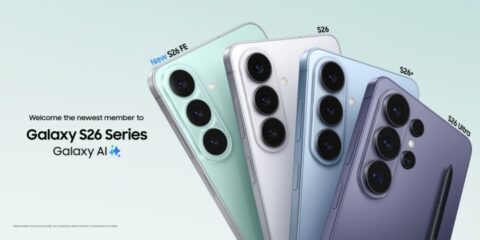
Samsung is expected to hold its summer Galaxy Unpacked event in London on July 22. Moving the venue outside South Korea or the United States for a summer event would be a first, and the lineup looks set to be one of the densest in years: three foldable smartphones, a smartwatch, and the company's first commercial AI smart glasses, all in one show. Official dates and prices will not be locked in until the day itself, but leaks and regulatory filings are already revealing the bigger picture.
Why London: Getting Ahead of Apple's Foldable
The date has not been formally announced, yet it is effectively settled. A redemption date left in the Galaxy Members app in Malaysia, reports from South Korean media, and FCC filings for the Z Fold 8, Z Flip 8, and Galaxy Watch 9 series all point to July 22. Pre-orders are expected to open the same day, with the foldables reaching store shelves around August 11.
The reason for choosing London is clear. With Apple widely expected to unveil its first foldable iPhone in September, Samsung wants its devices in buyers' hands and in reviewers' coverage first. Europe is Samsung's most competitive foldable market, and the London venue signals an intent to lock in European buyers before Apple changes the conversation.
The Biggest Change: The Wider "Z Fold 8 Wide"
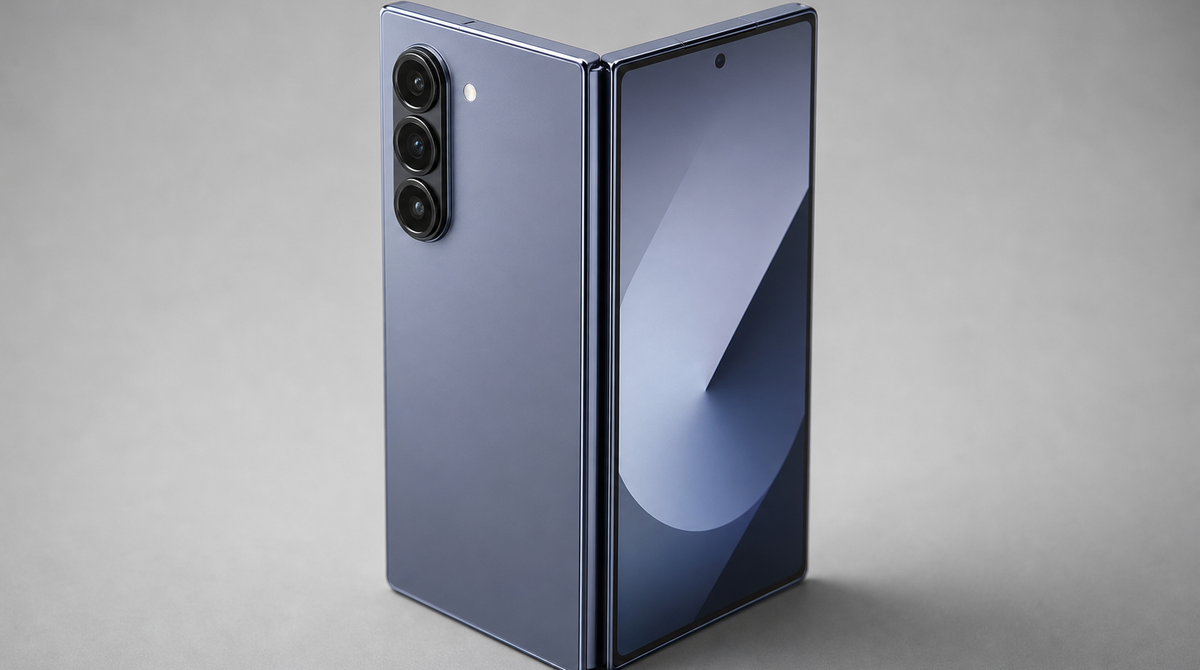
The most notable item in this lineup is not what is inside the flagship, but its shape. Since the original in 2019, the Galaxy Fold's inner display has been tall and narrow, good for reading documents but never quite delivering as a tablet. The new Galaxy Z Fold 8 Wide reportedly abandons that geometry for an inner display of roughly 7.6 to 7.8 inches at a 4:3 aspect ratio. Unfolded, it behaves more like a compact tablet than an oversized portrait phone, making landscape video, side-by-side multitasking, and on-screen typing far more natural. The cover display widens to about 5.4 inches at 16:10, wide enough to use one-handed as an ordinary phone while closed.
The engineering tradeoff is specific. The ultra-thin glass (UTG) that protects the panel is reportedly 60 micrometers thick on the Wide, versus 45 micrometers on the standard Fold 8 Ultra. Thicker glass hides the crease better and survives drops more easily, but it is harder to fold and more prone to cracking under repeated bending. Samsung apparently accepted that tradeoff to keep the crease from standing out on the Wide's broader panel. The rear camera is a dual setup, a 50MP wide and a 50MP ultrawide, with no telephoto. Anyone who wants optical zoom will need the Fold 8 Ultra.
A Steady Upgrade for the "Fold 8 Ultra" and a Possibly Final "Flip 8"
For those who prefer the traditional portrait format, the Galaxy Z Fold 8 Ultra addresses the three things reviewers asked for most on the Fold 7. The battery grows from 4,400mAh to 5,000mAh, and charging jumps from a long-standing 25W ceiling to 45W. The much-criticized crease is also said to be significantly reduced. The cameras get their largest upgrade yet: a 200MP main sensor, a 50MP ultrawide (up from 12MP), and a 10MP 3x telephoto. There is no Exynos variant; every region gets Qualcomm's Snapdragon 8 Elite Gen 5, with seven years of software updates. Pricing is not official, but multiple sources place the 256GB base model at 1,999 USD (about 320,000 yen) and the 1TB configuration at 2,499 to 2,799 USD (about 400,000 to 450,000 yen). The Wide's base configuration is expected to sit around the same 1,999 USD as the Ultra.
The Galaxy Z Flip 8, meanwhile, looks like the most modest update of the three. It slims down to about 13.2mm, drops to roughly 180g, and adds a crease-minimizing new hinge and 12GB of RAM, though there is no 1TB option. More striking than the specs is the claim from several prominent leakers that the Flip 8 will be Samsung's last clamshell. Samsung has not confirmed this, but supply-chain reports of the Flip 8 being built in lower volumes while Wide output rises are consistent with the rumor. Even if it is the final clamshell, seven years of software support would keep it current through 2033.
The First Galaxy AI Glasses and a New Smartwatch
The star of the show may not be a phone at all. The Galaxy Glasses, codenamed "Jinju" and developed with South Korea's Gentle Monster and the US brand Warby Parker, are expected to receive a full hardware and pricing reveal on the day. As previewed at Google I/O in May, the glasses themselves handle audio input and output, a 12MP Sony camera, and local AI processing via Qualcomm's Snapdragon AR1, while heavier computation is offloaded to a paired phone over Bluetooth and Wi-Fi. That division of labor is what makes a realistic 379 to 499 USD (about 60,000 to 80,000 yen) price feasible for the audio-only first generation. Through Google's Gemini, they are said to support turn-by-turn walking navigation tied to your facing direction, real-time translation that preserves the speaker's voice, and notification summaries. Against Meta's smart glasses, which have already sold more than seven million units (from 299 USD, about 50,000 yen), Samsung is betting on Gemini's multilingual, multimodal depth to stand out.
The Galaxy Watch Ultra 2 arriving alongside them tackles short battery life head-on. Capacity reportedly rises more than 30 percent from the original's 590mAh to about 800mAh, surpassing the Apple Watch Ultra 3's 599mAh. For the first time in a Galaxy Watch, the chip moves away from Samsung's in-house Exynos to Qualcomm's Snapdragon Wear Elite. Built on a 3nm process, it carries an NPU capable of running AI models of up to two billion parameters at 10 tokens per second on the device, enabling Gemini conversations without going through the phone. The expected price is around 649 to 699 USD (about 100,000 to 110,000 yen).
The Memory Shortage Behind the Price Hikes
The price increases across Samsung's 2026 lineup are less a company decision than the result of a structural force shaking the entire semiconductor industry. High-bandwidth memory (HBM) for AI data centers needs roughly three times the wafer capacity per gigabyte compared with the LPDDR5X inside phones. The more production shifts toward HBM to meet demand for AI accelerators from the likes of NVIDIA, the tighter conventional mobile DRAM becomes. One analysis found LPDDR5X 12GB prices surged 89 percent quarter over quarter in Q2 2026, and Samsung itself is reportedly negotiating to raise its average DRAM price by up to 20 percent in Q3. Research firm Gartner sees no relief before late 2027, projecting global average smartphone prices up about 13 percent by year-end, with premium models absorbing an extra 150 to 200 USD (about 20,000 to 30,000 yen). The key takeaway: because the increase is structural rather than cyclical, waiting to buy is unlikely to bring the price down.
*Converted at 1 USD = 161 JPY (as of July 3, 2026)
Summary
The July 22 Galaxy Unpacked is shaping up to be one of the densest events in recent memory, showing off the wider new Fold 8 Wide, the steadily improved Fold 8 Ultra, the possibly final Flip 8, and the first commercial AI glasses, the Galaxy Glasses, all at once. Behind it lie Samsung's push to get ahead of Apple's foldable iPhone and the reality of AI-driven memory prices. The specs and pricing will not be final until the day, but with a device that rethinks the very shape of a foldable taking center stage, this generation looks set to stand apart from those before it.