

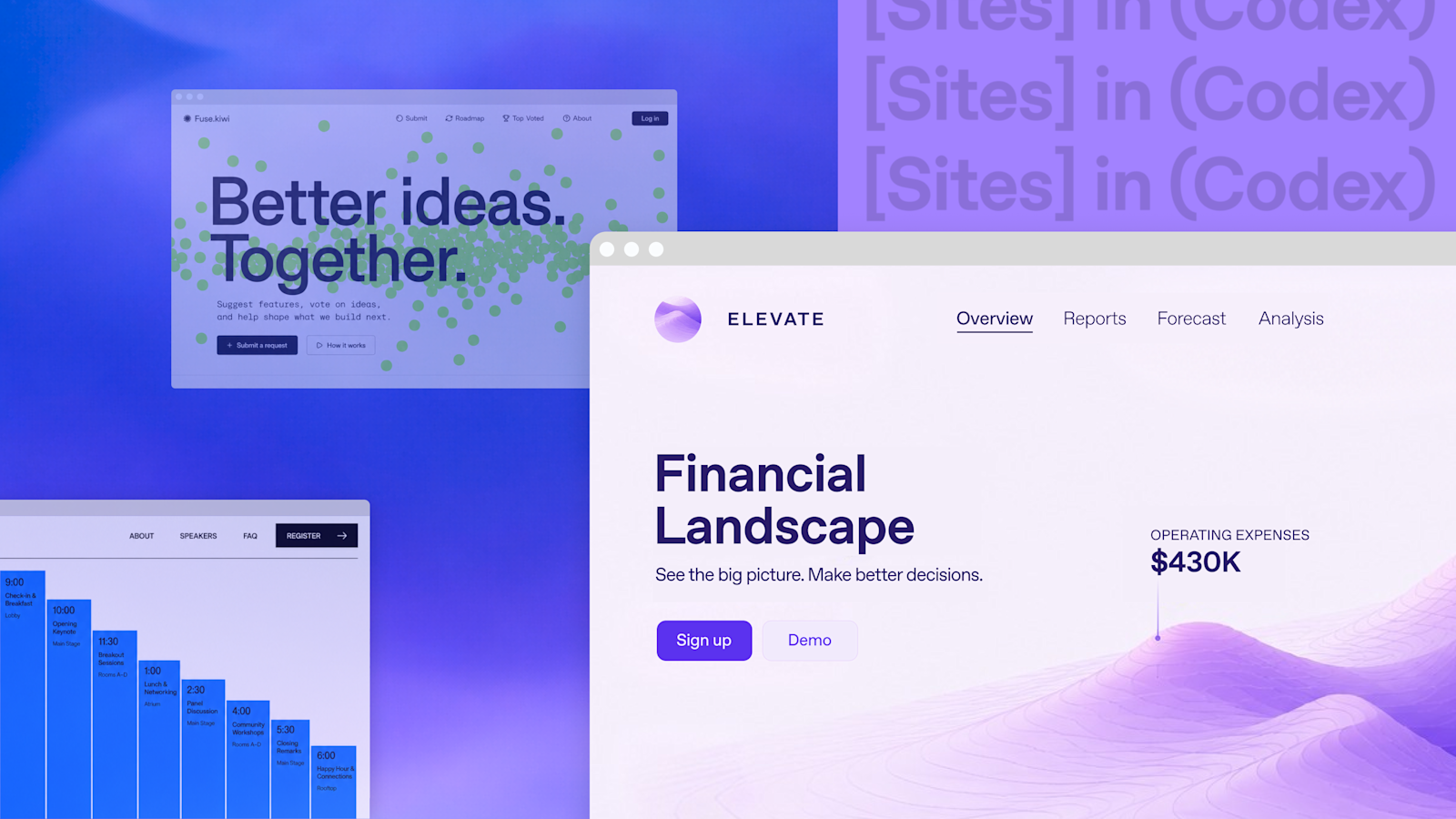
OpenAI announced new additions to its AI tool Codex: plugins tailored to specific roles, "annotations" that let you point to the exact part you want to refine, and a preview of "Sites" for creating shareable web pages and apps[1]. More than 5 million people now use Codex every week, and its use beyond developers is growing quickly[1]. The update aims to extend Codex, which began as a coding tool, into the everyday work of a much wider range of roles.
Non-Developer Use Is Growing 3x Faster
According to OpenAI, Codex now has more than 5 million weekly active users[1]. Developers remain the largest group, but non-developers such as analysts, marketers, designers, and researchers now make up about 20 percent of all users, and they are growing more than three times as fast as developers[1].
Inside OpenAI, non-technical teams use Codex to build internal apps, prepare executive materials, and create dashboards[1]. At Zapier, teams pull information from tools like Slack, Google Docs, and Coda, then use it to create postmortems, incident response plans, and feature tickets[1]. At NVIDIA, researchers use Codex to speed up their experiment workflows[1].
Six New Role-Specific Plugins
The centerpiece of this update is a set of plugins that adapt Codex to your role and tools[1]. Each plugin bundles the apps, skills, instructions, and workflows relevant to that role, and together the six plugins include 62 apps and 110 skills[1].
The data analytics plugin connects with tools such as Snowflake, Databricks Genie, Hex, and Tableau to explore product and business data and build reports and dashboards[1]. The creative production plugin uses Figma, Canva, Shutterstock, Picsart, and Fal to turn a brief into ad variations and product images[1]. The sales plugin works with Salesforce, HubSpot, Slack, Outreach, and more to surface high-priority accounts, prepare for meetings, and handle follow-ups[1].
In addition, OpenAI introduced a product design plugin for turning early ideas into prototypes, a public equity investing plugin for reviewing earnings and comparing companies, and an investment banking plugin for preparing pitch materials[1]. More plugins are planned, including ones for Corporate Finance, Private Equity Investing, Marketing Strategy, Strategy Consulting, and Legal[1].
"Sites" Launches in Preview for Sharing Ideas
"Sites" is a new feature that lets Codex turn ideas, analysis, and plans into interactive web pages such as dashboards, planners, review workspaces, and project boards[1]. It is currently offered as a preview for business and enterprise customers, and the pages you create can be shared with anyone in your workspace via a URL[1].
The pages are not static; you can ask Codex to keep them up to date as things change[1]. OpenAI says it is working with partners including Wix, Base44, Replit, Lovable, Figma, Webflow, and Emergent to build out Sites[1].
"Annotations" Let You Target Specific Parts
"Annotations" let you point to the part you want to change and tell Codex what needs to be different[1]. The feature was previously used to refine code, Markdown, and websites, but it now extends to documents, spreadsheets, and slides as well[1].
For example, you can mark a chart on a slide and ask for a clearer label, or highlight a claim in an investment thesis and ask where it came from[1]. Because the change is focused only on the part you selected, you can refine your work without redoing the parts you already like[1].
Availability and What's Next
The plugins are rolling out in Codex in supported regions and can be installed from the Codex plugin directory[1]. In Business and Enterprise workspaces, admins can control app permissions[1]. Sites is rolling out in preview for business and enterprise teams through the Codex app, with enterprise admins enabling it in admin settings[1].
Summary
With this update, Codex moves beyond simple coding assistance into the specific work of different roles. Role-specific plugins bundle the apps and skills each role needs, Sites turns results into shareable web pages, and annotations help refine the details. As use beyond developers grows rapidly, the announcement clearly signals OpenAI's intent to extend Codex to "every role, tool, and workflow."
Source: https://openai.com/index/codex-for-every-role-tool-workflow