OpenAI has announced that it will unveil "Codex Micro," its first branded hardware product, on July 15. The device appears to be a compact input device dedicated to Codex, the company's AI coding assistant, developed in partnership with keyboard maker Work Louder. Rather than entering the market with a consumer device like a smartphone or smart glasses, OpenAI is starting with a peripheral that sits on developers' desks — a very characteristic choice for the company.
"Your Favorite Codex Shortcuts Are Getting an Upgrade"
On June 29 (US time), OpenAI's official developer account posted a short teaser video on X. The accompanying message read "Your favorite Codex shortcuts are getting an upgrade," along with the date July 15.
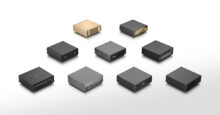
The video shows only the silhouette of a small, roughly square-shaped device, with no mention of specifications or pricing. Even so, the post was viewed nearly 1 million times within 24 hours, drawing significant attention ahead of the announcement.
The device has already been demonstrated at the AI Engineer World's Fair, an event for AI engineers, where OpenAI's Dominik Kundel described it as a keyboard "designed to supercharge people's Codex usage." Codex is OpenAI's coding agent, which developers can call from the terminal, their editor, or a dedicated app to handle code generation and reviews. Codex Micro appears to be positioned as a dedicated device for mapping those invocations and routine operations to physical buttons.
Likely Based on Work Louder's "Creator Micro 2"
Based on the teaser footage and demonstrations, Codex Micro is believed to be a Codex-specific version of the Creator Micro 2, a programmable macro pad currently sold by Work Louder. The Creator Micro 2 is a palm-sized device that combines mechanical keys with a joystick and a touch sensor, and its key feature is the ability to freely assign shortcuts for each application. It sells for about 144 USD (about 23,000 yen) for the wired Base model and about 174 USD (about 28,000 yen) for the wireless Pro model in the US.
Work Louder has a track record of building custom macro pads for well-known companies such as Figma, and developing a Codex-specific version is a natural extension of that work. For OpenAI, it is a practical collaboration that lets the company piggyback on an existing, highly polished product without designing hardware from scratch.
That said, many details remain unknown at this point. Pricing and OS compatibility have not been announced, and it is unclear whether users will be able to create custom key mappings, or whether integration via IDE (integrated development environment) extensions or an API will be offered. We will have to wait for the July 15 announcement for details.
Before a Consumer Device, First the Developer's Desk
When it comes to OpenAI hardware, attention has focused on the consumer AI device the company is developing with the team of Jony Ive, Apple's former design chief. Yet the first product to materialize under OpenAI's own brand turns out not to be an ambitious new category of device, but a small macro pad based on an existing developer peripheral.
This choice can be read as a sign that OpenAI sees developer experience as a source of competitive advantage. In a development style where AI agents write the code, small operations like running prompts, launching tests, and switching environments occur over and over. Consolidating frequently used actions into a single physical key could further cut the time spent navigating menus and typing routine prompts. It is an attempt to bring the "left-hand device" concept, long established in the world of creative software, into AI coding.
Summary
OpenAI's first branded hardware product, Codex Micro, is a Codex-dedicated input device co-developed with Work Louder, and it will be officially announced on July 15. Judging from the price of the Creator Micro 2 it appears to be based on (about 144 to 174 USD, or roughly 23,000 to 28,000 yen), it could turn out to be a relatively affordable peripheral. Pricing, supported environments, and customizability are still unannounced, so keep an eye out for further updates.
Source: https://worklouder.cc/creator-micro-2
※1 USD = about 162 JPY (as of July 8, 2026)