
On July 29, OpenAI announced ChatGPT for Academic Researchers, a program that opens its frontier models to researchers at selected universities and institutions at no cost[1]. The program will eventually cover 100,000 researchers, starting with 10,000 this summer. Participants get the company's newest models, including GPT-5.6 Sol Pro, along with skills built for work such as genomic analysis and protein modeling. OpenAI positions it as part of a commitment of more than 250 million USD (about 40 billion yen) through 2027 to support scientific research[1].
10,000 Now, 100,000 by 2027
The program targets researchers in the sciences, mathematics, and engineering at selected academic institutions. Roughly 10,000 seats are available at launch this summer, and access is already live at institutions such as the Institute for Advanced Study (IAS) and École normale supérieure (ENS). OpenAI plans to scale to 100,000 researchers through 2027[1].
Approved researchers can invite up to 4 collaborators from their own institution. Those collaborators must also verify their affiliation, and they count toward the program's total number of accounts[1]. Workspaces come with business-grade privacy and security protections, and by default the data entered is not used to train OpenAI's models[1].
At institutions that already run ChatGPT Edu, the free access granted through this program is coordinated through the institution's workspace[1].
GPT-5.6 Sol Pro and More Than 75 Life Science Skills
Access spans frontier models across ChatGPT, ChatGPT Work, and Codex, with the GPT-5.6 family included at launch. Participants also get expanded deep research, higher usage limits, and larger context windows[1].
The three model tiers serve different roles. Terra balances capability and efficiency for everyday research, Luna returns faster responses for lighter tasks, and Sol takes on the hardest scientific and mathematical problems. On FrontierMath Tier 4, which measures research-level mathematical reasoning, Sol scores 83 percent against 72.5 percent for GPT-5.5. On GeneBench Pro, which evaluates complex biological data analysis, Sol Pro solves 31.5 percent of tasks[1].
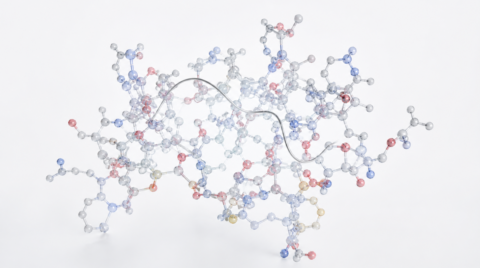
More than 75 life science skills are available, covering genetics, genomics, sequencing, single-cell analysis, protein modeling, and drug discovery. Connectors reach scientific literature, public genomic and clinical databases, satellite imagery, computational notebooks, data platforms, and reference managers[1].
Codex handles writing and debugging code, analyzing datasets, and building reproducible workflows. ChatGPT Work is aimed at longer efforts such as finding funding opportunities, preparing grant applications, reviewing literature, drafting manuscripts, and creating materials to communicate results[1].
Mathematics Leads, and the Top 20 Percent Delegate More
OpenAI says roughly 1.3 million people use ChatGPT each week for advanced science and mathematics, generating about 8.4 million messages[1].
The company describes mathematics as where the shift is clearest. Over the past 6 months, use has moved from occasional help on isolated problems to a regular part of mathematical research, and a growing number of papers now acknowledge ChatGPT's contribution[1].
Two examples are cited. Physicist Rogerio Jorge and his team are using AI to develop open-source fusion research software that industry and national laboratories use to design fusion energy devices. In theoretical computer science, Barna Saha, Yinzhan Xu, and Christopher Ye used GPT-5.5 Pro to build a proof establishing new limits on how efficiently computers can solve high-dimensional geometry problems, then validated and refined the results themselves[1].
Heavier users also hand off heavier work. Researchers in the top 20 percent of AI usage within their field direct nearly 7 percent of their requests at tasks estimated to take 4 hours or more, roughly twice the 3.5 percent seen among other researchers in the same field[1].
Part of a 250 Million USD Science Commitment
The program sits inside a broader commitment of more than 250 million USD (about 40 billion yen) through 2027 to support external scientific research and discovery. That framework includes NextGenAI, a 50 million USD (about 8 billion yen) initiative supporting research institutions, and work with the US Department of Energy's Genesis Mission to bring frontier AI to researchers at national laboratories and universities[1].
※1 USD = 160 JPY (as of July 31, 2026)
OpenAI frames its strategy as declining to pick which scientific problems deserve attention, and instead putting capable tools in the hands of the research community so researchers can pursue their own questions[1].
There is another way to read a giveaway of this size. Engadget notes that the least charitable interpretation is a hunt for new sources of training data, while also acknowledging that data is not used for training by default. It then points out that as more research outcomes involve GPT models and more scientific fields come to depend on the company's tools, the arrangement could open a path to future revenue from for-profit research[2]. This is not OpenAI's first move toward researchers either: in January it released Prism, an AI tool for working with scientific journals and documents[2].
Applicants Must Describe Their Research
The initial program is open to qualifying researchers at selected academic institutions. On the institutional side, eligibility requires a recognized, degree-granting college or university with a high level of research activity[1].
Beyond verifying their affiliation, applicants must provide information about their active research and how they intend to use AI scientifically. Applications opened on July 29, the same day as the announcement[1]. Training and support are tiered by experience level, from researchers touching these tools for the first time to those building advanced applications in their fields[1].
Summary
ChatGPT for Academic Researchers is an unusually large commitment to the research community, both in its 100,000-seat scale and in its contents, from GPT-5.6 Sol Pro to more than 75 life science skills. The default of not training on researchers' data addresses an obvious concern, but how to view scientific fields leaning on one company's tools remains a separate question. What the first 10,000 participants produce will be the next thing worth watching.
Source[1]: https://openai.com/index/chatgpt-for-academic-researchers/
Source[2]: https://www.engadget.com/2226656/openai-will-provide-free-ai-models-to-select-researchers/