
NVIDIA has published the first public benchmark results for Vera, its in-house data center CPU[1]. In testing by the benchmark site Phoronix, the chip — with 88 custom cores and 1.2 terabytes per second of memory bandwidth — delivered a 1.6x geometric-mean gain over the prior-generation Grace CPU[1]. As agentic AI reshapes what data centers demand from a processor, Vera is drawing attention as a serious challenger to Intel and AMD x86 chips[1].
A New CPU Requirement for the Agentic AI Era
NVIDIA argues that the spread of agentic AI — AI that plans its own steps and carries tasks forward autonomously — has changed what an AI factory, a large data center built specifically for AI work, needs from its CPU[1]. Specifically, it comes down to three things: fast cores, massive memory bandwidth, and the ability to sustain performance even when every core is active[1].
At the heart of Vera are NVIDIA's custom-designed Olympus CPU cores[1]. Fully compatible with the Armv9.2 instruction set architecture, Olympus is built for the sequential CPU work that underpins agentic AI: branch-heavy runtimes, sandboxed code, data processing, and orchestration of the overall workload[1]. A monolithic die and the second-generation NVIDIA Scalable Coherency Fabric are designed to keep data moving smoothly across all 88 cores[1].
Phoronix tested a single-socket Vera rated at a 450-watt thermal design power (TDP) with less than 30 watts of memory power[1]. Within that envelope, it delivered strong performance across a broad range of tasks — code compilation, file compression, video transcoding, Python and Java execution, and database management[1]. These are exactly the CPU-heavy jobs that AI agents and AI factories run every day[1].
An "Incredible Advantage" in Memory Performance
Vera uses a second-generation LPDDR5X memory subsystem, a low-power memory standard that dramatically lowers energy per bit compared with DDR5[1]. As a result, where traditional CPUs spend more than 100 watts on memory, Vera reaches up to 1.2 terabytes per second of bandwidth — up to twice that of traditional CPUs — using less than 30 watts of memory power[1].
In the STREAM TRIAD memory-bandwidth benchmark, Vera sustained 90 percent of its rated peak, the highest share of any CPU Phoronix has tested, and delivered more than 4x the memory bandwidth per core of traditional x86 CPUs[1]. Michael Larabel, founder and principal author of Phoronix, wrote that "NVIDIA Vera with its LPDDR5X memory was showing its incredible advantage in memory performance over current Intel Xeon and AMD EPYC processors"[1].
Peak bandwidth is only part of the story. AI factories run many sandboxes, tool calls, and data services at once[1]. In separate testing, the AI infrastructure company Prime Intellect found that Vera maintained high bandwidth and low, consistent memory latency as more workloads ran in parallel — the predictable performance agentic AI requires[1].
A 1.6x Generational Leap That Outpaces Top x86 Chips
The generation-over-generation gains were large: in Phoronix's testing, Vera delivered a 1.6x geometric-mean improvement over the prior-generation Grace CPU[1]. Larabel wrote that "the difference from Grace to Vera was consistently exceeding my expectations for gen-on-gen performance," adding that Vera, with its in-house Olympus cores, shows a level of competitiveness he had never seen from any Arm or non-x86 processor[1].
Vera led the tested field, posting a 1.5x overall performance advantage over a latest-generation 128-core x86 processor[1]. The edge showed up in real developer work: a single-socket Vera compiled a default Linux kernel in just 20 seconds, the fastest result Phoronix measured in that test, and on a per-core basis compiled the kernel 2x faster than the 128-core chip[1]. Larabel also noted that "on a geometric mean basis, the NVIDIA Vera delivered 10 percent better performance than the AMD EPYC 9575F 5.0 GHz high-frequency processor"[1].
Shipping in the Second Half of 2026, Through Partners
At its GTC technology conference, NVIDIA announced broad ecosystem support for Vera spanning AI natives, supercomputing centers, cloud service providers, and infrastructure providers[1]. It has already delivered the first Vera CPUs to leading AI companies and cloud providers, calling it an important milestone on the way to partner availability in the second half of 2026[1].
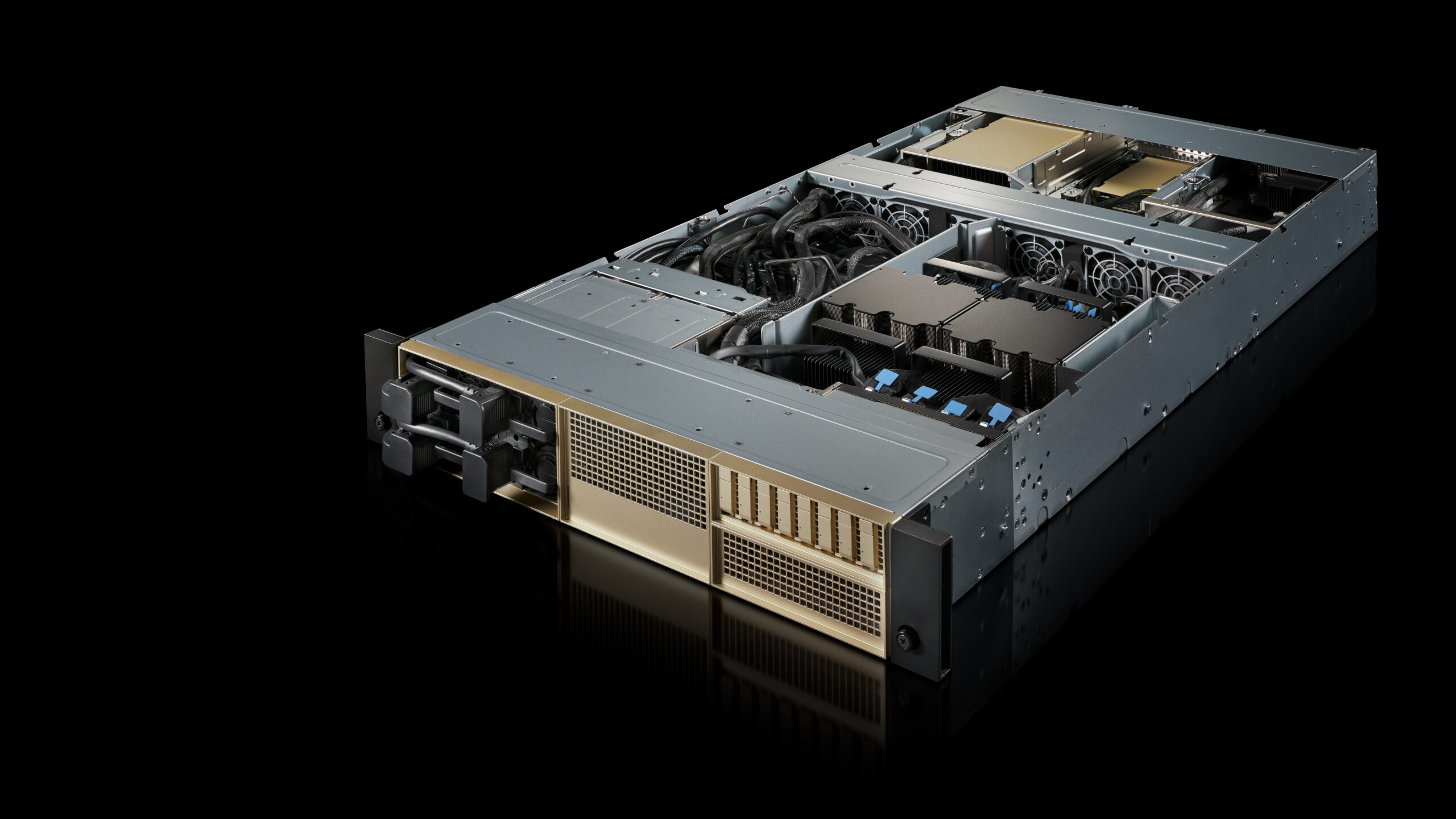
Vera will come in both dual- and single-socket systems, with air-cooled and liquid-cooled options[1]. The lineup is meant to cover everything from standard enterprise data centers to high-density agentic AI infrastructure[1].
Summary
In Phoronix's first public benchmarks, NVIDIA's in-house Vera CPU posted a 1.6x geometric-mean gain over the prior-generation Grace and a 1.5x advantage over a latest 128-core x86 chip. The standout is fitting 88 Olympus cores and 1.2 terabytes per second of memory bandwidth into a 450-watt envelope. With availability slated for the second half of 2026, the question now is whether a strong Arm-based option can establish itself in a server CPU market long led by Intel and AMD.