
At TM Forum's DTW Ignite 2026, the telecom industry event now underway in Copenhagen, Denmark, NVIDIA showcased the building blocks for AI agents (AI that autonomously assesses situations and carries out work) that can run telecom networks on their own[1][2]. Working with operators and vendors around the world, including SoftBank, KDDI, Amdocs and NTT DATA, the company laid out a plan that combines synthetic data, telecom-domain models, secure runtimes and simulation so that operations can be entrusted to agents while humans stay in control of policy[1].
From Automation to Autonomous Networks
Telecom operators have already gained returns by using generative AI to automate network management, customer care and back-office operations[1]. Most of that, however, has been task-based automation that speeds up predetermined steps, while people still correlate the resulting insights and decide the next move[1].
NVIDIA frames automation not as the finish line but as the launchpad toward autonomy[1]. What the company envisions is an autonomous network in which AI agents proactively watch for problems and coordinate changes across network, IT and business systems[1]. This announcement presents the components needed to make that real, shown together with live demonstrations at DTW Ignite 2026, hosted by TM Forum[1]. The event runs June 23–25 in Copenhagen, with autonomous networks featured as one of its core themes[2].
Training AI While Protecting Sensitive Data With Synthetic Data
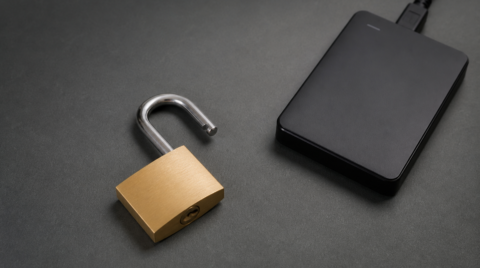
The foundation of autonomous networks is reasoning models that understand the telecom domain. Such specialized models require fine-tuning on high-quality data, yet the most valuable network and customer data is the most sensitive and hard to use directly[1]. According to NVIDIA, 54 percent of operators cite data-related issues as their biggest barrier[1].
That is where synthetic data comes in. By generating pseudo data that reproduces the structure and distribution of real data, operators can increase the volume and diversity of training data without exposing raw customer records[1]. SoftBank uses NVIDIA's NeMo Safe Synthesizer and NeMo Anonymizer to generate privacy-preserving synthetic datasets that reflect real network performance and configuration data[1]. It is using these to fine-tune its large telecom model and build specialized network agents[1].
A Runtime for Safely Operating Autonomous Agents
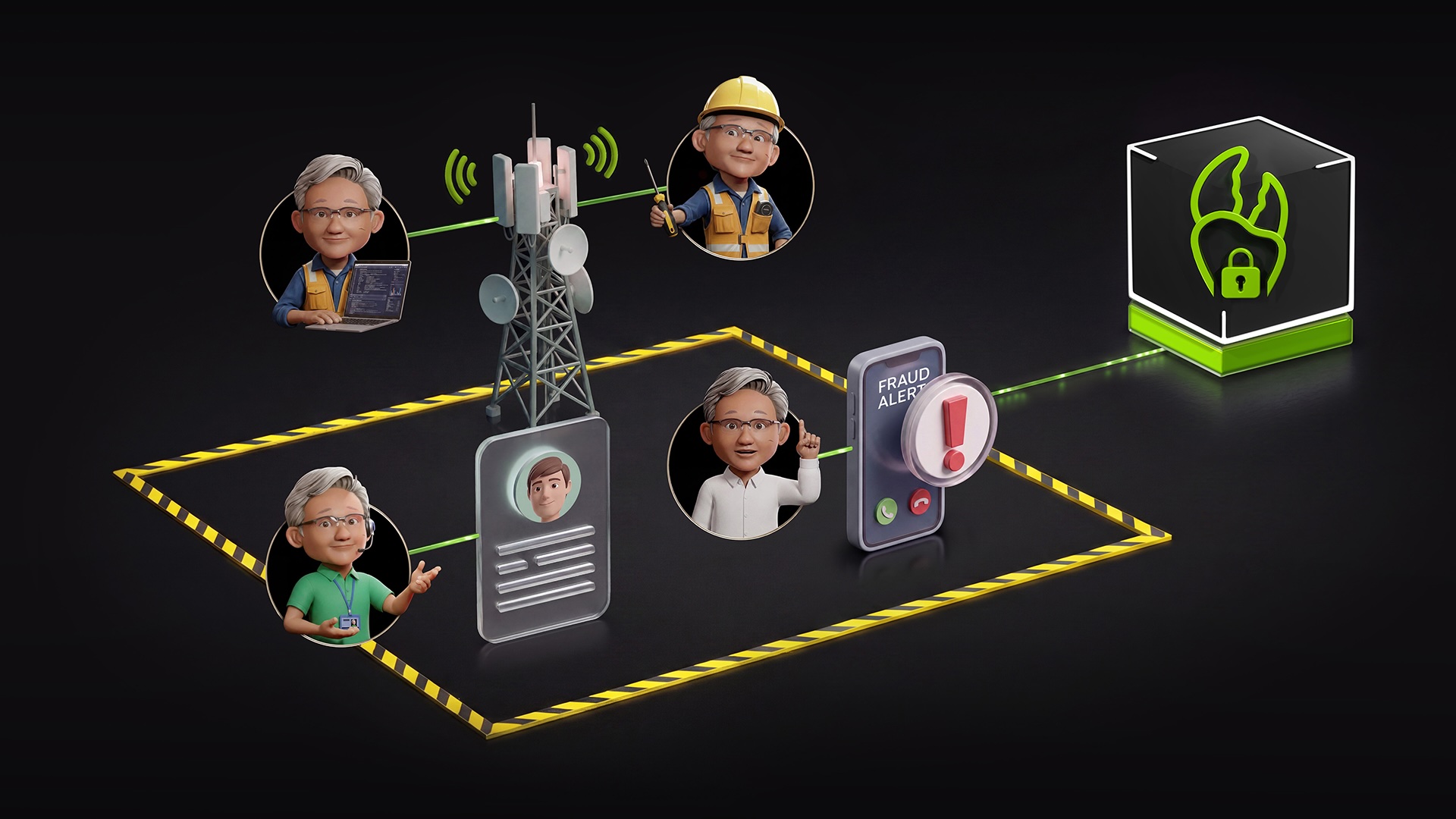
For operators to make entire workflows autonomous, they need agents that can see a complex job through from start to finish, not just execute a single task[1]. The key is the ability to keep running over long periods while observing service-level agreements (SLAs), change-management rules and regulatory constraints[1].
NVIDIA provides the NemoClaw blueprints and the OpenShell secure runtime. These give agents policy-based guardrails and sandboxed (isolated) access to telecom systems, keeping behavior predictable and auditable[1]. AdaptKey is using them to pilot security-hardened, long-running agents for self-healing 5G operations with operators[1]. Amdocs showed proactive customer-care agents that act within business rules, such as identifying users whose roaming package is nearly depleted and offering approved options[1].
In addition, NTT DATA combines NVIDIA's Nemotron open models with NemoClaw to build long-running agents that proactively detect network degradation[1]. ServiceNow is bringing Project Arc to telecom, enabling autonomous network operations center (NOC) agents that handle the full incident-response lifecycle by pulling context from emails, logs and diagnostics[1]. Tata Consultancy Services (TCS) is developing a multi-fidelity "AI sensor" architecture that scans broadly for issues and selectively triggers deeper diagnosis[1].
Backing Trustworthy Autonomy With Simulation
The more responsibility AI agents take on in operations, the more important it becomes to validate their recommendations through simulation before touching the live network[1]. Accelerating simulation on GPUs lets agents check their decisions in near-real conditions[1].
Forsk integrated an AI-based radio propagation model into its Naos RAN (radio access network) planning platform and achieved up to 200 times the speed of CPU-only baselines on NVIDIA RTX PRO 6000 Blackwell Server Edition GPUs[1]. VIAVI Solutions also moved RAN simulation to GPUs for an order-of-magnitude improvement in throughput[1]. Furthermore, KDDI and KDDI Research are working with NVIDIA, Keysight and Samsung Research America to build a high-fidelity RAN digital twin (a virtual environment that reproduces reality) for the 6G era using the NVIDIA Aerial Omniverse Digital Twin[1]. In this environment, multiple autonomous agents will be able to safely validate "what-if" scenarios such as area optimization and future radio conditions[1].
Summary
What NVIDIA presented are the parts for incrementally assembling autonomous networks: safe training through synthetic data, a policy-guarded runtime, and high-speed simulation. Operators and vendors such as SoftBank, KDDI, NTT DATA, Amdocs and ServiceNow are each advancing proof-of-concepts in their own settings, making concrete a shift in network operations from "automation where people run the steps" to "autonomy where people hold the policy." Full deployment on live networks will require assured safety and auditability, but the groundwork has clearly begun.
出典:https://blogs.nvidia.com/blog/telecom-ai-agents-dtw-ignite-2026/