On May 20, 2026, Google announced a new experimental feature for Google Beam, its true-to-life video communication platform, designed to improve group meetings with multiple participants[1]. Using HP's immersive "HP Dimension" display, Beam renders people joining from non-Beam devices at their true size, as if they were seated around the same table[1]. The effort aims to close the sense of exclusion that remote participants often feel in hybrid meetings.
Rendering non-Beam participants at true-to-life size
Google Beam is a video communication platform that displays the other person three-dimensionally without headsets or special glasses, and it grew out of Google's long-running research effort known as "Project Starline"[1][2]. Google notes that with conventional video conferencing, where small tiled video frames sit side by side, remote participants can struggle to read subtle expressions and may end up feeling like observers rather than active participants in the conversation[1].
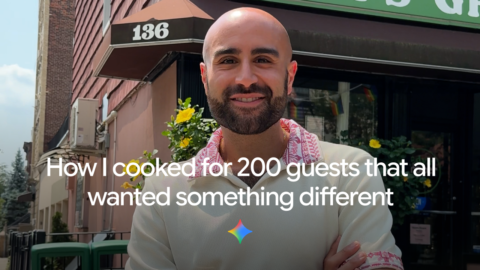
The experiment Google has now unveiled addresses this challenge across more devices[1]. On the HP Dimension immersive display, members joining from non-Beam devices are also rendered at true-to-life size and positioned as if seated at the same table as you[1]. Mohamed Abdelgany, Group Product Manager for Google Beam, served as the spokesperson for the announcement[1].
Spatial audio and automatic optimization heighten the in-room feeling
In addition to the visuals, Beam combines spatial audio[1]. By anchoring each participant's voice directly to the position where that person appears on screen, the source of the voice matches the speaker's image, heightening the sense of being in the same room[1].
According to Google, this optimization works automatically whether you join from home or from the office, with no need for users to switch settings manually[1]. Google further says it is continuing to work with Google Workspace and Zoom so that the meetings people already hold can be elevated directly on Beam[1]. More details are expected to be shared over time at beam.google[1].
Aiming to close the hybrid meeting "inclusion gap"
Google points to research suggesting that approaches like these help close the "inclusion gap" in hybrid meetings[1]. In Google's study, the sense of social connection was 50 percent stronger, and reported ability to contribute to conversations increased by 21 percent[1].
HP Dimension, the commercial hardware for Beam, features a 65-inch light field display and is priced at USD 24,999 (about 3.97 million yen), with a separate Beam license required to use it[3]. * Converted at 1 USD = 159 JPY It became available in late 2025 in six countries — the United States, the United Kingdom, Canada, France, Germany, and Japan — and supports Zoom and Google Meet[2][3]. Because the immersive three-dimensional experience has so far centered on one-on-one calls[2], the extension to group meetings represents a move to broaden where Beam can be used.
Summary
Google Beam's new experiment aims to reduce the sense of exclusion in hybrid meetings by displaying participants from non-Beam devices at true-to-life size with spatial audio on the HP Dimension display[1]. While it still presupposes expensive dedicated equipment, Google has stated it will continue to work with Workspace and Zoom, and attention now turns to how far supported devices and use cases will expand[1].