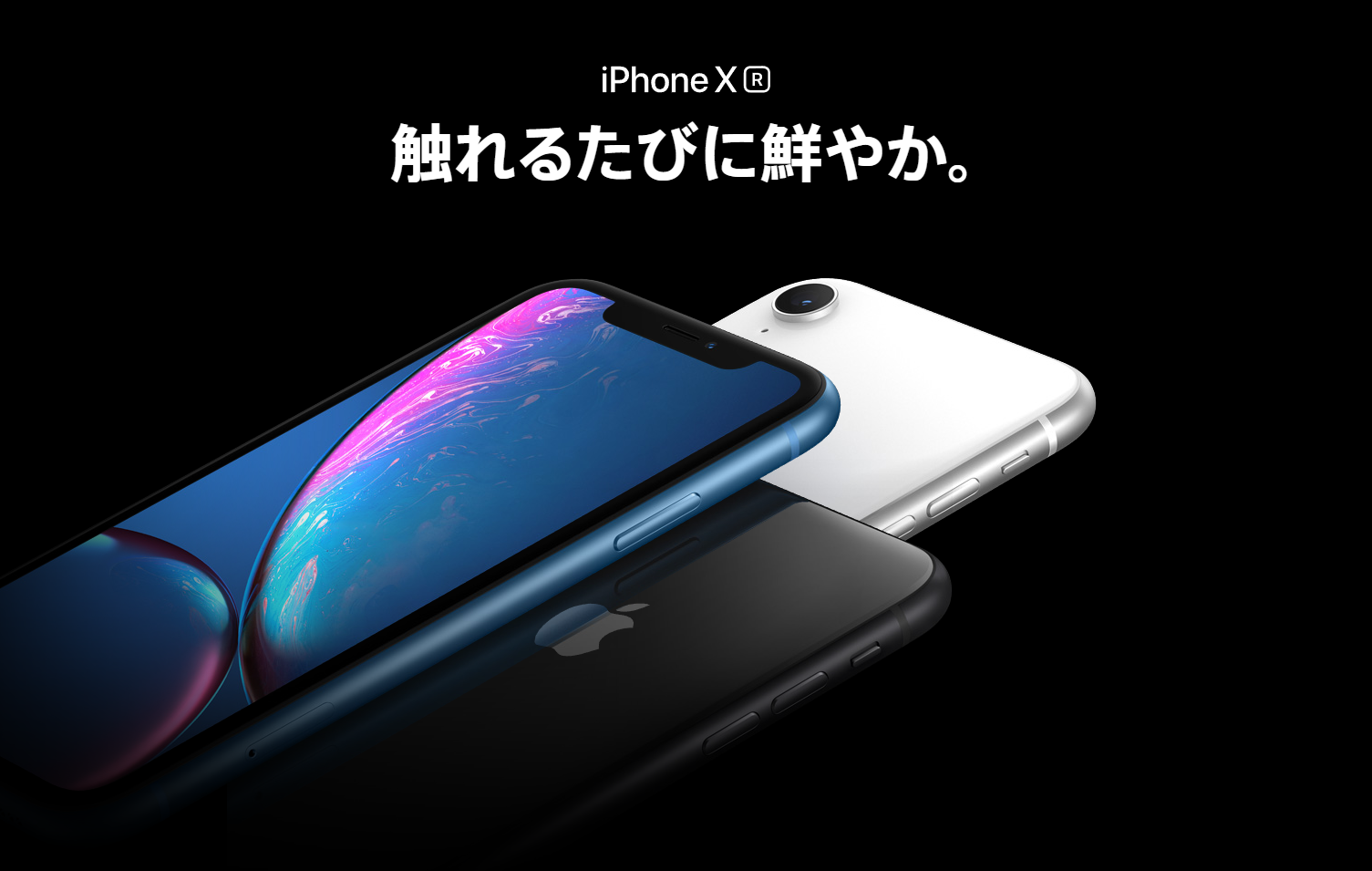
Apple Store Online came back from maintenance today, and the iPhone XR — announced for an October 19 launch — is now available to purchase. Pricing starts at 84,800 yen, and orders placed today will arrive on October 26 (in Tokyo).
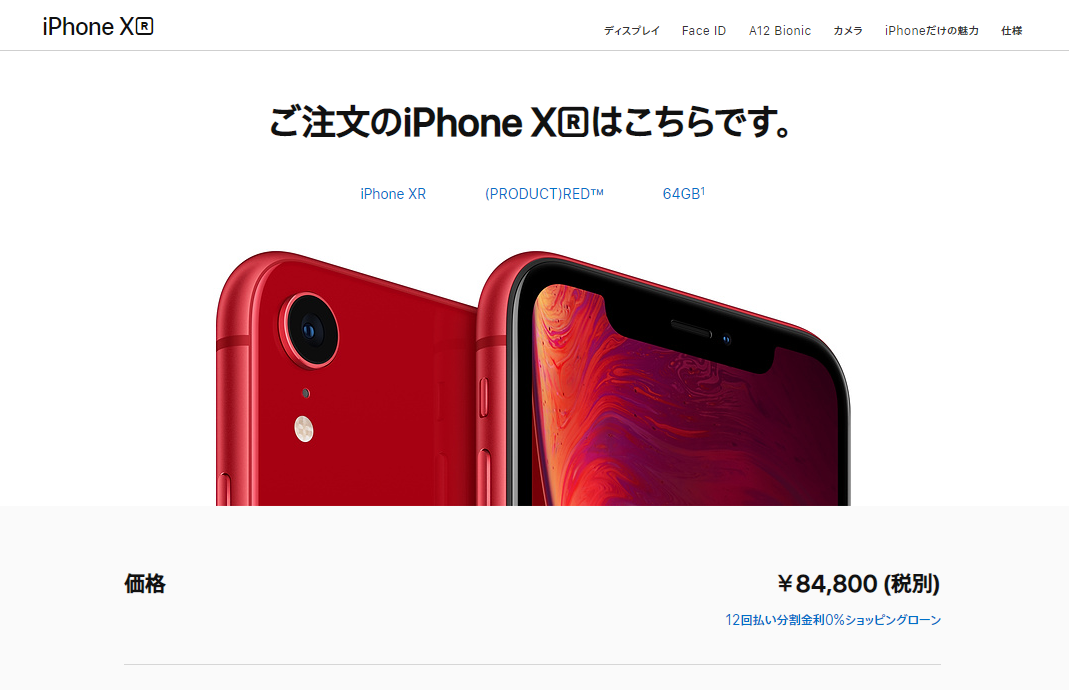
With a 6.1-inch LCD covering the front and the latest A12 Bionic processor, the iPhone XR is the most affordable model in the 2018 iPhone lineup. The colorful body options — white, black, blue, yellow, coral (a pinkish hue), and (PRODUCT)RED — are also a big draw. Just like the iPhone XS, it of course supports Face ID and FeliCa.
Visit the Apple Store Online official site
iPhone XR vs. XS — what's different? Quick comparison chart
Below are some of the differences excerpted from the official site.
| - | iPhone XR | iPhone XS |
|---|---|---|
| Display | Liquid Retina HD 6.1-inch (IPS LCD, 1,792 x 828 @ 326ppi, 1,000,000:1 contrast ratio (typical)) | Super Retina HD 5.8-inch (OLED, HDR, 2,436 x 1,125 @ 458ppi, 1,400:1 contrast ratio (typical)) |
| Camera | 12MP / 7MP TrueDepth (5x digital zoom, Portrait Lighting (Natural, Studio, Contour, Stage, Stage Mono)) | Dual 12MP / 7MP TrueDepth (2x optical zoom, 10x digital zoom, Portrait Lighting (Natural, Studio, Contour)) |
| Storage | 64GB, 128GB, 256GB | 64GB, 256GB, 512GB |
| Memory | 3GB | 4GB |
| Water resistance | IP67 (up to 1 meter for up to 30 minutes) | IP68 (up to 2 meters for up to 30 minutes) |
| Color | Blue / White / Black / Yellow / Coral / (PRODUCT)RED | Silver / Space Gray / Gold |
| Size & Weight | H150.9 x W75.7 x D8.3 / 194g | H143.6 x W70.9 x D7.7 / 177g |
| Battery | 2,942mAh | 2,658mAh |
| Price | from 84,800 yen (excl. tax) | from 112,800 yen (excl. tax) |
Surprisingly, things like battery capacity are actually larger on the XR than on the XS. Looking at the official site's power and battery comparison, talk time is 20 hours on the iPhone XS but 25 hours on the iPhone XR — meaning the XR actually has the better battery life.
How much faster did the A12 Bionic get?
According to the official site, the A12 Bionic — built into both the iPhone XS and XR — is up to 15% faster than the A11 Bionic, with graphics performance up to 50% faster. The A12 Bionic is manufactured on a 7nm FinFET process. The A11 Bionic was on 10nm, so this generation moves to an even finer process. The benefit of finer fabrication is higher integration density, which translates into better performance and lower power consumption. Likely as a result, the transistor count has gone up by 60% compared to the A11 Bionic.