

Moonshot AI of China released its new large language model, Kimi K3, on July 16, 2026. With 2.8 trillion total parameters, it is the largest model ever published with open weights. Size is not the whole story either: across several benchmarks it sits just behind the top-tier models from OpenAI and Anthropic. The full weights are scheduled for release on July 27, timed to land just before the World Artificial Intelligence Conference in Shanghai.
The assumption that open models lag behind no longer holds
Until now, open-weight models have followed the closed frontier by roughly half a year. K3's numbers make that assumption hard to sustain this time.
On GDPval-AA v2, a benchmark modeled on real-world professional tasks, K3 scored 1,687 for third place overall. Only Claude Fable 5 Max at 1,815 and GPT-5.6 Sol Max at 1,747.8 rank higher, and K3 comes in above Claude Opus 4.8 at 1,600. On AA-Briefcase, which measures sustained knowledge work, K3 took second place with 1,527, overtaking GPT-5.6 Sol Max at 1,495.
The other standout is a score of 91.2 on BrowseComp, a test of difficult, long-horizon information seeking. Moonshot AI says it reached that figure with a single agent, using no context compression and no special context management. The implication is that simply letting a model read a long context in full can beat elaborate multi-agent workarounds.
A sparse MoE inside, with confident pricing
K3 does not run every parameter on every token. It uses a sparse mixture-of-experts design that routes each token through 16 of 896 experts, which is why a 2.8-trillion-parameter model remains practical to operate.
Two in-house techniques are new here. One is Kimi Delta Attention, a hybrid linear attention mechanism; the other is Attention Residuals, a drop-in replacement for residual connections. Both aim to keep gains steady as model scale grows. On top of that, the context window exceeds 1.04 million tokens, image understanding is supported natively, and the reasoning mode is always on.
The API is compatible with the OpenAI SDK, so existing code can be pointed at K3 with little more than an endpoint change. Pricing is 3 USD (about 490 yen) per million input tokens and 15 USD (about 2,400 yen) per million output tokens, with cached input dropping to 0.30 USD (about 50 yen). That is assertive for a Chinese lab, but the per-task cost works out to roughly half that of Claude Opus 4.8. A promotion running through August 12 returns up to 30 percent in vouchers on API top-ups of 1,000 USD (about 160,000 yen) or more.
※1 USD = 162 JPY (closing rate, July 18, 2026)
Anyone wanting to try it can do so through kimi.com, the Kimi Work productivity suite, or Kimi Code for developers.
Designing its own chip over 48 hours
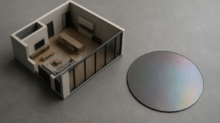
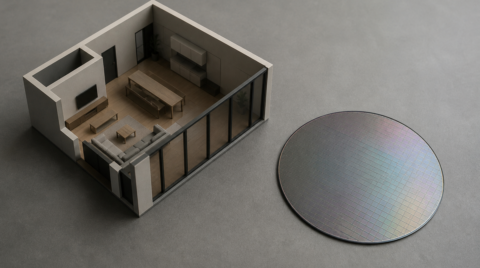
More telling than the benchmarks was a demonstration shown alongside the release. Moonshot AI asked K3 to design a chip capable of running a nano-scale version of itself.
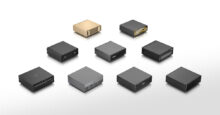
Using open-source design automation tools, K3 reportedly worked for 48 hours without human intervention, carrying the project from architecture through optimization and verification. The result was a small chip covering 4 square millimeters that achieved timing convergence at 100 MHz and, in simulation, decoded more than 8,700 tokens per second.
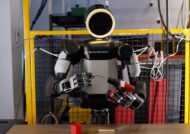
This is not a production part. What the demo was meant to show is whether a model can sustain a loop of reading documentation, making decisions, and recovering from failures across two full days. That is a different axis from answering a single question well, and it points to agent endurance as the new proving ground. A separate example in astrophysics has K3 reproducing in about two hours a calculation that typically takes a researcher one to two weeks, cross-reading more than 20 papers in the process.
A company that fell hard and is betting on scale
Moonshot AI was founded in 2023 by Yang Zhilin, a Tsinghua University graduate with research experience at Google and Meta. In 2024, Kimi spread quickly on the strength of long-document analysis and AI search, climbing to third in monthly active users in China.
Everything changed in January 2025, when DeepSeek shipped its low-cost R1 model and pulled attention away. Kimi slid to seventh. The company had raised roughly 1.5 billion USD (about 240 billion yen) in total, with its valuation climbing from 2.5 billion USD (about 400 billion yen) to 4.3 billion USD (about 700 billion yen), yet its presence had clearly thinned.
The recovery plan was the open-weight strategy that began with Kimi K2 in July 2025. K3 continues that line, but the gap in scale is stark. Among rival open-weight models, DeepSeek sits at 1.6 trillion parameters, Xiaomi at 1.02 trillion, and Alibaba at 397 billion. Training at 2.8 trillion requires substantial compute and months of preparation, so this move was almost certainly set in motion well in advance. The funding side has since recovered as well: in May 2026 the company raised about 2 billion USD (roughly 320 billion yen), lifting its valuation back above 20 billion USD (roughly 3.2 trillion yen).
For companies that cannot train models themselves, this widens the set of near-frontier options they can host and tune in house. It can also be read as China positioning itself at the center of the global developer community by giving weights away while the United States tightens compute exports. When the actual weights arrive on July 27, the question becomes how much of this anyone can realistically run.
Summary
Kimi K3 from Moonshot AI is among the largest open-weight models yet released, with 2.8 trillion parameters and a context window over 1.04 million tokens. Third place on GDPval-AA v2 and 91.2 on BrowseComp show the gap with closed frontier systems narrowing considerably. As the 48-hour autonomous chip design demo suggests, the contest is shifting from single exchanges to long-running agent work. Full weights are due on July 27.