
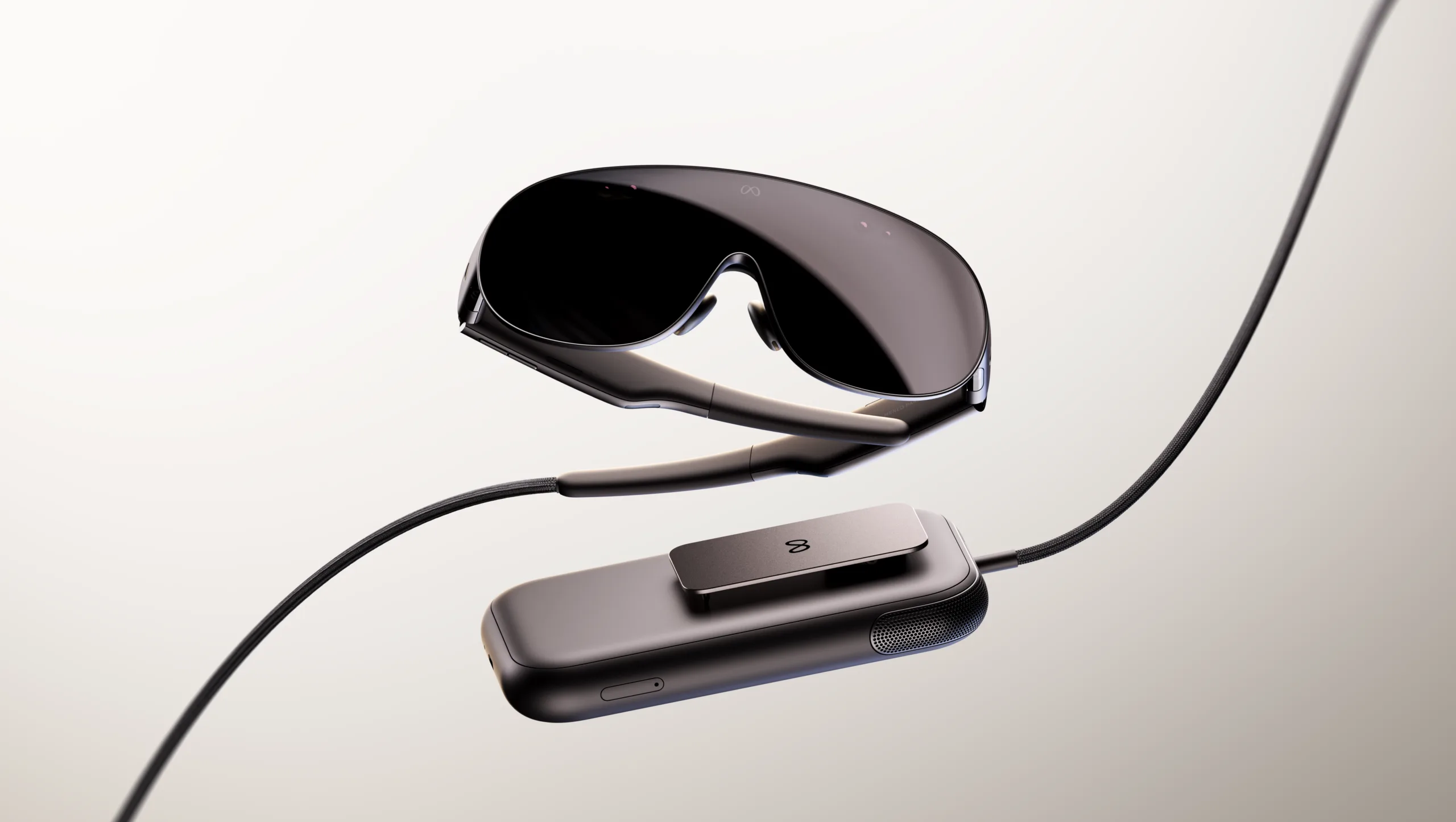
Meta announced a new glasses-style VR device called Meta VR Glasses on September 23 local time. The headset itself weighs about 100 grams, roughly a fifth of the company's existing Meta Quest 3, and Meta plans to launch it in several countries, including Japan, in spring 2027.
A Split Design: Lightweight Frame, Separate Compute Pack
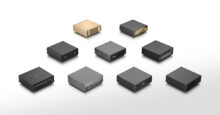
To reach that weight, Meta moved the processor, battery, and storage out of the headset and into a separate compact pack that fits in a pocket or clips to a belt, connected to the glasses by a fiber-optic cable. The headset frame is made of magnesium alloy, while the pack itself weighs about 300 grams, bringing the combined total to roughly 400 grams. Unlike a traditional strapped headset, the design lets Meta VR Glasses sit on the face much like a pair of regular glasses.
The display is a micro-OLED panel called the 5K Infinite Display, offering 2,412 by 2,288 pixels per eye at 37 pixels per degree for sharp text and detail. The system runs on Qualcomm's Snapdragon Reality Elite processor.
Controller-Free Input Through Meta AI, Eye Tracking, and Hand Gestures
Instead of handheld controllers, Meta VR Glasses relies on voice commands to the Meta AI assistant combined with eye tracking and hand gestures to handle most interactions. The compact pack supplies power for up to three hours of use.
The device covers a wide range of uses. For video, it supports movies, shows, and live sports from streaming apps on a large virtual screen, including 3D content, and it is the first VR device to receive IMAX Enhanced certification. For productivity, it connects wirelessly or via USB-C to a Mac or Windows PC to arrange multiple virtual displays, and can project a virtual keyboard and trackpad onto a flat surface so users can type without carrying a physical keyboard. For video calls, it offers a hologram-style feature that renders a realistic, real-time avatar of the user.
Over 75 Launch Titles, With Full Access to the Existing Quest Library
On the gaming side, Meta says more than 75 controller-free titles will be available at launch, and the existing Meta Quest game library remains fully accessible, with support for the Meta Quest Touch Plus controllers from Quest 3 and 3S. Meta VR Glasses also streams hundreds of titles through Xbox Cloud Gaming and can connect to consoles and handhelds for big-screen play.
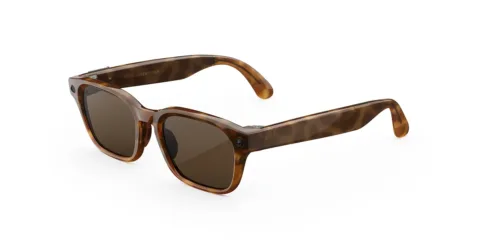
Meta also introduced Ray-Ban Meta Audio alongside the headset, a pair of AI glasses that double as open-ear Bluetooth headphones with up to 12 hours of battery life on a single charge. Japan availability for that product is also planned for 2027.
Priced Above 200,000 Yen in the US, Japan Pricing Not Yet Announced
In the United States, Meta VR Glasses is priced at 1,299.99 USD (about 205,000 yen), with prescription lens inserts sold separately. Japan pricing has not been announced as of this writing, though Meta's official site has opened email sign-ups for launch updates.
※1 USD = 158 JPY (as of September 25, 2026)
Summary
By separating the compute pack from the headset, Meta has brought Meta VR Glasses down to about 100 grams, positioning it as a device built for extended, everyday wear rather than short gaming sessions. With features spanning video, gaming, and productivity, the device is set to launch in Japan and other markets in spring 2027, and attention now turns to Meta's pending announcements on regional pricing and availability.