
Meituan, the Chinese lifestyle-services giant, has released LongCat-2.0, a large language model built for agentic coding, where the model plans and writes software on its own. It carries 1.6 trillion parameters in total, yet activates only a portion of them for each step to keep computation in check, and it can handle a context window of up to 1 million tokens. Its most striking feature is that the entire training run was carried out on domestically produced Chinese chips. This article walks through what is inside the model, how it is priced, and what it means for the industry.
The "Owl Alpha" That Had Been Topping the Charts
LongCat-2.0 was already making waves among developers before it was formally unveiled. On OpenRouter, a platform that lets users call many AI models through a single gateway, an anonymous model named "Owl Alpha" had spent about two months near the top of the usage rankings. Meituan has now revealed that Owl Alpha was in fact LongCat-2.0.
According to usage data compiled after the reveal, Owl Alpha was processing roughly 10 trillion tokens per month on OpenRouter, averaging about 559 billion tokens per day. Its volume climbed 242 percent month over month, pushing it into the global top three. That such a heavily used model kept its name and origin hidden underscores how strongly it had won developers over on both performance and cost.
1.6 Trillion Parameters, but Only a Fraction Runs
LongCat-2.0 uses a Mixture-of-Experts (MoE) design, which routes each request only to the specialized sub-networks it needs. The total parameter count is a massive 1.6 trillion, but the model actually activates about 48 billion parameters on average per token, ranging from roughly 33 billion to 56 billion depending on the complexity of the query. A "Zero-Compute Experts" scheme sends routine work through lighter paths, cutting the wasted overhead that tends to burden always-on dense models.
There is also engineering aimed at long contexts. Meituan says it adopted "LongCat Sparse Attention (LSA)," an evolution of the sparse attention mechanism used by DeepSeek, so that a 1-million-token context can be processed at a realistic computational load. The design assumes use cases such as loading an entire codebase at once and then asking the model to edit or generate against it.
Benchmarks and Aggressive Pricing
Meituan's materials report a score of 59.5 on SWE-bench Pro, which tests real software-engineering tasks, edging out OpenAI's GPT-5.5 at 58.6. On Terminal-Bench 2.1, which measures terminal operations, it scored 70.8. These figures are all vendor-published, however, and real-world usefulness varies with the task and conditions, so they should be read with third-party verification in mind.
The model is released under the permissive MIT license, which places few restrictions on commercial use, and it is being made available on GitHub and Hugging Face. API pricing is aggressive as well. The standard rate is 0.75 USD (about 120 yen) per million input tokens and 2.95 USD (about 475 yen) per million output tokens, and a limited-time discount brings those down to 0.30 USD (about 48 yen) for input and 1.20 USD (about 193 yen) for output. On top of that, any portion served from a reused context "cache" is free.
*1 USD = 161 JPY (as of July 3, 2026)
Why Training on Chinese Chips Matters
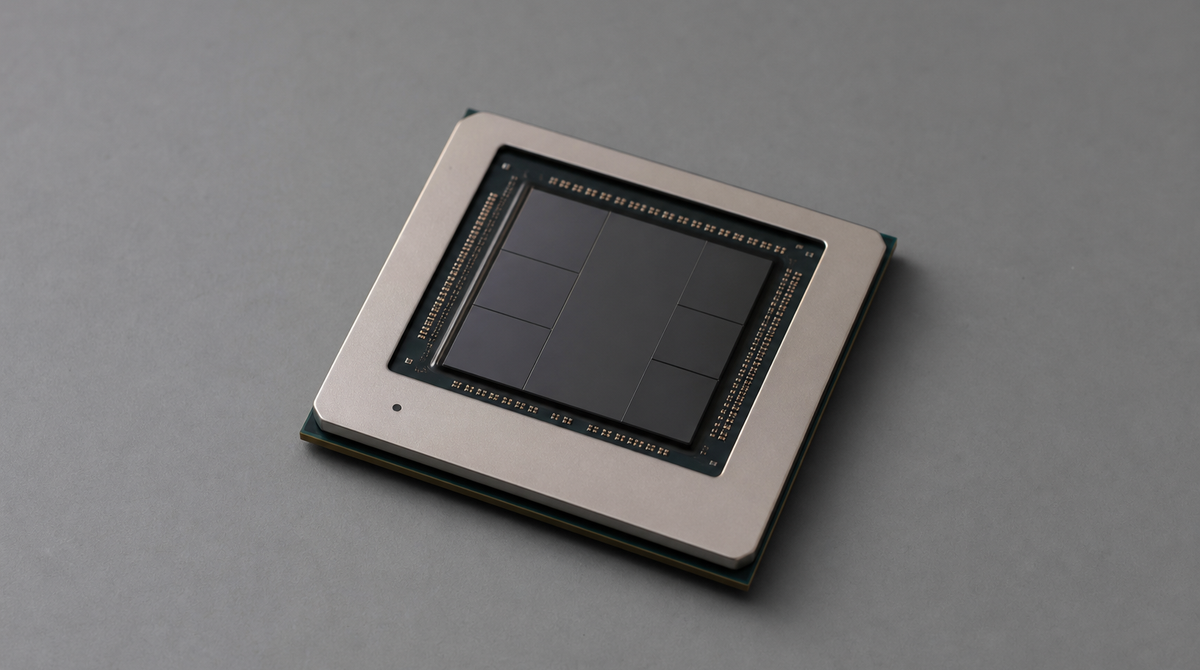
Even more than the technical details, the training setup has drawn attention. LongCat-2.0 was trained solely on a cluster of more than 50,000 domestically made Chinese AI chips (ASICs). At a time when most frontier generative-AI models rely on NVIDIA GPUs, this shows that a near-frontier model can be finished on homegrown silicon alone.
The move coincides with a period in which the United States has been tightening export controls around advanced AI. OpenAI has narrowed access to its new GPT-5.6 family, and Anthropic temporarily pulled its latest "Claude Fable 5." Some observers argue that the more access to high-performance Western models is restricted, the more room opens up for developers to shift toward affordable, high-performance Chinese open-source models. At the same time, an edge in published benchmarks does not automatically translate into an edge in production, and it will take time, including on the geopolitical front, for a settled assessment to emerge.
Summary
LongCat-2.0 is an open-source model that keeps the active portion small within a 1.6-trillion-parameter MoE structure, combining a 1-million-token context with coding performance. Its release under the MIT license, together with bold pricing that includes free cache hits, shakes up a market for autonomous software development that has been led by closed commercial models. Between that and the fact that it was trained solely on domestic Chinese chips, its trajectory is worth watching from the angles of performance, cost, and supply chains. Still, the performance picture rests mostly on the vendor's own numbers for now, so a stance of waiting for third-party verification remains essential.