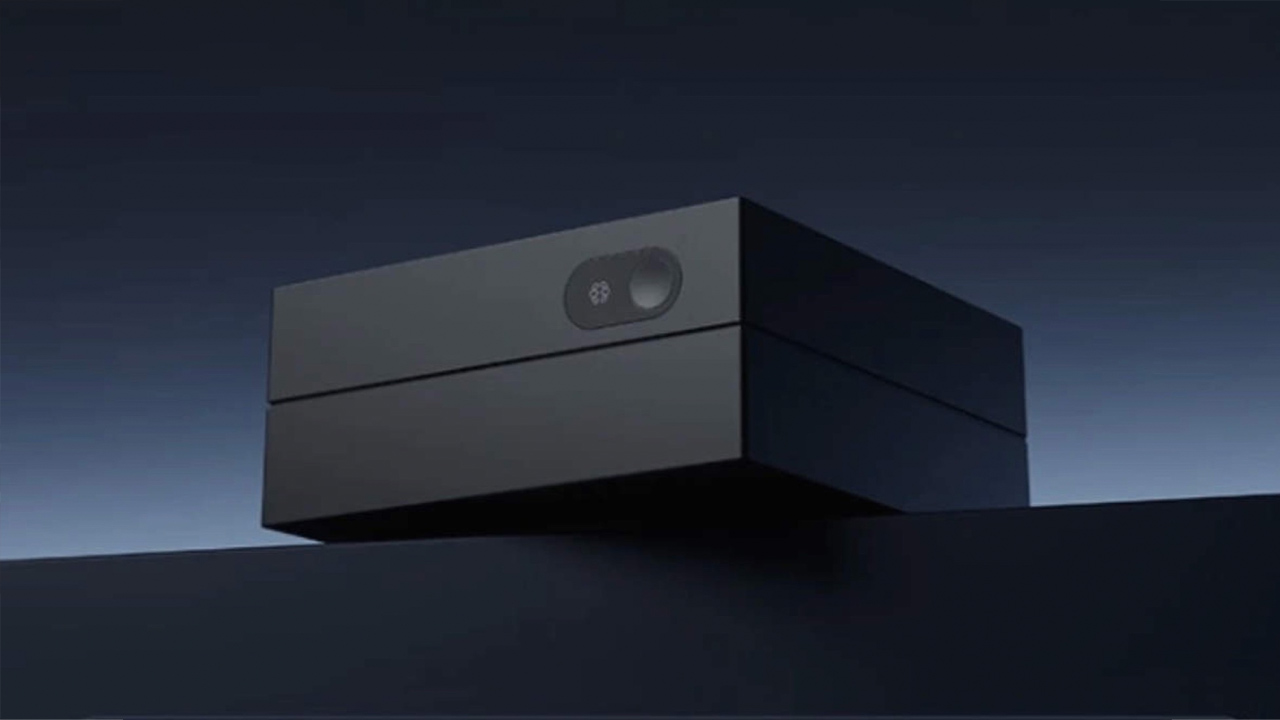
Lenovo has announced the Lenovo AI Host Mini, a tiny AI-focused mini PC for the Chinese market that fits in the palm of your hand. At just 0.48 liters in volume, it is even more compact than Apple's Mac mini. The standout feature is the chip at its heart: rather than Intel, AMD, or Qualcomm, Lenovo went with the Cixin P1, an Arm processor made by the Chinese designer Cixin (CIX). It is positioned as a personal AI computer for everyday users, a slightly different stance from the mini PCs that came before it.
A 0.48-liter chassis smaller than the Mac mini
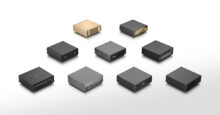
The unit measures roughly 100 x 100 x 48.65 mm and weighs about 0.373 kg, small enough to sit in the corner of a desk or on a shelf without getting in the way. At 0.48 liters, it is a notch smaller than the Mac mini, which is often cited as the benchmark for compact desktops. The plain black box looks unremarkable from the outside, but what matters here is what is inside.
Lenovo frames the device not as an experimental box for developers but as a "personal AI computer" for ordinary consumers. The idea is to run AI features locally in a small box on your desk, without leaning on the cloud.
At its core: the China-made Arm chip Cixin P1
The system-on-chip is the Cixin P1 (CD8180), an Arm-architecture processor built on a 6 nm process. It pairs a 12-core CPU with Arm's newer 10-core Immortalis-G720 graphics, and adds an NPU for AI work, for a total of 45 TOPS of AI compute that Lenovo advertises. TOPS, or trillion operations per second, is a measure of raw AI throughput: the higher the figure, the easier it is to handle tasks such as image recognition or generative AI on the device itself.
What stands out is the choice of a homegrown Arm chip over Intel's x86 or the mobile silicon from Qualcomm and MediaTek. The Cixin P1 has been showing up in more Arm-based mini PCs lately, with the same family of chip appearing in Minisforum's MS-R1 and the Orange Pi 6 single-board computer. The AI Host Mini sits within this broader shift, as Arm chips built with AI in mind start to offer a fresh alternative in a mini PC world long dominated by x86.
Memory is 8 GB of LPDDR5-6000, and storage is a 256 GB SSD. On paper, that points to an entry-level box for trying out local AI rather than a workstation-class machine. The rear panel carries two USB-C ports, four USB-A ports, 2.5 Gbit/s wired LAN, plus HDMI 1.4 and DisplayPort 1.4 for connecting monitors and peripherals.
A software platform that grows through Skills
On the software side, Lenovo combines Ubuntu Linux with its own platform called Tianxi Claw. Users scan a QR code with a smartphone to set the device up, then add AI capabilities in units called "Skills."
More than 20 Skills are available out of the box, and over 8,000 more can be added from a dedicated marketplace. In keeping with its domestic focus, the device is designed to work with services such as QQ, WeChat, and Feishu. Lenovo says it has enough horsepower to run multiple AI agent instances at once, allowing a single box to be shared among several users. The idea of adding Skills to expand what the device can do feels much like installing apps on a smartphone.
Price, release, and an undecided global rollout
The Lenovo AI Host Mini goes on sale in China on July 1, 2026. It is priced at CNY 2,999 (about 71,000 yen), and only one configuration, with 8 GB of memory and a 256 GB SSD, is offered. The fact that it is close to the Mac mini in size yet cheaper is likely to draw attention.
For now, however, this is a China-only announcement, and there is no official word on an international launch. Because the software platform is so closely tied to Chinese services, it remains to be seen whether the device will roll out abroad as is, or with a reworked specification. *1 CNY = about 23.8 JPY (as of June 19, 2026)
Summary
The Lenovo AI Host Mini packs a China-made Arm chip, the Cixin P1, and 45 TOPS of AI performance into a 0.48-liter chassis smaller than the Mac mini, all under the banner of a personal AI computer. From the Skills-based software platform that lets you expand its features to the CNY 2,999 (about 71,000 yen) price tag, it clearly reads as an entry-level box for running AI at home. It launches first in China on July 1, and the questions to watch next are whether it will ever reach overseas buyers, and how far mini PCs built on the same Cixin-family chips will spread.