Huawei has unveiled its next operating system, HarmonyOS 7, at its developer conference. The highlights are a new glass-like design that emphasizes on-screen depth, an "agentic AI" that acts more autonomously, and a dedicated set of features for stopping fraud before it happens. The release spans not only smartphones but also tablets, PCs, wearables, and IoT devices. A developer beta is available the same day, with the finalized version arriving this fall.
A New "Spatial Design" Changes the Look First
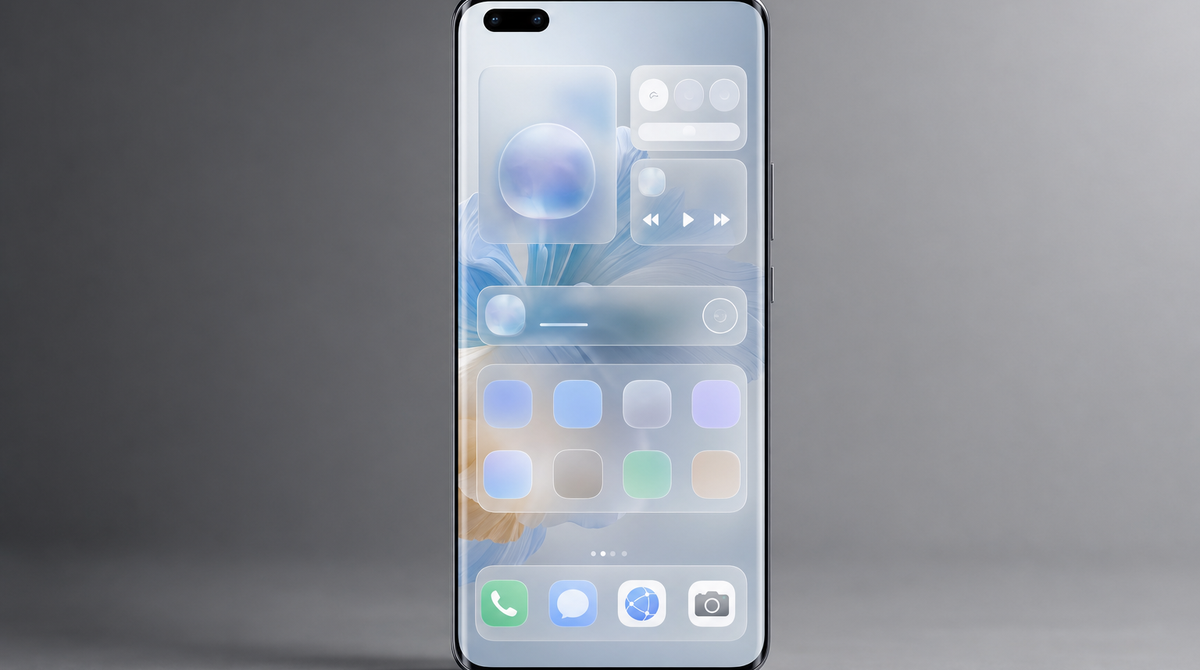
The first thing you notice in HarmonyOS 7 is the new "spatial design" that runs throughout the system. Wallpapers, buttons, and sliders gain depth and lighting effects through software rendering, taking on a look as if layers of translucent glass were stacked on top of one another. On the lock screen in particular, photos and scenery are presented with a three-dimensional feel, and the display reacts to finger movement and the way the device is tilted.
This direction closely resembles the translucent, depth-focused interface that Apple rolled out earlier, and several outlets have described it as a redesign that is clearly conscious of Apple. Even with the fresh look, the basic feel of operating the system stays close to before, which should make it easier for existing users to adapt.
"Agentic AI" Woven into the OS
HarmonyOS 7 makes a point of building AI into the core of the operating system rather than treating it as an add-on inside apps. The standard AI assistant now supports a wider range of in-app actions and can carry a user's instructions through to completion by voice alone. Rather than simply answering questions, it takes on the character of an "agent" that handles multi-step tasks on the user's behalf.
The foundation for this is the newly introduced "HarmonyOS Intelligent Agent Framework 2.0." Huawei describes the mechanism as "intent as a service," in which the system reads a user's intent and delivers it as a service, and the company claims a task success rate of more than 90 percent. New AI photo-editing features that let you retouch images with natural language were also added.
Anti-Fraud Defenses Built on Six Features
On the practical side, the dedicated anti-fraud platform stands out. HarmonyOS 7 can detect suspicious QR codes, warn about fake apps impersonating legitimate ones, block fraudulent websites, and identify spoofed international phone numbers. On top of that, it adds AI-based voice scam detection that can spot fraudulent exchanges in real time during a call.
As scams and phishing grow more sophisticated, a design in which the OS itself blocks danger at the entry point translates directly into day-to-day peace of mind. It is a quiet but high-value upgrade that benefits everyone who uses the device.
15% Faster Performance, Arriving This Fall
Perceived performance gets a lift, too. Huawei says HarmonyOS 7 runs up to 15 percent faster than the previous HarmonyOS 6.1 and has been tuned so that the system does not feel increasingly sluggish over long-term use. Expect smoother responsiveness when launching apps and playing games.
The rollout is phased. A developer beta for eligible smartphones begins on the day of the conference, while the general release for everyday users is expected this fall. The gap between announcement and final availability is, fittingly, reminiscent of a major manufacturer's update cycle.
Summary
HarmonyOS 7 is a major update built on three pillars: a glass-like design that emphasizes depth, an agentic AI woven into the OS, and anti-fraud protection anchored by six features. Performance also improves by 15 percent, aiming for a consistent experience from smartphones to home devices. The developer beta is out the same day, with the finalized version this fall. The points to watch from here are how it actually feels on real hardware and whether the AI and anti-fraud features live up to the claims.