At its annual developer event, Google I/O 2026, Google made a wide range of announcements spanning new AI models, a reimagined Search, and stronger developer platforms[1]. The company published its customary list of 100 highlights, and this article organizes the major topics from it[1]. The theme running through this year's I/O is clear: pushing AI beyond a tool toward agents that act on your behalf.
New Model "Gemini 3.5" and Video Model "Gemini Omni"
Two new models took center stage. The first is Gemini 3.5, the latest family that Google describes as "combining frontier intelligence with action." As its first release, the lightweight and fast 3.5 Flash became available the same day[1]. According to Google's own figures, 3.5 Flash outperforms the higher-tier Gemini 3.1 Pro on coding and agentic benchmarks, scoring 76.2 percent on Terminal-Bench 2.1 and 83.6 percent on MCP Atlas, and reaching 1656 Elo on the agent-focused GDPval-AA[1]. The higher-end "3.5 Pro" is already in internal use, with a rollout planned for the following month[1]. It is worth keeping in mind that these numbers are all figures published by Google itself.
The second is Gemini Omni, a new model that can create output from any input[1]. It starts with video output, combining images, audio, video, and text to generate videos grounded in Gemini's knowledge[2]. It also supports conversational video editing, and the first release, "Gemini Omni Flash," is rolling out to paid subscribers through the Gemini app and Google Flow, while also being available to try at no cost in YouTube Shorts Remix[1]. Videos created this way carry the SynthID digital watermark that indicates AI generation[1].
A Reimagined Search and the New "Information Agents"
For Search, Google announced its biggest Search box upgrade in over 25 years[1]. In addition to text, the new Search box accepts images, files, videos, and Chrome tabs as input and can reason across all of them, rolling out worldwide[2]. AI Mode, described as the most capable AI Search, has surpassed 1 billion monthly users, and its default model has been updated to Gemini 3.5 Flash[1].
Google also introduced "information agents," which let you create and manage multiple AI agents inside Search[1]. These agents monitor across blogs, news, and real-time information on finance, shopping, and sports, then deliver a synthesized summary of changes on topics you care about, with a rollout to paid subscribers first this summer[1]. For shopping, a "Universal Cart" lets you add products from Search, Gemini, YouTube, or Gmail, and automatically tracks prices and stock alerts[1].
A Redesigned Gemini App and Support for Work and Creativity
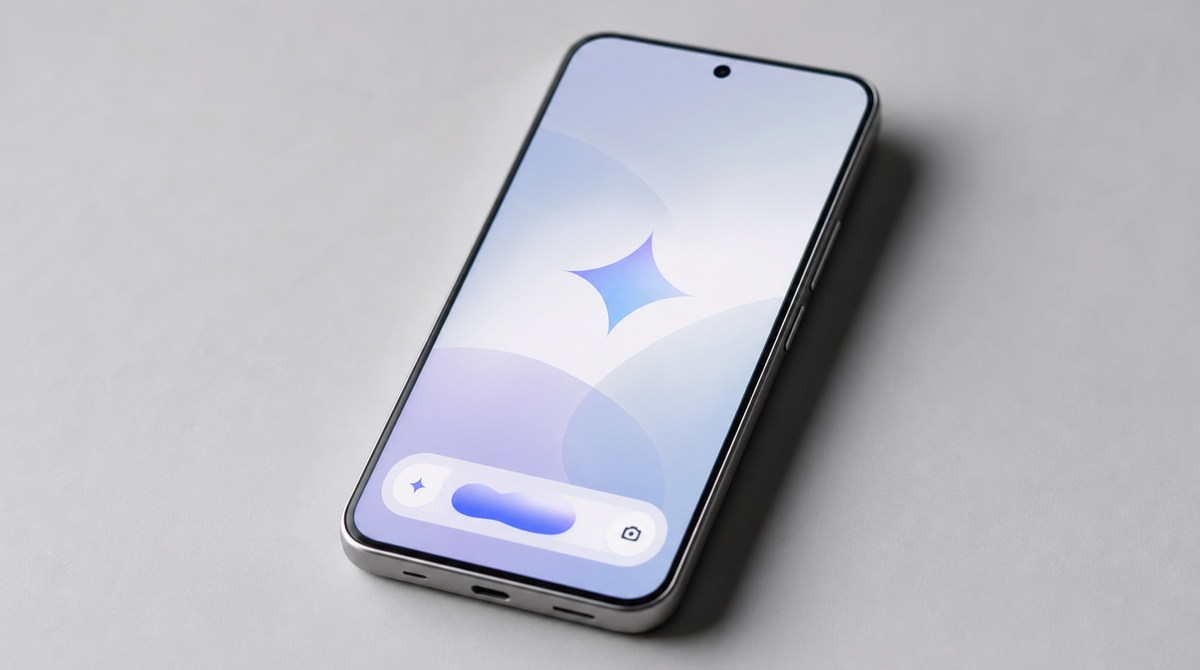
The Gemini app has been redesigned around a new look called "Neural Expressive," shifting from showing answers all at once to presenting them step by step with interactive images and timelines[1]. Google also introduced "Gemini Spark," a 24/7 personal agent, and "Daily Brief," which analyzes your inbox and calendar to summarize the day's key points[1].
Support for work and creativity expanded as well. In Gmail, "AI Inbox," which surfaces what matters most, is reaching more subscription tiers, while the image creation and editing tool "Google Pics" and the voice-driven document tool "Docs Live" roll out over time[1]. The video creation tool Google Flow also gained a multi-step "Flow Agent"[1].
Expansion of the Developer Platform "Google Antigravity"
For developers, the agent-first development platform Google Antigravity was significantly expanded[1]. The standalone desktop app "Antigravity 2.0" lets you run multiple agents in parallel, so one can write code while another generates brand assets[1]. The terminal-oriented "Antigravity CLI" and the "Antigravity SDK" for running agents on your own infrastructure also debuted, and Google is encouraging migration from the Gemini CLI to the Antigravity CLI[1].
For developers and power users, Google announced a new AI Ultra plan at 100 USD (about 16,000 yen) per month[1]. It includes five times the usage limits of the AI Pro plan and 20TB of cloud storage[1]. A hackathon with a total prize pool of 2 million USD (about 320 million yen) was also announced, which Google says is its largest hackathon ever[1]. ※1 USD = 159 JPY (as of May 31, 2026)
Science, Learning, Android XR, and Content Provenance
In research, Google announced "Gemini for Science," which supports everything from tracking papers to generating hypotheses, along with "Science Skills," which connects to more than 30 life science databases and tools[1]. On the learning side, a conversational search experience called "Ask YouTube" is being introduced as an experiment[1].
In wearables, "intelligent eyewear" was presented as the next milestone for Android XR[1]. Audio glasses that offer spoken assistance are due this fall, developed in partnership with Gentle Monster, Warby Parker, and SAMSUNG, and compatible with both Android and iOS[1].
The SynthID watermark for verifying the provenance of AI-generated content was also strengthened, reportedly used 50 million times globally so far[1]. Verification is being added to Search and Chrome so you can ask whether something was made with AI, and other companies such as OpenAI and ElevenLabs are adopting SynthID technology as well[1].
Summary
Google I/O 2026 lined up announcements centered on two new models, Gemini 3.5 and Gemini Omni, extending AI as an agent that acts on your behalf across Search, shopping, work, development, and science[1]. Many features are only just launching or are slated for this summer and beyond, so their real-world usability remains to be seen. Given that many of the announced performance figures come from Google itself, it is worth waiting for further verification.
Source:https://blog.google/innovation-and-ai/technology/ai/google-io-2026-all-our-announcements/
Source:https://blog.google/innovation-and-ai/technology/ai/io-2026-keynote-moment-videos/