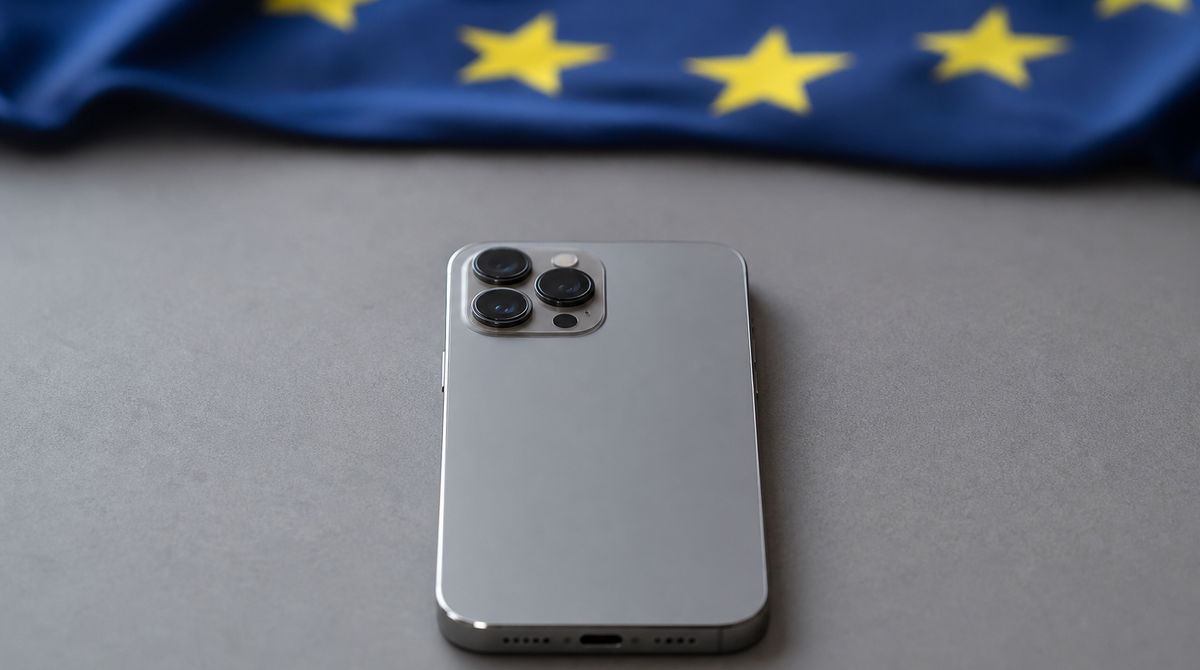
Apple has unveiled Siri AI, a new generation of Siri built on Apple Intelligence, but it will hold off on bringing Siri AI to iOS 27 and iPadOS 27 in the European Union (EU) for now, after failing to reach an agreement with regulators over the Digital Markets Act (DMA)[1]. Within the EU, Siri AI will still arrive on macOS 27 and visionOS 27, but it will be unavailable on iPhone (iOS 27) and iPad (iPadOS 27), as well as on Apple Watch (watchOS 27)[1].
Siri AI Put on Hold for iPhone and iPad in the EU
Siri AI is a new-generation, highly conversational assistant powered by Apple Intelligence. It can search for information across Messages, email, and photos, answer questions on a wide range of topics, and carry out actions within apps[1]. What this announcement makes clear is that users on iPhone (iOS 27) and iPad (iPadOS 27) in the EU will not be able to use Siri AI when those releases roll out later this year[1].
The features that will be unavailable include the dedicated app for reviewing conversation history, the expanded visual intelligence experience, integrated writing tools, and the Siri mode in the Camera app — in short, the full set of Siri AI features shown at WWDC26[1]. Within the same EU region, however, Siri AI will be offered on macOS 27 and visionOS 27. Using Siri AI on watchOS 27 requires pairing with an iPhone that has Siri AI enabled, so EU users will not be able to use it on watchOS 27 either[1]. Developers based in the EU will also be unable to test or use the new Siri AI features for apps on iOS 27, iPadOS 27, and watchOS 27[1].
The Reasons Apple Gives for the Delay
Apple attributes the delay to its conclusion that the requirements regulators derive from the DMA would, in fact, put users' safety at risk[1]. According to Apple, under regulators' interpretation, offering Siri AI would mean it must simultaneously open up functions such as direct access to users' private data and control over installed apps to any virtual assistant — without the protections that would normally be required[1].
Granting AI near-unlimited access of this kind, Apple warns, creates the risk that personal data such as passwords and photos could be stolen if an AI system is hijacked, or that settings could be changed without the user's consent. The company notes that security researchers have already demonstrated such techniques[1].
As a remedy, Apple says it designed an intermediary mechanism called Trusted System Agent that would let other assistants securely access the same capabilities as Siri AI, and proposed a plan to bring Siri AI to the EU while rolling the system out in stages over 18 months. The European Commission, however, did not accept this, and Apple says the Commission agreed to none of the proposals it put forward[1]. Craig Federighi, Apple's senior vice president of Software Engineering, commented that it is deeply disappointing not to be able to deliver Siri AI to EU users, while adding that Apple will continue to work with regulators toward a path forward[1].
What the Digital Markets Act (DMA) Is
The Digital Markets Act is an EU regulation aimed at curbing the strong market power held by large technology companies and at promoting competition. It designates platform operators above a certain scale as "gatekeepers" and imposes obligations such as prohibiting them from favoring their own services and ensuring interoperability with competing third-party services. The stated goal is to keep users free to choose the services they want and to open fair opportunities to new entrants.
The point of contention here lies precisely in this idea of interoperability. Regulators appear to take the position that a feature should not be available only to the company that built it, and that rival assistants should be granted equivalent access. Apple counters that the way this opening is required goes too far and ends up undermining user safety. Over the very same law, the regulators who prioritize fair competition and Apple, which puts privacy and security front and center, are arriving at sharply opposing assessments.
Impact on Users and the Road Ahead
Those directly affected by the delay are users of iPhone and iPad across the EU's 27 member states[1]. In those countries, even after iOS 27 and iPadOS 27 ship later this year, the headline Siri AI features will remain unavailable for the time being. Since Siri AI is available on Mac and Apple Vision Pro, people who use several devices together may find the inconsistent availability inconvenient.
Apple says it will keep looking for a way to offer these features safely, but that for now there is no timeline for bringing Siri AI to iOS and iPadOS in the EU[1]. Unless the standoff over where to draw the line between regulation and safety is resolved, there is little visibility into when EU iPhone users will get to try Siri AI. Outside the EU — including Japan — the rollout is expected to proceed as announced, leaving the experience to differ from region to region.
Summary
Even as Apple announced its new Siri AI, its dispute with regulators over the DMA means it will hold off, for now, on offering the feature on iOS 27 and iPadOS 27 within the EU[1]. Apple cites safety as its reason, while the European Commission emphasizes building a competitive environment, and the two sides' arguments are not meeting in the middle. It is a case that once again raises the question not only of how new features evolve, but of the rules under which they are delivered.
Source: https://www.apple.com/jp/newsroom/2026/06/due-to-dma-siri-ai-delayed-in-eu-for-ios-27-and-ipados-27/