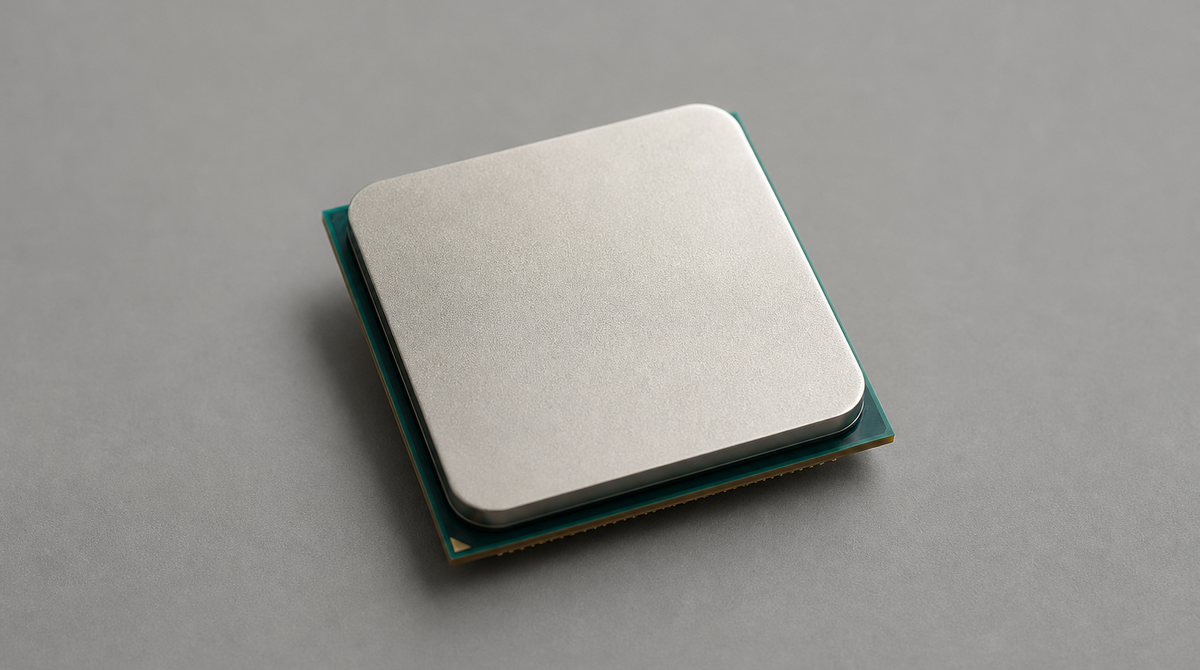
On March 2, 2026, timed with Mobile World Congress 2026 in Barcelona, Spain, AMD announced its desktop processor lineup, the "Ryzen AI 400 Series" and "Ryzen AI PRO 400 Series." The biggest headline is that these are the world's first desktop CPUs to qualify for Microsoft's Copilot+ PC program. They cram Zen 5 cores, RDNA 3.5 integrated graphics, and an XDNA 2 NPU rated at up to 50 TOPS into a single package, and they drop straight into existing AM5 motherboards — a combination that has caught the attention of DIY PC builders and OEMs alike.
First Copilot+ for Desktop, with an On-Package NPU That Works on AM5
Copilot+ PC is the certification tier Microsoft hands out to PCs equipped with an NPU rated at 40 TOPS or higher. Until now it has been limited to laptops powered by Snapdragon X Elite, Intel Core Ultra (Lunar Lake), or AMD's own Ryzen AI 300 Series. The Ryzen AI 400 Series clears that NPU performance bar and becomes the first desktop platform to earn Copilot+ certification. Because the NPU runs on-device at all times, things like image generation, audio transcription, real-time translation, and local LLM inference can be handled without leaning on the cloud — a benefit that enterprise users especially value, since sensitive data can stay inside the company.
The PRO 400 Series stacks AMD PRO technologies (security and management features) on top for business buyers. Lenovo, HP, and other OEMs are scheduled to ship Ryzen AI 400 desktops in waves from the second quarter of 2026 onward.
Sources: AMD official press release (https://ir.amd.com/news-events/press-releases/detail/1281/amd-gives-consumers-and-businesses-more-ai-pc-options-with-expanded-ryzen-ai-400-series-portfolio) / Tom's Hardware (https://www.tomshardware.com/pc-components/cpus/amds-ryzen-ai-400-series-includes-the-first-copilot-desktop-cpu-team-red-refreshes-zen-5-apus-and-strix-halo)
Key Desktop SKUs and Specs
Every desktop SKU launched this round combines Zen 5 cores, an RDNA 3.5 iGPU, and an XDNA 2 NPU, split between 65 W "G" models and 35 W "GE" models. The main models disclosed at announcement are as follows.
The Ryzen AI 7 PRO 450G / 450GE is an 8-core, 16-thread part with a max boost of 5.1 GHz and Radeon 860M graphics. The Ryzen AI 5 PRO 440G / 440GE is a 6-core, 12-thread design with Radeon 840M, and the Ryzen AI 5 PRO 435G / 435GE sits below it as a lower-clocked, more power-efficient variant of that 6-core configuration. The NPU is rated at 50 TOPS across the lineup, comfortably above the 40 TOPS Copilot+ threshold. On the platform side, the chips support PCIe 5.0 and DDR5 memory, and existing AM5 motherboards are expected to work after a BIOS update.
Sources: TechPowerUp (https://www.techpowerup.com/346918/amd-launches-ryzen-ai-400-series-processors-for-mobile-and-desktop) / Wccftech (https://wccftech.com/amd-ryzen-ai-400-desktop-apus-8-cpu-gpu-cores-50-tops-am5-socket-official/)
Benchmarks vs. Intel Core Ultra: AMD Is Bullish
Alongside the launch, AMD released benchmark numbers for its high-end mobile parts compared with Intel Core Ultra. The company says the Ryzen AI 9 HX PRO 470 is up to 30 percent faster in multithreaded performance than the Intel Core Ultra X7 358, and that running the flagship Ryzen AI 9 HX 470 at 28 W versus an Intel Core Ultra 9 288V at 30 W yields a 1.3x lead in multitasking, 1.7x in content creation, and 1.1x in gaming.
On the NPU side, the flagship Ryzen AI 9 HX 475 hits up to 60 TOPS, which AMD pitches as roughly 20 percent ahead of Intel's mainstream Panther Lake parts that top out around 50 TOPS. The desktop SKUs settle for 50 TOPS, but that is still enough to clear the Copilot+ bar, and third-party evaluations report scores 15 to 20 percent higher than the Intel Core Ultra 9 288V on integer-quantized tasks.
Sources: Neowin (https://www.neowin.net/news/amd-touts-blazing-windows-11-performance-benchmarks-on-ryzen-ai-400-series-vs-intel/) / Notebookcheck (https://www.notebookcheck.net/AMD-launches-Ryzen-AI-400-desktop-processors-with-up-to-50-TOPS-NPU-and-Copilot-support.1239340.0.html)
A Few Caveats Worth Noting
Expectations are high, but there are caveats worth keeping in mind. First, the desktop SKUs are OEM-only for now — there are no plans for retail boxed sales into the DIY market. Distribution will run through prebuilt machines from the likes of HP and Lenovo, so DIY enthusiasts will have to wait a bit longer to take advantage of Ryzen AI 400 directly. Notebookcheck has also analyzed the Ryzen AI 400 (codename Gorgon Point) as showing "relatively small gains over the current generation, with a modest pure CPU generational jump," which may leave users who care strictly about raw CPU performance feeling underwhelmed.
The 50 TOPS NPU does meet the Copilot+ entry requirement, but for practical workloads such as local LLMs, VRAM capacity and iGPU compute also matter — so it is wise to hold off on judging the actual application experience until real-world benchmarks land.
Sources: Notebookcheck Performance Analysis (https://www.notebookcheck.net/AMD-Ryzen-AI-400-Performance-Analysis-Gorgon-Point-debuts-with-only-minor-improvements.1211982.0.html)
Wrap-up
The Ryzen AI 400 Series is a symbolic launch — the moment Copilot+ arrives on the desktop. By leveraging the AM5 platform it lets users keep their existing investments, by integrating NPU and iGPU into a single socket it broadens the options for mini PCs and small-form-factor builds, and by going on the offensive against Intel on both NPU and overall performance it looks set to shake up the AI PC market in the second half of the year. The OEM-only start is a constraint, but the first thing to watch is how far the HP and Lenovo desktops arriving in Q2 2026 can stretch this silicon's potential.