Alibaba began offering its video generation model Wan3.0 on August 24, 2026. A single pass produces clips of up to 30 seconds at resolutions up to 1080p. Inputs are not limited to text and images: hand it a PDF, a slide deck, or a spreadsheet and it returns a video. And one more thing has changed. The open weights that defined the series are not part of this release.
The 15-second ceiling moved to 30 seconds
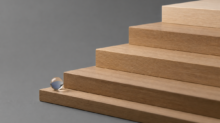
The clearest change in Wan3.0 is how long a single generation can run. Its predecessor, Wan2.7, capped output at 15 seconds. Wan3.0 doubles that to 30 seconds in one pass. Resolution goes up to 1080p, and Alibaba says character detail, spatial layout, and motion stay consistent across the full clip.
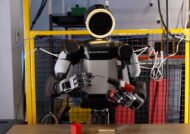
The weak point of video generation models has always been that faces and clothing drift as the clip gets longer. Being able to generate a long clip and being able to generate a long clip that holds together are two different problems. Alibaba claims Wan3.0 addresses this, and adds synchronized micro-expressions on faces along with multilingual voice output.
None of this has been independently benchmarked yet. Every figure comes from the developer, so real quality can only be judged by using it.
Feeding it the documents you already have
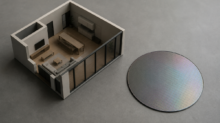
The range of accepted inputs is the other headline. Text, images, audio, and video are supported, and so are web pages and documents. Pass in a PDF, a PowerPoint file, or spreadsheet data, and the model builds a video out of the contents.
It is clear who this is aimed at. Teams that want to turn an existing proposal or earnings deck into a short explainer, which in practice means marketing and corporate communications. For anyone used to planning a structure, gathering assets, and opening an editor before a single frame exists, the starting point shifts to the material already sitting on the drive.
That cuts both ways. If a document can become a video as-is, so can its rough edges. Tools like this tend to produce better results when the source document is well organized, and Wan3.0 is unlikely to be the exception.
0.2 USD per second, compared with Veo 3.1
Pricing is set per resolution. 480p costs 0.05 USD (about 8 yen) per second, 720p costs 0.10 USD (about 16 yen), and 1080p costs 0.20 USD (about 32 yen). A minute at 1080p works out to 12 USD (about 1,900 yen), and a full 30-second clip comes to 6 USD (about 950 yen).
※1 USD = 159 JPY, 1 CNY = 23.7 JPY (as of August 24, 2026)
The usual point of comparison is Google's Veo 3.1, whose standard service runs 0.40 USD (about 64 yen) per second. On raw per-second cost, Wan3.0 at 1080p lands at half that. Generative video burns money on every attempt, so the gap translates directly into how many attempts are affordable. If the workflow involves regenerating repeatedly until something lands, the lower unit price is easy to feel.
Access requires an application through Model Studio or Qwen Cloud, so it is not open to everyone on day one. A consumer-facing site is planned at wan.video, and that is described as members-only as well.
Choosing not to release the weights
The Wan series built its following by publishing model weights. Being able to pull a model onto your own hardware and modify it was the reason to choose it. Wan3.0 breaks from that: the weights stay closed and the model is delivered as a cloud service.
Monetization is the reason. Open releases grow a brand and a user base, but they do not bring in revenue directly. With development costs climbing, Alibaba has picked billing over distribution. The same call is being made elsewhere, and the line between open and closed tends to move earlier as capability increases.
The Wan3.0 announcement landed right after a 10.2 billion USD (about 1.6 trillion yen) share placement in Hong Kong. The proceeds are earmarked for AI investment, and this release puts a concrete product behind that stated direction.
The financials explain the urgency. For the quarter ending June 2026, cloud and AI revenue grew 45 percent year over year to 48.44 billion CNY (about 1.15 trillion yen). Quarterly net profit, meanwhile, fell 75 percent, because capital expenditure swelled to 67.68 billion CNY (about 1.6 trillion yen).
In early 2025 Alibaba committed 380 billion CNY (about 9 trillion yen) to AI infrastructure over three years, and reports suggest that figure may rise to 480 billion CNY (about 11 trillion yen). Revenue climbing while profit falls is a picture of how expensive the entry ticket to the AI race has become. Shipping Wan3.0 as a paid cloud service, with the weights closed, is hard to separate from that balance sheet.
Summary
Wan3.0 is Alibaba's new video generation model, producing 30-second clips at up to 1080p in a single pass. The ability to feed it PDFs and slide decks looks like the feature that matters in practice, and 0.20 USD per second at 1080p undercuts Google's Veo 3.1 by half. The performance claims remain unverified by third parties, and the weights are now closed. It is a clear signal that a series built on openness has entered its monetization phase.