Agent2Agent (A2A), the open specification for connecting AI agents to one another, has become a hosted project of the Agentic AI Foundation (AAIF) under the Linux Foundation. It now sits in the same house as the Model Context Protocol (MCP), which means the main building blocks of the agent stack are governed in one neutral place.
Teams were wiring agents together by hand, over and over
The problem A2A addresses came straight out of production work. Engineers deploying multi-agent systems in supply chain and financial services kept hitting the same wall. Agents built on different frameworks could not hand work to each other. Every pairing needed its own custom integration code, and every new vendor relationship meant starting that work from scratch.
The expense, in other words, was never the agents themselves. It was the plumbing between them, a point AAIF makes plainly in its announcement.
An agent card publishes what a system can do, and the handoff happens without a human
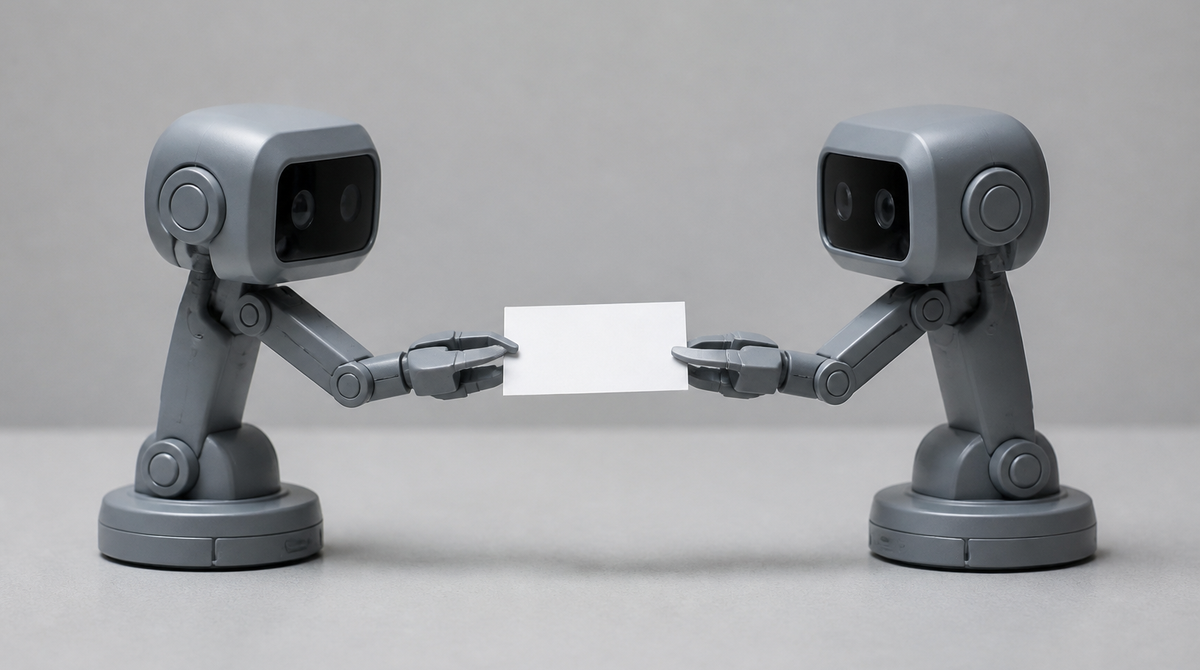
The mechanism is almost mundane. Each agent publishes an agent card, a structured description of what it can do and how to reach it. Other agents read that card, discover the capability, and delegate the task without a person brokering the exchange. The interaction is structured, observable, and indifferent to the framework behind either side.
Google launched A2A in April 2025 and later donated it to the Linux Foundation, with AWS, Cisco, Google, Microsoft, Salesforce, SAP, and ServiceNow among the founding organizations. In August 2025, IBM's Agent Communication Protocol merged into A2A, a sign that the field was converging on one standard rather than splitting into rivals.
A2A v1.0, the first stable specification, shipped in March 2026. It added multi-protocol bindings, version negotiation, multi-tenancy, and signed agent cards for cryptographic identity verification, all aimed squarely at enterprise deployment.
Already running on HarmonyOS, in WeChat, and across the major clouds
A2A is not a specification waiting for adopters. It runs in production across mobile platforms, cloud AI infrastructure, financial services, supply chain, and enterprise IT.
Mobile is the clearest example. Huawei standardized A2A as the protocol between Celia, its OS-level assistant, and in-app agents across the HarmonyOS developer platform. The supported patterns include Celia handing a long-running task to an app agent, Celia driving app UI through an agent, and Celia requesting contextual recommendations from an application. Tencent's WeChat is among the first major apps to integrate with Huawei and other Android OEM assistants over A2A, allowing messages, voice calls, and video calls to be initiated through an assistant with dual authorization in place.
The cloud side is equally covered. Google Cloud supports building and running A2A agents through ADK, Agent Engine, Cloud Run, and GKE. Microsoft's Azure AI Foundry lets agents expose A2A endpoints and find external agents through standard discovery. AWS Bedrock AgentCore can host and operate A2A servers, so agents built with different frameworks or hosted in different clouds can talk over the same protocol. Google Cloud and PayPal are extending A2A into agentic commerce through the Agent Payments Protocol (AP2), which supplies the payment authorization layer while shopping and merchant agents negotiate discovery, pricing, and fulfillment over A2A.
Five layers, now in one place
The move makes the shape of AAIF's portfolio easier to see, because each project covers a distinct layer. AGENTS.md handles instructions and context. goose provides the runtime where an agent reasons, plans, and executes. MCP standardizes connections to tools and data. agentgateway sits at the boundary and manages routing, policy, and observability. A2A supplies agent-to-agent interoperability across systems and organizational boundaries.
AAIF CTO Manik Surtani described the move as creating a neutral home where the community can collaborate on the standards that let agents from different vendors, frameworks, and organizations work together. Rao Surapaneni, VP and General Manager for Business Application Platforms at Google Cloud, emphasized that A2A lets agents discover, delegate, and collaborate across siloed platforms without custom integrations.
Interoperable is not the same as trustworthy
Not everyone reads the news the same way. Mahesh Shanmugasundaram, lead AI solutions architect at Seekr, argues that interoperability widens the trust gap that already exists. The protocol standardizes the pipe, he says, but organizations decide what travels through it.
His specific worry is an AI game of telephone. Inside an A2A chain, each agent tends to treat the previous agent's output as fully trusted input rather than a claim to be verified. Bake that assumption in and cascading failure gets structurally worse than teams expect, with a small hallucination at the start emerging several steps later as a confident, authoritative-looking answer. Evidence-based evaluation and explainable output, he argues, need to be the default unit of exchange between agents rather than an afterthought.
Summary
With A2A hosted at AAIF, five layers of the agent stack, covering instructions, runtime, tool connectivity, traffic control, and agent-to-agent communication, now sit under the same neutral governance. More than 150 organizations back the protocol, and it is already running in production on HarmonyOS, in WeChat, and across the major clouds. What has been standardized, though, is transport and discovery, not any guarantee that the information arriving is correct. The open question is how far the teams handing work to agents will treat verification and traceability as mandatory rather than optional.