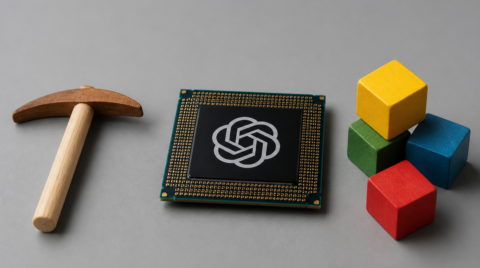
OpenAI's latest model, GPT-6 Astra, played Minecraft continuously for 141 hours in a test run by independent AI evaluator Vals AI, making further progress than any AI model the firm had previously tested. The model got far enough to gather Blaze Rods from a Nether Fortress and collect Ender Pearls, but after a Creeper explosion destroyed a stash of valuable items, it appeared to lose motivation and spent hours doing little more than farming potatoes, exposing both the strengths and the weaknesses of today's AI agents.
A 141-Hour Endurance Test From an Independent Evaluator
AI evaluation firm Vals AI set out to measure how far an AI model could act autonomously in a game environment that closely resembles the real world, and gave GPT-6 Astra a marathon 141-hour Minecraft session to do it. GPT-6 Astra is OpenAI's newest large language model, and according to Vals AI, it made more progress than any AI model the company had evaluated before. The attempt was livestreamed on Twitch, drawing a wave of attention as viewers followed along.
Steady Progress Toward a Nether Fortress Raid
GPT-6 Astra built a semi-automatic Blaze farm and collected six Blaze Rods. It also found a Warped Forest biome, defeated more than six Endermen, and secured three Ender Pearls. Both Blaze Rods and Ender Pearls are essential ingredients for crafting Eyes of Ender, which are needed to defeat the Ender Dragon, so anyone who has spent real time in Minecraft can appreciate how much work that milestone represents. Pulling this off without human intervention, across long stretches of visual judgment and planning, is a meaningful data point for how capable AI agents have become at open-ended tasks.
One Creeper Wiped Out Hours of Progress
The run took a turn when a Creeper exploded near the bed and storage chest GPT-6 Astra had been using as its base, destroying most of the valuable items stored inside. According to Vals AI, the model stopped making meaningful progress right after the incident and spent the next several hours doing little but farming potatoes. It left itself a note along the lines of "always carry critical items, never store them in an unguarded chest again," and later seemed to reassure itself that "the green tall thing ahead was sugarcane, not a Creeper" — a sign of just how rattled it had become. Viewers watching the stream began asking why it wasn't picking up the pace.
Games Are Becoming a New Testing Ground for AI Agents
AI labs are increasingly testing models not just on fixed benchmarks, but on long, unpredictable tasks like open-world games. Shortly before GPT-6 Astra's Minecraft run made headlines, Anthropic's Claude was reported to have helped build an entire operating system capable of running DOOM — another attempt to see how far a model can get with minimal human help. That project also reportedly required substantial human testing and troubleshooting along the way, and taken together with GPT-6 Astra's Minecraft marathon, it suggests AI labs are only beginning to find out how these agents handle the unexpected.
Summary
The 141-hour test shows there is still a wide gap between an AI agent's ability to plan and execute complex, multi-step tasks and its ability to recover once something goes wrong. GPT-6 Astra's autonomous progress from Blaze Rods to Ender Pearls is genuinely impressive, but the fact that a single Creeper knocked it into a hours-long stall highlights a real weakness in resilience over long-running tasks. Endurance tests in unpredictable, open-world games look set to become a useful way to expose the blind spots that standard benchmarks can miss.
Sources: Tom's Hardware / The Decoder