Google, NVIDIA, and grid-software company Emerald AI announced on September 16 (U.S. time) that they have founded the AI Energy Management Alliance (AEMA), an industry group dedicated to making AI data centers more flexible in how they consume power. The idea is simple: if data centers voluntarily cut their draw during the hours when the grid is under the most stress, they should be connected faster, unlocking capacity that already exists on the grid without waiting for new power plants or transmission lines. Eighteen launch partners have joined, including Anthropic and major utilities such as National Grid, AES, and NRG.
Faster Connections for "Good Grid Citizens"
In the United States, the construction of AI data centers is surging, but waiting for a grid connection has become the biggest bottleneck. The grid is designed around the single highest-demand moment of the year, and on average only about half of its capacity is in use. Because data centers have traditionally demanded a constant, heavy load around the clock, utilities have had to plan for new generation and substation upgrades before approving connections, and some new data centers reportedly wait a decade or more to get hooked up.
AEMA's core argument is that if a data center reduces its consumption during the grid's toughest hours, which add up to less than 100 hours per year, it should be rewarded with a faster and larger connection. Emerald AI founder and CEO Varun Sivaram says that if AI data centers behave as "good citizens" of the grid, the existing U.S. grid could accommodate an additional 100 GW of flexible data centers. Tyler Norris, who leads advanced energy market innovation at Google, adds that where traditional system upgrades take 5 to 7 years or more, a combination of compute flexibility, batteries, and on-site generation can shorten that timeline dramatically.
The alliance describes itself as technology-neutral. Colocated generation, energy storage, and computational flexibility, which means slowing, pausing, or shifting workloads to other sites, are all treated as valid ways to respond to the grid's needs. Josh Parker, Head of Sustainability at NVIDIA, says the company will advocate for performance-based standards that evaluate flexible data centers on measurable grid reliability metrics.
Google Already Runs About 1 GW of Demand Response
The members bring a track record. Google has written demand response, the practice of curbing consumption when demand peaks, into long-term contracts with multiple U.S. utilities, and the total now stands at roughly 1 GW. Starting with a demonstration with Omaha Public Power District in 2024, the company signed agreements with Indiana Michigan Power and the Tennessee Valley Authority, and in March 2026 it disclosed similar contracts with Entergy Arkansas, Minnesota Power, and DTE Energy. Norris will also serve as AEMA's inaugural board chair.
To coincide with the launch, Google released two reports. One, by The Brattle Group, serves as a technical blueprint for turning recent direction from the Federal Energy Regulatory Commission (FERC) into day-to-day operations. The other, by Aurora Energy Research, models how flexible data centers paired with front-of-meter resources would perform on the Texas grid operated by ERCOT.
Emerald AI builds software that relays requests from utilities to data centers, which can then pause noncritical jobs or move workloads to other facilities where the grid has headroom. Conventional demand response has typically meant switching to diesel backup generators; Emerald AI's approach avoids that. The company has completed six demonstrations with NVIDIA and plans to switch on a roughly 100 MW "power-flexible AI factory" in Virginia together with NVIDIA and Digital Realty before the end of 2026. In August 2026, it raised 150 million USD (about 23 billion yen) in a Series A led by Energize Capital and DCVC, at a valuation of 1.05 billion USD (about 164 billion yen).
Regulators Are Already Moving
Frank Lacey, a veteran energy industry executive, will serve as AEMA's Executive Director. The organization is positioned as the next evolution of the Advanced Energy Management Alliance, founded in 2014, and it plans to lobby both state and federal policymakers to give priority connections to data centers that commit to flexibility.
Regulators have begun to act. In June 2026, FERC issued show cause orders to the six RTOs and ISOs it oversees, requiring them to justify or reform their interconnection processes for large loads. Each order notes that the grid operators lack transmission service options designed for large customers able to adjust their draw. Texas grid operator ERCOT is finalizing rules to connect controllable data centers sooner, and Silicon Valley Power, a municipal utility in California, has launched the first flexible-load interconnection program in the country.
That said, flexibility will not solve every power problem. Ayse Coskun, Emerald AI's chief scientist, acknowledges that while the approach can blunt the need for new generation, it cannot eliminate it. Emerald AI also is not alone in the field: Google has been developing its own tools, and companies such as Enel X let data centers use their uninterruptible power supplies to shave demand peaks. How to absorb data center power demand is an unavoidable question in Japan as well, and the idea of changing how the grid is used rather than simply waiting for it to be expanded offers a useful reference point for the domestic debate.
Summary
AEMA, founded by Google, NVIDIA, and Emerald AI, is an industry group that promotes, through policy and standards, a bargain in which AI data centers curb their power draw during grid stress in exchange for faster connections. Eighteen partners including Anthropic and major utilities joined at launch, and Google brought roughly 1 GW of demand response experience to the table. Whether the claim of unlocking 100 GW of spare grid capacity holds up will depend on rulemaking at FERC and in the states, and on the operational data that accumulates from here.
※Exchange rate (as of September 17, 2026): 1 USD = 156 JPY
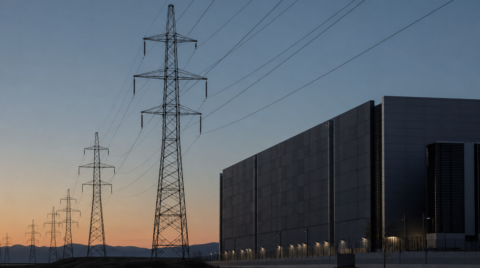
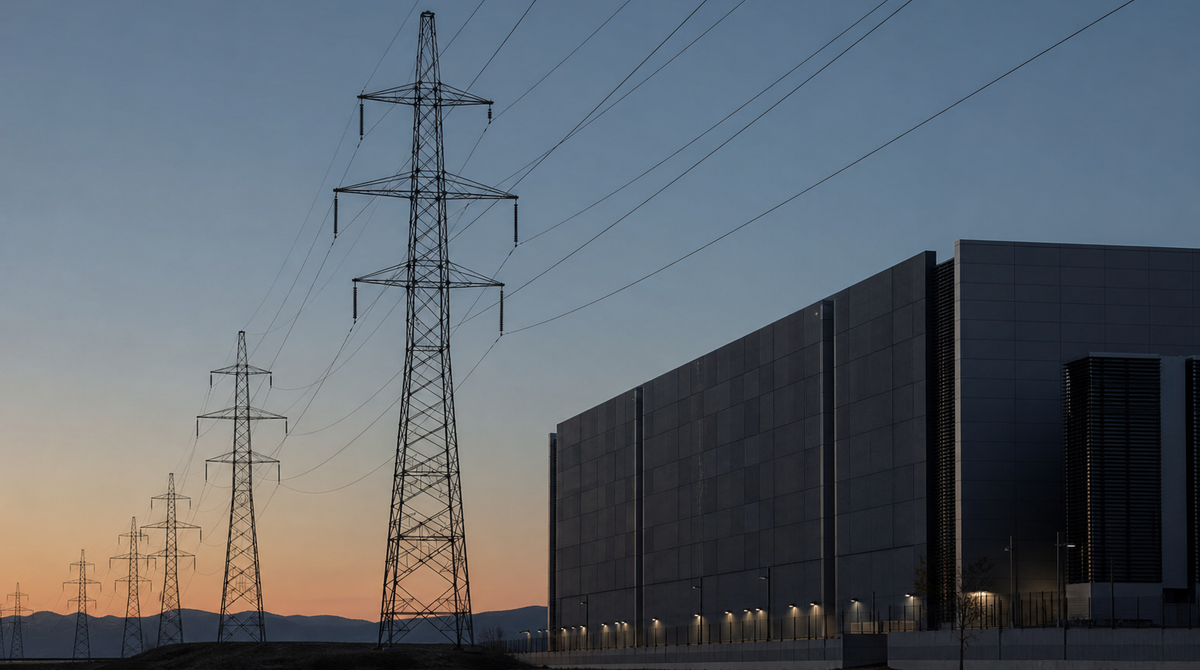
※The thumbnail image is an AI-generated illustration.