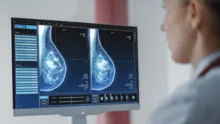
Children's Hospital of Philadelphia (CHOP) is using MONAI, an open source medical imaging AI framework cofounded by NVIDIA, to build detailed 3D models of children's hearts in seconds[1]. Work that once took a skilled researcher about four hours has become fast enough for routine clinical use, and the approach is now spreading to more than 20 children's hospitals across the United States[1].
From Research Project to Standard of Care
When cardiologist Dr. Matthew Jolley joined CHOP in 2015, modeling tools existed for adult heart valves, but almost nothing had been built for the complex, small anatomies found in children[1]. His team worked with the open source community to build SlicerHeart, an extension of the 3D Slicer platform for visualizing and analyzing 3D medical images[1].
CHOP's cardiac modeling service now runs on MONAI, the open source medical imaging framework NVIDIA helped create[1][2]. It takes CT scans, MRI and 3D ultrasound images a child's care team already has and produces anatomically precise heart models within seconds[1]. By training segmentation networks with MONAI Label and NVIDIA's Auto3DSeg, Jolley's team compressed a process that used to take four hours down to a matter of seconds[1].
About 1% of live births involve a congenital heart defect, and no two cases are exactly alike[1]. In one case, a child had already gone through two failed repair attempts before a 3D model finally clarified the anatomy, allowing surgeons to succeed on the third try[1].
Newton Brings Near Real-Time Device Simulation
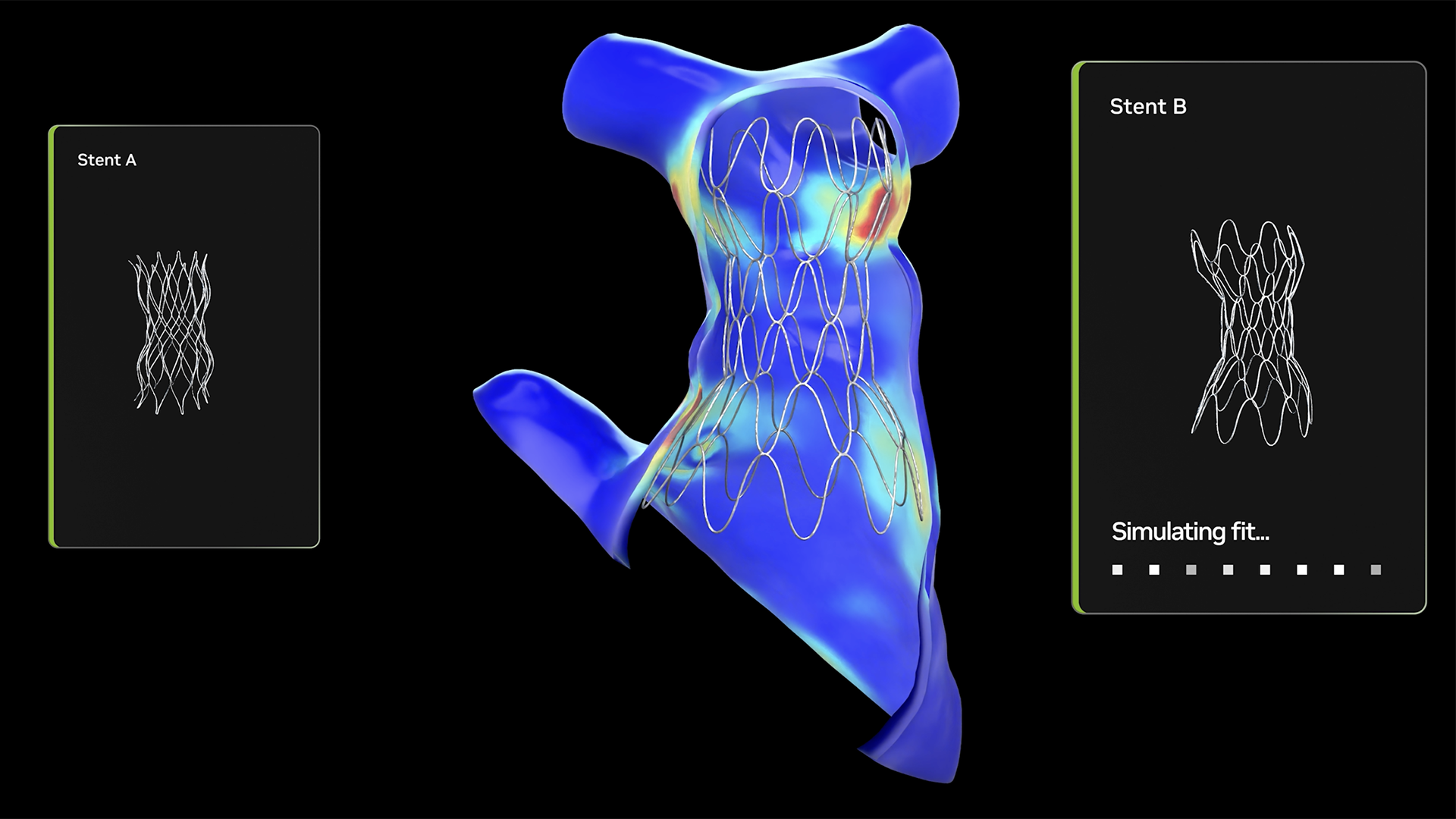
Seeing what a heart looks like is only part of the goal — clinicians also want to know how a device will behave once it's deployed[1]. That's where Newton, an open source physics engine built on NVIDIA's Warp framework, comes in[1][3]. With GPU acceleration, simulations that once took up to four hours, or an overnight run for multiple configurations, now run in near real time[1]. That means a clinician can compare how different devices fit a specific child's anatomy and make a same-day treatment decision[1].
CHOP has already begun applying Newton and Warp to simulations of devices used to close holes in children's hearts, and hopes to extend the approach to transcatheter valves next[1]. The team is also connecting SlicerHeart with NVIDIA Omniverse digital twins built on OpenUSD, aiming to eventually let clinicians explore a child's cardiac anatomy in virtual reality with the help of vision-language models[1].
Open Source as a Workaround for a Small, Diverse Population
About 2.4 million people in the U.S. live with congenital heart disease, but the population has historically been too small and too varied to attract the kind of investment a traditional device company needs[1]. "Open source defies traditional economics for small and heterogeneous populations by allowing collaboration and progress without barriers," Jolley said[1].
SlicerHeart's tools are already in use at more than 20 children's hospitals nationwide[1]. At Boston Children's Hospital, modeling now supports more than half of all cardiac surgeries, or roughly 500 cases a year, while CHOP expects to complete about 200 modeled cases this year[1]. Researchers at Stanford and Boston Children's are contributing tools alongside CHOP, and a national consortium of children's hospitals is forming to build shared modeling infrastructure for the next generation[1].
Summary
CHOP's work shows how open source platforms such as MONAI, Newton and OpenUSD, all developed with NVIDIA's involvement, can support medical breakthroughs for small, diverse patient populations that no single company could serve alone[1]. What began as a research project is now standard practice at several major children's hospitals, with catheter-based treatment and VR-assisted care next on the roadmap[1].
Source: https://blogs.nvidia.com/blog/childrens-hospital-open-source-ai-cardiac-care/
Source: https://project-monai.github.io/