
KDDI and Lawson have been selected for GENIAC, a Japanese government program run by the Ministry of Economy, Trade and Industry (METI) and NEDO to support generative AI development. The two companies will research a robot foundation model capable of taking over convenience store tasks such as inventory management and shelf stocking. Data collection has already started at a test store in Takanawa, Tokyo, with a public release of the technology targeted for fiscal 2028 or later.
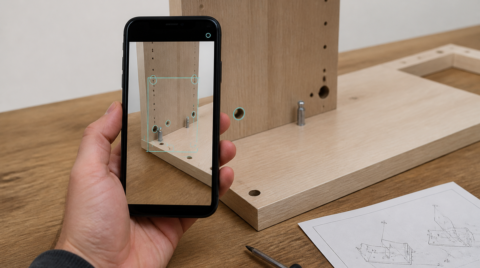
※The thumbnail image is an AI-generated illustration.
The Test Site: An Employee-Only Store in Takanawa
The pilot is being run at a Lawson store located inside KDDI's Takanawa headquarters that is open only to employees. Unlike a regular store open to the public, it operates as an environment dedicated to collecting operational data. The plan is to advance robot demonstrations and worker behavior data collection side by side there.
From the Back Room to the Sales Floor: A Wide Range of Tasks
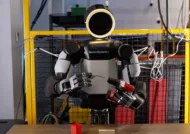
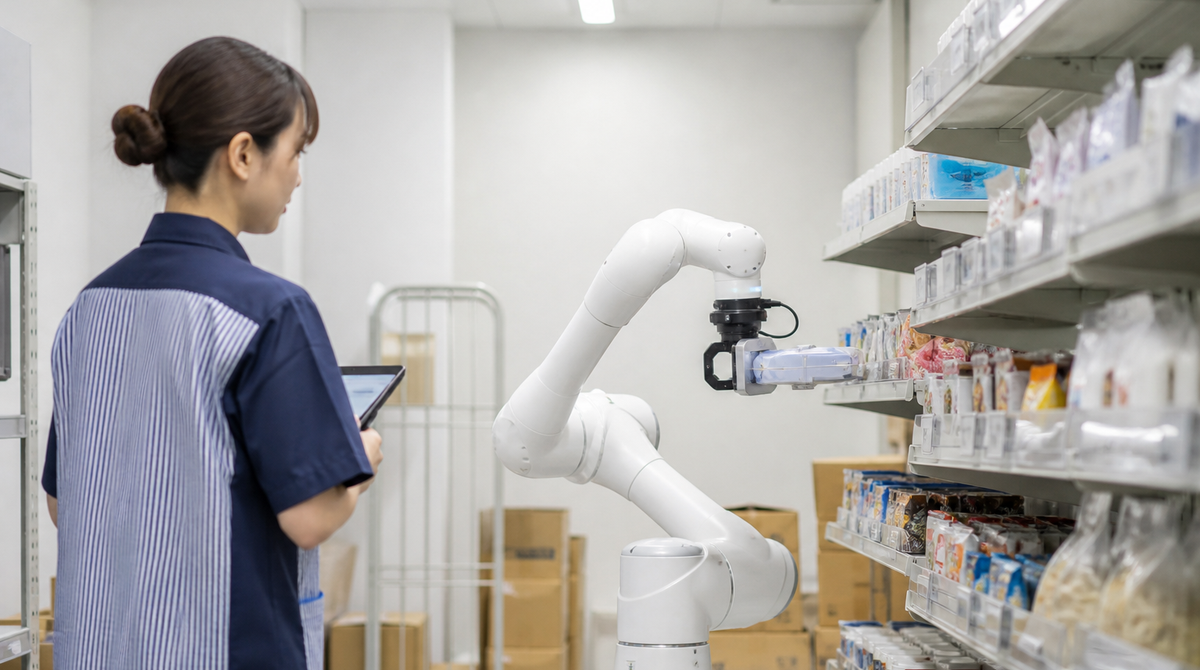
The robot foundation model under development is meant to cover everything from back-room work, such as storing inventory and preparing items for restocking, to sales-floor tasks like displaying and replenishing products. Particular attention is being paid to handling items that are soft and irregularly shaped, such as bagged snacks, and to delicate work like restocking a shelf without knocking over the items next to it. The approach relies on collecting first-person video and operation data from workers and using it for training. The development involves ELYZA, KDDI Research Institute, and the robotics companies Genki Robotics and Real World Inc.
Why Convenience Store Work Is Considered Hard to Automate
Compared with routine warehouse transport tasks, running a convenience store is considered far more difficult to automate. Stores handle an extremely wide variety of products, and shelf conditions change constantly depending on the time of day and season. In retail and logistics sites facing serious labor shortages, whether this kind of non-routine work can be automated is becoming the deciding factor in how far robot adoption can spread.
GENIAC Widens Its Focus From Text and Images to the Physical World
GENIAC originally began as a program to help domestic companies secure the computing resources needed to develop generative AI. Starting in 2026, it also began supporting "physical AI," in which cameras and sensors are used to perceive the real world and actually move robots. This year's selections include companies across manufacturing, logistics, and construction, such as Mercari, which is developing dual-arm robots to automate the inspection and listing of items sold on its marketplace app, and Hitachi Construction Machinery, which is working to automate the removal of obstacles such as rocks and the excavation and loading of earth. The shift suggests that the focus of government support is moving from generative AI's traditional strengths in text and image generation toward automating physical, hands-on work.
The Government's Goal: 10 Million Robots by 2040
Behind this move is the "AI Robotics Strategy" that the Japanese government laid out in 2026. Facing a worsening labor shortage, the government has set a goal of increasing the number of robots operating in Japan to roughly 10 million by 2040, and GENIAC's expanded support for physical AI is positioned as one of the measures for carrying out that strategy. A total of 13 projects, including KDDI's, were newly selected this round, and the initiative spans multiple industries, from retail to manufacturing and construction, all moving forward in parallel.
Summary
KDDI and Lawson have been selected for the GENIAC program to develop a robot foundation model that can take over on-the-ground work at convenience stores. The companies are collecting data at a test store in Takanawa and aim to make the technology public from fiscal 2028 onward. Convenience store operations have long been seen as one of the hardest environments to automate because of their product variety and constantly shifting conditions, but viewed alongside other selected projects such as Mercari's and Hitachi Construction Machinery's, it is clear that generative AI's applications are steadily expanding into support for real-world physical work.