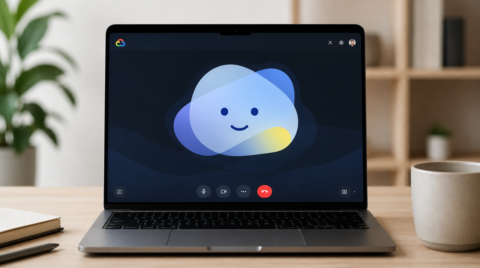
Cisco has begun giving every employee a personal AI agent called MyAgent. It is not a chatbot that answers questions. Give it an objective and it plans the steps, then carries them out across multiple business applications under human supervision. The rollout covers roughly 90,000 employees and started with the new fiscal year that began at the end of July. It stands out as a concrete example of a company moving past AI experiments and into daily operations.
From asking to delegating
MyAgent runs on Circuit, the internal AI platform Cisco has built. Circuit is model agnostic and provides governed access to approved LLMs, agents and enterprise data. It exists so employees do not have to hand business data to outside services on their own, and so AI can be operated as a shared company capability rather than a collection of departmental tools.
On top of that foundation, MyAgent works across the applications people already live in, including Outlook, Webex, Jira and SharePoint. The trigger is intent. An employee supplies a goal, the surrounding context and the desired outcome, and MyAgent works out the sequence of steps needed to get there. Rather than automating a single action, it takes on the coordination that spans several systems.
The second pillar is memory. MyAgent retains user preferences, past interactions and accumulated context. That removes the need to re-explain a situation every time and lets responses reflect the history of the work in progress. This continuity is the practical difference between MyAgent and a one-off chat session.
The groundwork was already in place. According to Cisco, agentic use on Circuit grew roughly 350 percent quarter over quarter. The company-wide rollout follows that curve.
Cost comes down to model routing
The most interesting technical detail is the architecture, not the headcount. MyAgent does not send every request to the most capable frontier model. A routing layer decides, for each request, which model is most cost-efficient for that particular job.
A simple question about internal policy goes to a lightweight model. Complex financial analysis goes to something stronger. Changing the destination based on the nature of the work changes the bill for the same volume of output. Cisco also chose to run much of the infrastructure on premises, keeping direct control over both cost and data.
That is the opposite of how many organizations operate today. Picking the strongest available model and dealing with the invoice later works while usage is small. At 90,000 seats it does not. Cisco treated this as an operations problem from the start rather than a technology experiment.
Finance served as the first test case
The proving ground was the finance organization led by CFO Mark Patterson. Running the pilot inside his own function gave him direct visibility into what worked and what did not.
Results have followed. For the MD&A section of US regulatory filings, which is management's discussion of financial condition, AI now produces 80 to 90 percent of the first draft. Work that took analysts days now takes minutes, and people review and refine instead of starting from a blank page.
Patterson is now building what he calls a CFO cockpit dashboard. The idea is to pull performance data from across the business into a single view and surface recommended next actions. The emphasis on supporting decisions rather than producing reports faster says a lot about the intent behind the program.
Agents for 90,000 while fewer than 4,000 roles go
There is a second fact worth holding alongside the first. In May 2026, Cisco told employees it would cut fewer than 4,000 jobs, under 5 percent of its global workforce, as part of a restructuring that shifts investment toward AI infrastructure.
Handing AI agents to 90,000 people while removing 4,000 roles is not a coincidence. The two move in the same direction. Work that AI handles reliably gets automated, and people are redirected toward judgment-heavy tasks. Many companies are making that adjustment quietly this year. Cisco chose to disclose both in the same period.
Cisco frames the shift as moving from human-in-the-loop to human-in-control. Employees set intent, apply judgment and remain accountable for outcomes. AI contributes speed, efficiency and focus, not a transfer of responsibility.
Governance underpins that claim. MyAgent can reach only approved models, approved systems and data pathways deemed appropriate for enterprise use. A degree of looseness is tolerable when AI merely suggests. Once it acts inside a workflow, architecture and control carry far more weight.
What actually matters here
The lesson from MyAgent is less about distributing agents to everyone and more about what made distribution possible. A platform that unifies approved models and enterprise data, a routing layer that matches each task to a model, a memory system that preserves context, and controls that define what the agent may touch. All four together make operation at this scale realistic.
Remove any one of them and scaling the user count simply moves the failure to cost or to security. Departmental pilots often fail to grow into company standards precisely because this layer is left unbuilt.
Summary
Cisco has started rolling out MyAgent, a personal AI agent that executes work across business applications, to all 90,000 employees. It is built on Circuit, which governs access to approved models and enterprise data, and it keeps costs in check through per-task model routing and a largely on-premises footprint. In finance, AI already drafts more than 80 percent of the first version of the MD&A section. At the same time, fewer than 4,000 roles are being cut. That combination makes this deployment worth following as a measure of what enterprise-wide AI actually delivers.