Marvell Technology has issued Google a warrant to buy up to 12.2 billion USD (about 1.94 trillion yen) worth of its stock. The shares vest only as Google keeps buying custom AI silicon from Marvell. A chip supplier handing equity to its customer looks like the roles are reversed, and that inversion says a lot about how power is shifting across AI infrastructure.
A warrant that vests on purchase volume
The two companies entered into the commercial agreement on July 29, 2026, and the warrant itself was issued on August 18, 2026. Marvell granted Google the right to acquire up to 58,970,907 shares at 206.58 USD (about 32,800 yen) each, which works out to roughly 12.2 billion USD if fully exercised.
What makes the structure unusual is the vesting condition. Instead of unlocking on a fixed schedule, tranches vest each time Google's qualifying purchases from Marvell reach another 500 million USD (about 79.5 billion yen). Only 1,360,867 shares vest in the first year, and those vest in equal quarterly installments following execution of the agreement and the warrant rather than on purchases. The remainder is released in step with actual procurement.
Full vesting would require roughly 120 billion USD (about 19.1 trillion yen) of purchases through fiscal 2033, a span of about 7 years. Google gains a reason to keep ordering, and Marvell locks in long-term visibility on demand.
※1 USD = 159 JPY (as of August 21, 2026)
The scope covers what surrounds the TPU
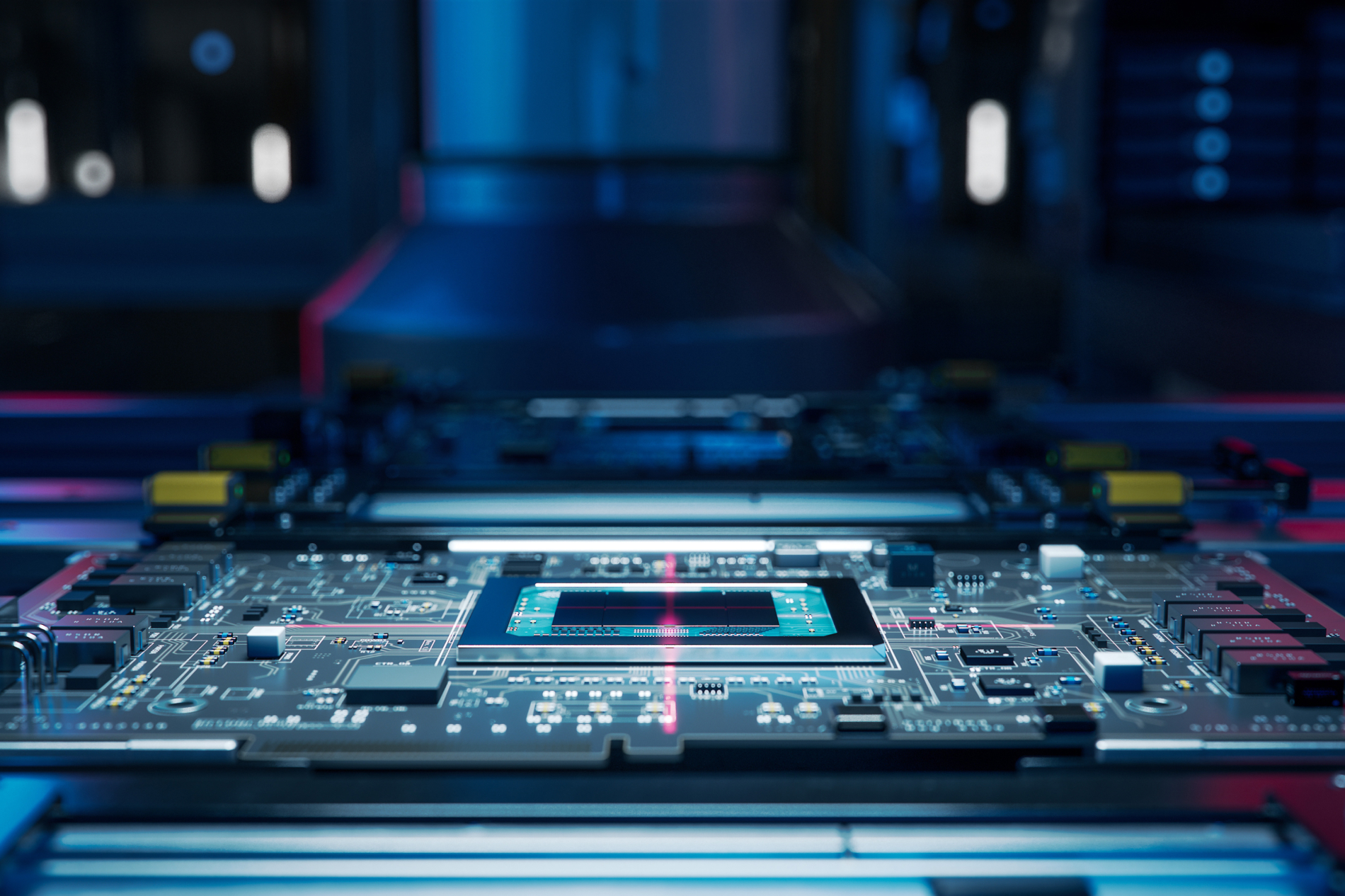
The expanded agreement does not cover the TPU (Tensor Processing Unit) itself. It covers the silicon that attaches to the TPU ecosystem: AI inference accelerators, storage controllers, network interface controllers, memory interface controllers and near-memory compute.
Training silicon gets most of the attention, but a data center only performs when inference, storage and networking all keep pace. Connectivity and data movement are exactly where Marvell has built its business. Google keeps the core compute in-house and brings Marvell in to fill out everything around it.
Reports of the two companies collaborating on AI silicon surfaced back in April 2026. This agreement essentially converts that relationship into something with explicit dollar figures and a defined timeline.
A second source in a market Broadcom had to itself
The market reaction was direct. Marvell shares rose about 10 percent on the news, while Broadcom fell about 3 percent.
Google has relied on Broadcom for custom TPU design for more than a decade, and the two expanded their own agreement in April 2026. It has been described as one of the most valuable single-customer relationships in the semiconductor industry. Adding Marvell as a formally qualified second source is not a small change.
With only one supplier, pricing and delivery schedules follow that supplier's constraints. Having a qualified alternative reshapes the negotiating table regardless of how much of the existing program Broadcom retains. Google is not alone here. Amazon, Meta and Microsoft have all pushed custom silicon programs to reduce their dependence on NVIDIA GPUs. This deal shows that effort reaching the stage of spreading orders across multiple partners.
Paying a customer in equity
The other notable element is the form of compensation. Large buyers usually get discounts or priority allocation. Here, the buyer also gets the right to own a piece of the supplier.
For Google, continued procurement converts directly into an equity stake in Marvell's growth. For Marvell, accepting near-term dilution buys long-term demand and a market signal at the same time. When AI silicon demand is hard to forecast and capital spending decisions are difficult, equity becomes a way to share the risk.
Whether this becomes a template depends on whether Google sustains the pace of its TPU expansion. The 500 million USD increments cut both ways: if orders slow, vesting stops. The 120 billion USD figure in the agreement is a ceiling, not a commitment.
Summary
Marvell granted Google a warrant covering up to 58,970,907 shares worth roughly 12.2 billion USD. The shares vest in tranches tied to every 500 million USD of purchases, and full vesting requires about 120 billion USD of procurement through fiscal 2033. The scope spans inference accelerators, storage and networking silicon attached to the TPU ecosystem, giving Google a second pillar in a custom chip supply chain that had run through Broadcom alone. Marvell rose about 10 percent and Broadcom fell about 3 percent as the market priced in the shift.