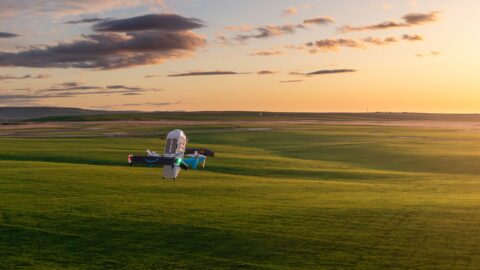

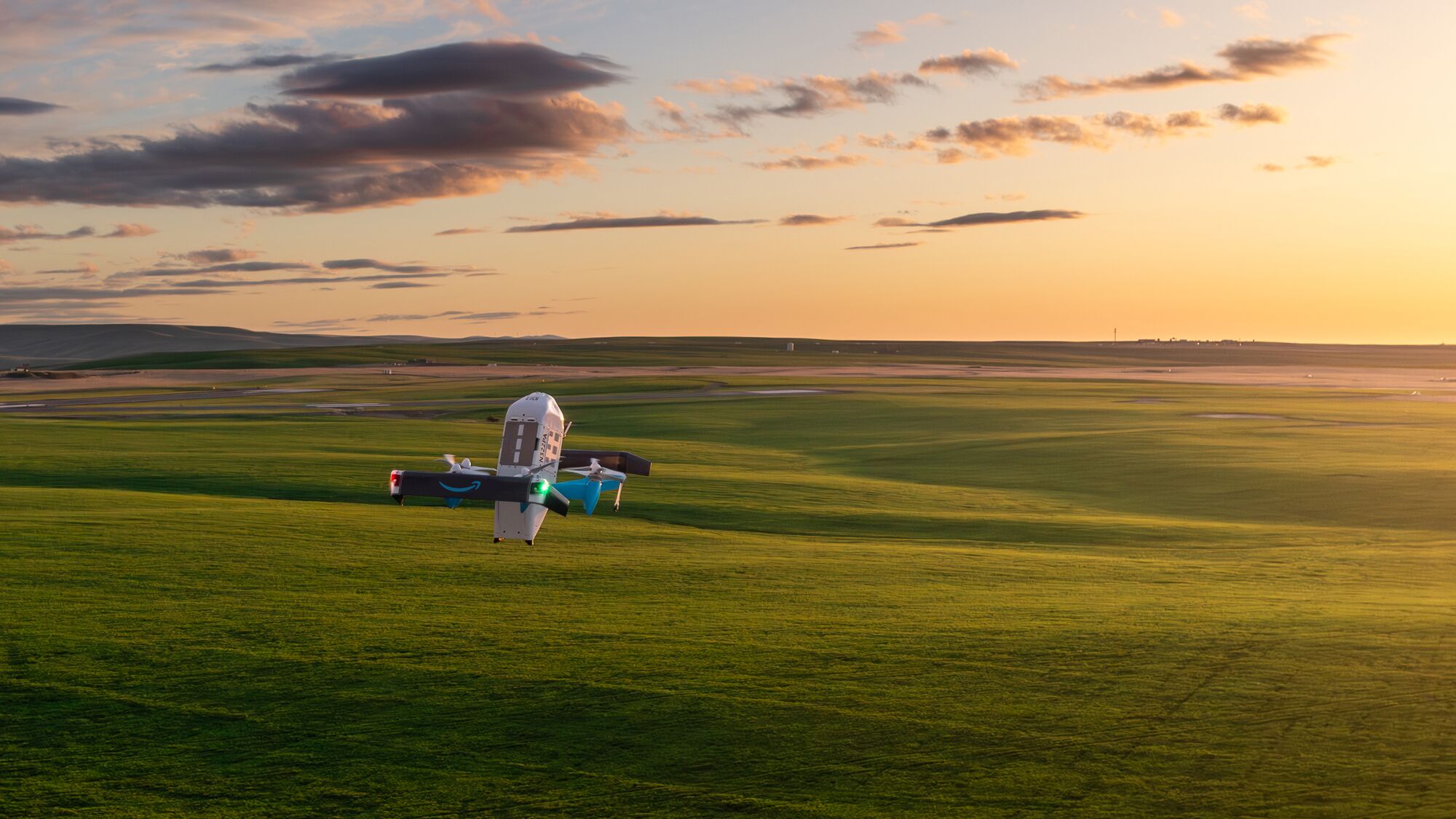
Amazon has laid out plans to expand its Prime Air drone delivery service to roughly 500 cities and towns across the United States by the end of 2026. That is about a sixfold increase over its current footprint, and it brings large metro areas such as Chicago and Atlanta into range. Delivery in as little as 30 minutes is moving from an experiment toward an everyday option.
From 11 Sites to Nearly 500 Cities
Prime Air currently operates from 11 sites across 10 US metro areas. Those span seven states: Arizona, Florida, Kansas, Louisiana, Michigan, Nebraska and Texas. Texas has the densest coverage, with sites in Richmond near Houston, San Antonio, Richardson near Dallas, and Waco. Each site covers roughly 175 square miles, or about 450 square kilometers, which is a little more than 70 percent of the area of Tokyo's 23 wards.
Joining them soon are five metro areas: Chicago in Illinois, Syracuse in New York, Cleveland in Ohio, Atlanta in Georgia, and Boise in Idaho. More communities will follow later this year, bringing the total to roughly 500 cities and towns and putting the service within reach of tens of millions of customers.
Outside the US, service has started in Darlington in northern England. The delivery zone extends 7.5 miles, about 12 kilometers, from the fulfillment center. The named locations in this announcement cover the US expansion only, with no mention of Japan or other countries.
Up to 2.3 Kilograms, Free for Prime Members on Orders Over 50 USD
Drones carry items weighing 5 pounds, about 2.3 kilograms, or less that fit in a large shoebox. The limit sounds restrictive, but Amazon says more than 60 percent of the items customers buy most often qualify. Groceries, cosmetics, medications and electronics make up the core categories, and eligible products include the iPhone, Galaxy phones, AirTag, AirPods and Ring doorbells.
Pricing depends on membership. Prime members pay nothing extra on orders of 50 USD (about 8,000 yen) or more, and 2.99 USD (about 480 yen) on orders below that. Customers without Prime pay 4.99 USD (about 790 yen). Orders arrive in as fast as 30 minutes, with most landing around 60 minutes after checkout.
※1 USD = 159 JPY
The ordering flow is no different from a regular Amazon purchase. Same app, same checkout, and the same support including returns and the A-to-z Guarantee. Customers confirm a delivery point on their first drone order, then choose whether to reuse it or pick a new one each time.
Safety Built on the Same FAA Framework as Commercial Aviation
Prime Air holds Federal Aviation Administration (FAA) Part 135 certification. That is the same framework applied to commercial air carriers, and it represents the highest level of FAA oversight for drone delivery operations.
Multiple independent systems keep flights safe. At the center is Detect-and-Avoid, which continuously monitors the airspace and environment around the aircraft. It plays a role similar to a trained pilot scanning the surrounding sky, letting the drone make its own decisions in flight. Before releasing a package, the drone also checks that no people, pets or vehicles are in the way.
On privacy, Amazon says the onboard cameras and sensors exist for navigation, obstacle detection and safe delivery, and do not track individuals or record their movements. No person monitors a live camera feed, and the camera data is processed on the drone itself.
Noise is a fair concern. During drop-off, the sound level stays below that of a delivery truck idling at the curb and lasts about 30 seconds. In cruise flight it is comparable to a window fan on low and is typically inaudible indoors. The drones are fully electric with no exhaust emissions, and they are engineered to fly in light rain and across a range of temperatures.
Why Another 30-Minute Option Matters
For Amazon, drones are one tool among several for selling speed. Amazon Now delivers in 30 minutes from smaller urban sites, a 1-hour and 3-hour service covers more than 90,000 items, and Same-Day Delivery reaches more than 10,000 cities and towns. Prime Air's role is fast single-item delivery, mainly in suburban areas.
David Carbon, vice president of Amazon Prime Air, says the company has already delivered hundreds of thousands of packages by drone this year. Drone sites handle thousands of deliveries a day and rank among the highest-volume delivery locations in the US by average. This is no longer a technology sitting in a pilot phase.
Standing up new sites requires both regulatory work and capital, so whether a sixfold expansion lands on schedule remains to be seen. Even so, once coverage reaches tens of millions of people, a meaningful share of the US will treat drone arrival as unremarkable. The race on speed is no longer fought with ground vehicles alone.
Summary
Amazon plans to expand Prime Air drone delivery to roughly 500 US cities and towns by the end of 2026. The service runs today from 11 sites across 10 metro areas in seven states, and the Chicago, Syracuse, Cleveland, Atlanta and Boise metro areas will join soon. Drones carry items up to about 2.3 kilograms, Prime members pay no extra fee on orders of 50 USD or more, and packages arrive in as fast as 30 minutes. Operations run under FAA Part 135 certification, with an autonomous Detect-and-Avoid system underpinning safety.