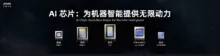
Zhaoxin, one of China's main x86-compatible processor makers, presented a lineup of AI-oriented products built around its in-house ZX86 instruction set at a regional technology forum held on July 8, 2026[1]. Spanning the 96-core "KaiSheng KH-50000" server CPU down to the "KaiXian KX-7000" for client devices, the company laid out a plan to cover everything from the cloud to the edge and endpoints with domestic chips, underscoring how far China's push to localize its IT stack has spread.
What the Shanghai Forum Says About China's "Xinchuang" Drive
The event was a regional forum held under the theme of deepening the domestic IT ecosystem. In its AI track, participants discussed homegrown computing platforms, self-developed large language models, and AI agents, and Zhaoxin used the stage to showcase its processors' work in AI[1].
The backdrop is what China calls "Xinchuang" (IT application innovation) — a policy of replacing the IT foundations of government agencies and state-owned enterprises with domestic chips, operating systems, and software. At the forum, a 2.0 version of a Shanghai state-asset Xinchuang lab was announced, built on Zhaoxin's compute platform. It follows a "one cloud, many chips" approach that bundles multiple domestic processors under a single cloud, and offers services such as compatibility certification, low-code development, and AI-agent applications[1].
Zhaoxin positions this public-sector demand as a key channel for its chips. Paired with high-security data centers, the goal is to bring a domestic compute base into settings — such as government and finance — where mistakes are not tolerated.
What the ZX86 Instruction Set Actually Is
Zhaoxin emphasized ZX86, the instruction set it has built in-house. It describes the approach as "self-controlled but not closed, compatible but not dependent," meaning it can keep improving its CPUs without being bound by outside licenses[1].
There is, however, a reason Zhaoxin can build x86-compatible CPUs at all. The company was set up as a joint venture between Taiwan's VIA Technologies and Shanghai municipal capital, inheriting VIA's x86-64 license[3]. In other words, this is not a from-scratch architecture but an effort to localize and self-govern on top of existing x86 assets. ZX86 also includes instructions that accelerate China's national cryptographic standards SM2, SM3, SM4, and SM9[2].
From the 96-Core KH-50000 to the Endpoint: A Cloud-to-Edge Portfolio
At the core of the lineup is the "KaiSheng KH-50000" server chip. According to specifications reported by overseas tech media, it packs up to 96 cores split across multiple chiplets in a single package, with up to 384 MB of L3 cache, 12 channels of DDR5-5200 memory, and 128 lanes of PCIe 5.0. It supports dual- and quad-socket configurations, squaring up directly against server CPUs such as AMD's EPYC and Intel's Xeon[2].
At the other end, the "KaiXian KX-7000" is a desktop-class chip with eight CPU cores, clock speeds up to around 3.7 GHz, and DDR5 support[3]. With these two products as bookends, Zhaoxin has assembled a ZX86 lineup that reaches from the cloud through the edge to endpoints.
Partner products were also on display. Lenovo's "Kaitian" brand showed a one-liter ultra-compact AI terminal running the KX-7000, which Zhaoxin and its partners say delivers a high compute density of up to 640 TOPS per liter and can run local AI models. Other exhibits included an all-in-one machine pairing Zhaoxin CPUs with the domestic Iluvatar CoreX GPU and the homegrown Kylin OS, a liquid-cooled AI inference workstation, and servers built on the KH-50000[1]. Companies such as Seewo and ZTE also displayed ZX86-based laptops and all-in-one devices.
Summary
Zhaoxin has laid out a stack that runs from the 96-core KH-50000 server CPU to the client-focused KX-7000, all built around its ZX86 instruction set, aiming to cover cloud-to-endpoint computing with domestic chips. On performance, it will not necessarily match the latest AMD and Intel parts one-for-one, and figures such as compute density currently rest on claims from the vendor and its partners. Even so, the effort to assemble a domestic set of CPU, OS, GPU, and AI model is steadily taking shape — a sign that China's Xinchuang drive is now reaching into the server space.
Source[1]: https://www.zhaoxin.com/news_view.aspx?nid=2&typeid=289&id=2051