Alibaba has released Qwen3.7-Plus, the newest model in its Qwen family of large language models. Its defining feature is multimodal input: on top of text, it can take in images, video, and screenshots, and it does so at a far lower input cost than Qwen3.7-Max, the text-only model released just weeks earlier. Unlike the open-source approach that built Qwen's reputation, however, Qwen3.7-Plus is offered only through an API under a commercial license. As an agent-focused model that pairs low pricing with strong on-screen capabilities, the question is where it fits in real development workflows.
A multimodal design that handles text, video, and screens
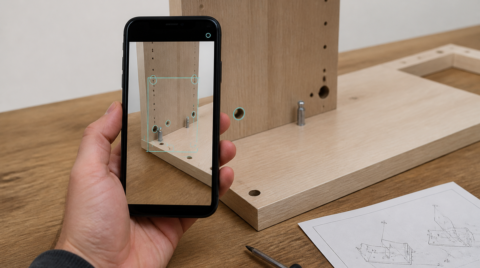
The big difference from its predecessor is the breadth of input it accepts. Where Qwen3.7-Max was text-only, Qwen3.7-Plus reads images, video, and screenshots directly. It is built to look at a computer screen, decide what to act on, and then write and run code, all within a single agent loop.
The model is delivered through the API on Alibaba Cloud's Model Studio platform (known domestically as Bailian) and through the Qwen Chat assistant. Because it can interpret a visual interface, execute commands, and generate code at the same time, it is well suited to automating routine tasks and data processing that involve operating a screen.
A 1-million-token context and "preserving thinking"
Qwen3.7-Plus offers a context window of up to 1 million tokens, roughly the equivalent of 2,000 pages of text. The intent is to let you feed in an entire codebase, have the model map out dependencies, and only then begin the work. Of that capacity, up to 256,000 tokens can be allocated to the model's internal chain-of-thought reasoning.
A common weakness of agents on long, multi-step tasks is "state decay," where the model loses track of its context partway through. Qwen3.7-Plus tries to counter this with an API parameter called "preserve_thinking," which keeps the internal blocks of reasoning intact across conversational turns. The idea is to continue a multi-step task along its original line of thought, without forgetting the rationale behind earlier actions or needlessly recomputing past history.
This notion of "preserving the reasoning state" has become common across the major AI labs. Anthropic offers an equivalent capability it calls "Extended Thinking" in models such as its latest Claude Opus 4.8. OpenAI takes a similar approach in GPT-5.5, passing encrypted reasoning back into the next exchange. Alibaba's preserve_thinking is, in effect, its own term for what has become standard plumbing for multi-step reasoning.
How it performs on benchmarks
The published numbers show Qwen3.7-Plus is strong on screen-operation and agent tasks. On Terminal Bench 2.0-Terminus, which measures the ability to run terminal-level code safely and iteratively, it scored 70.3, ahead of DeepSeek-V4-Pro Max (67.9) and Gemini 3.1 Pro (63.5). On ScreenSpot Pro, which evaluates how accurately a model can locate on-screen elements, it reached 79.0, well clear of GPT-5.4 (67.4) and Claude Opus 4.6 (49.5).
It is not top of the class everywhere, though. On overall capability, it reportedly trails leading U.S. models such as Claude Opus 4.6 and GPT-5.4 on many metrics. It shines when the focus is narrowed to screen operation and agent use, but it is not a model that replaces the state of the art in every situation. It is also worth keeping in mind that these figures were published by the model's provider.
Pricing and where it fits in the enterprise
Price is the main reason Qwen3.7-Plus is drawing attention. Standard input processing is set at 0.40 USD (about 64 yen) per million tokens, and output at 1.60 USD (about 256 yen) per million tokens. On top of that, when static data such as a large code repository or a standard UI kit is explicitly cached, repeat reads drop to 0.04 USD (about 6 yen) per million tokens. * Converted at 1 USD = 160 JPY
Workloads where an agent repeatedly references large volumes of code or screen history have long been prone to runaway costs. Qwen3.7-Plus slices its pricing finely so that these high-frequency, multi-step operations can run at a realistic cost. Because the API is OpenAI-compatible, swapping it in for an existing setup requires only minor changes. The intended pattern is to route routine work to Qwen3.7-Plus rather than spending an expensive general-purpose flagship model on it.
The shift away from open source as a talking point
For companies weighing adoption, the licensing terms are hard to overlook. Earlier Qwen models earned support by publishing their weights as open source, letting organizations bring them in-house. U.S. companies such as Airbnb have put open Qwen models to work.
Qwen3.7-Plus, however, is offered only as a commercial model accessed through Alibaba Cloud's API. The weights cannot be downloaded and run inside an isolated, in-house data center. Every request routes through Alibaba Cloud's overseas infrastructure (developer documentation points to a Singapore endpoint). Industries with strict requirements about where data resides, such as healthcare and defense, will need to verify case by case whether routing through an external API meets their obligations.
That said, completing everything through a cloud API has its upside, too: there is no need to provision and maintain large in-house GPU clusters. It is a trade-off, giving up the freedom to run the model locally in exchange for offloading the operational burden.
Summary
Qwen3.7-Plus combines multimodal input across text, images, video, and screens with a wide 1-million-token context and low pricing, aimed squarely at agent use. It shows real strength on benchmarks for screen operation and terminal-level code execution, while falling short of the leading U.S. models on overall capability. The central talking point is its pivot from an open-source path to a commercial, API-only model. Do you need to run it in your own environment, or do you prioritize low-cost automation? The decision to adopt it comes down to how you read that shift.