

On May 20, 2026, OpenAI announced that one of its general-purpose reasoning models had tackled a long-standing open problem in discrete geometry and disproved a belief that had been held for roughly 80 years[1]. The problem in question is the "unit distance problem," first posed by the mathematician Paul Erdős in 1946[1][2]. OpenAI describes this as the first time an AI has independently solved an open problem central to a field of mathematics, and says the resulting proof has been verified by a group of outside mathematicians[1].
What Is the "Unit Distance Problem"?
The unit distance problem asks how many pairs of points can be placed at a distance of exactly 1 from one another when n points are arranged on a plane[2]. Since Erdős posed it in 1946, it has remained one of the representative hard problems of discrete geometry, puzzling mathematicians for some 80 years[1][2].
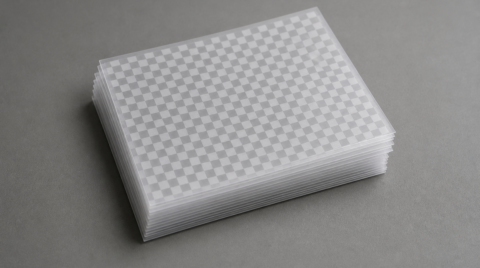
For this problem, a configuration known as the "square grid," in which points are arranged like a checkerboard, has long been recognized as a strong way to generate many such pairs[1]. For a long time, the mathematical community widely believed that a configuration close to a square grid was essentially the best, and that no configuration could significantly exceed it[1]. What OpenAI's model has now disproved is precisely this long-held belief[1].
Although the unit distance problem is stated in extremely simple terms—just points and distances on a plane—it has been notoriously difficult to pin down the best configuration or the exact upper bound[2]. Among the many open problems Erdős left behind, it has been repeatedly cited as a question that symbolizes the development of discrete geometry[2].
The New Construction the Model Found
According to OpenAI, its model discovered an entirely new "infinite family" of constructions that outperform the square grid[1]. This yields a polynomial-order improvement over the level achieved by the conventional square grid[1]. The fact that an infinite series of constructions was shown—rather than a single example—underscores the generality of the result.
What has drawn particular attention is that the core idea of this construction comes from "algebraic number theory," a field of mathematics quite different from discrete geometry[1]. Algebraic number theory deals with concepts such as factorization within systems called "number fields," which extend the integers[1]. The discovery of a bridge connecting number theory and discrete geometry—two areas that appear to have little in common—is, OpenAI explains, why the result amounts to more than the settling of a single conjecture[1].
A Result From a General-Purpose Model, and How It Was Verified
This proof did not come from a system trained specifically for mathematics, from a setup scaffolded to search through proof strategies, or from a model tuned specifically for the unit distance problem[1]. OpenAI emphasizes that it is the result of a new general-purpose reasoning model working on the problem directly[1]. The specific model name was not disclosed in this announcement.
The resulting proof was reviewed by a group of outside mathematicians[1]. These mathematicians also wrote a separate companion paper explaining the argument and providing further context on the significance and background of the result[1]. The pattern in which an AI autonomously steps into an open problem and has its results independently verified by experts looks set to mark a milestone in how the role of AI in mathematical research is understood.
OpenAI explains that this result does more than settle a single conjecture: it could serve as a foothold for mathematicians to explore further related problems[1]. That said, the unit distance problem itself remains an unsolved hard problem as a whole, since the exact upper bound on the number of point pairs is still undetermined. This disproof is positioned as one step toward that larger question.
Summary
A general-purpose reasoning model from OpenAI has disproved the belief that the square grid is best for the unit distance problem—open for nearly 80 years—by finding a new construction guided by algebraic number theory. The proof has been verified by outside mathematicians, and the case is drawing attention as an example of an AI independently advancing a central hard problem in mathematics.
Source:https://openai.com/index/model-disproves-discrete-geometry-conjecture/
Source:https://scitechdaily.com/for-the-first-time-chatgpt-has-solved-an-unproven-math-problem-in-geometry/