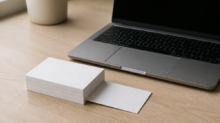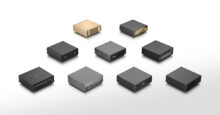
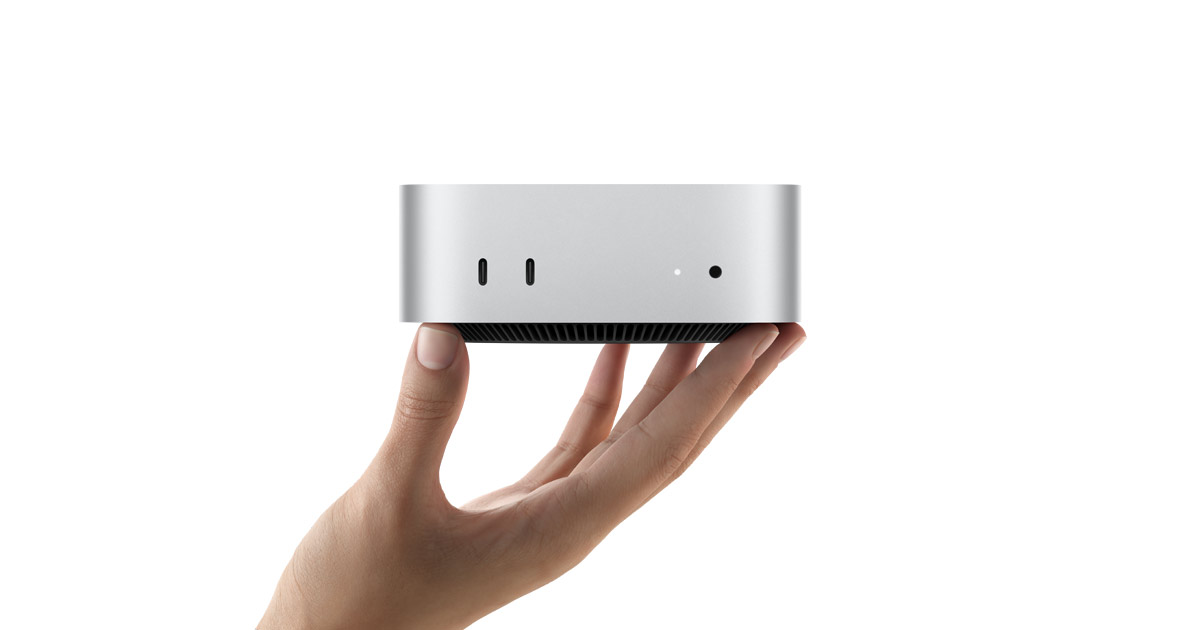
The Mac mini has long been thought of as a small desktop that sits quietly in the corner of a desk. Right now it is being bought by the crate in AI research. OpenAI has reportedly acquired tens of thousands of Mac mini and Mac Studio machines over the past several months, using them to train AI agents that operate computers. In a story that used to be all about GPU servers, an Apple desktop has suddenly claimed a seat at the table.
Tens of Thousands of Macs Serving as Lab Equipment
According to the reports, the machines OpenAI bought ship without displays or keyboards. They are not set up for people to sit in front of. They are lined up as dedicated nodes that run continuously inside the company's own infrastructure, and the volume is said to be in the tens of thousands, which is an entirely different order of magnitude from a typical office rollout.
OpenAI is not alone in reaching this conclusion. Anthropic is said to be pursuing a similar approach, but instead of buying the hardware outright it rents Mac mini capacity through Amazon Web Services. Both labs need the same thing and chose opposite ways of paying for it, which says something about the character of each company.
The Goal Is Training AI That Looks at a Screen and Acts
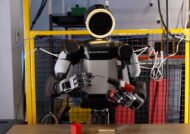
The stated use is reinforcement learning and the training of computer-use agents. A computer-use agent is an AI that touches software the way a person does. It navigates on-screen interfaces, writes and runs code, sorts email, and handles other tasks that span multiple steps.
Training that kind of AI takes more than feeding it text. The model has to run inside a real operating system, look at the screen, act, and receive feedback on the result, and that loop has to repeat millions of times. What the training rests on is not a dataset but a live operating system. If you want to build an agent that works on macOS, standing up tens of thousands of real macOS machines turns out to be the shortest path.
Why Macs Instead of GPU Servers
The technical reason cited is the unified memory architecture of Apple silicon. On a conventional PC, system memory and GPU memory are separate, while Apple silicon lets the CPU, the GPU, and the Neural Engine share one pool. For work that constantly moves back and forth between an AI model and the operating system, that layout removes a lot of unnecessary data shuffling.
Cooling is the second reason. Unlike laptops, the Mac mini and Mac Studio have active cooling, so they hold up under loads that run for long stretches. Training runs last days or weeks, so this unglamorous detail matters.
None of this means NVIDIA GPU clusters are becoming unnecessary. Pre-training large foundation models remains a completely different problem that demands compute on another scale. What Macs are filling is a fairly narrow role where memory capacity, access to the operating system, and the ability to spin up large numbers of isolated environments are what count. The competition here is over the number of environments rather than raw compute, and that is what makes it different from conventional AI infrastructure.
An Unplanned Source of Demand for Apple
For Apple, this demand appeared without the company engineering it. Mac revenue in the most recent quarter was reported at roughly 10.4 billion USD (about 1.66 trillion yen), up 29 percent year over year. Apple has not attributed that growth to OpenAI or other AI labs, but orders have concentrated on higher-memory configurations and supply has been reported as unable to keep pace.
Unexpectedly strong enterprise interest is also said to have pushed Apple to announce the new Mac mini and Mac Studio ahead of its usual fall schedule. Seen in that light, the way the new models foreground running AI models locally reads as a deliberate design response.
Competitors have taken notice. NVIDIA reportedly regards Apple as a major rival in local AI and positions DGX Spark as a compact system for developers. Taiwanese reporting indicates that ASUS and MSI have already exhausted their initial allocations of related RTX Spark products and are seeking more supply, so the scramble for desk-sized AI machines involves more than one company.
※1 USD = 160 JPY (as of August 31, 2026)
Summary
OpenAI's Mac buying spree marks a shift in agent training from running models to assembling large numbers of real computers. For Apple, enterprise demand it never chased has landed in its lap. Whether the company keeps selling Macs as desktops or starts addressing customers who treat them as compute is an interesting fork to watch as the next Mac mini and Mac Studio take shape.