
OpenAI says it paired its latest model, GPT-5.4, with Molecule.one's autonomous research system "Maria" to improve a difficult chemical reaction used in drug discovery[1]. The AI generated its own hypotheses and ran more than ten thousand reactions in a robotic lab, ultimately surfacing an additive that lifts the efficiency of a reaction that had long suffered from low yields. It is a "near-autonomous" setup in which human chemists still make the final calls, but the result stands out because the AI took part across the full arc of a research project.
Pairing GPT-5.4 with the autonomous lab "Maria"
The work continues OpenAI's broader effort to make AI a partner for scientists[1]. The company has previously shown examples of its models contributing to new results in mathematics, theoretical physics, and biology. This time it extended that direction into medicinal chemistry, a field tied directly to drug discovery.
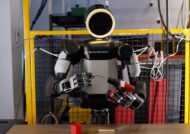
Specifically, OpenAI worked with Molecule.one, a company focused on drug-discovery support, and connected GPT-5.4 to its chemistry AI, "Maria"[1]. Maria is an agentic chemistry AI integrated with a high-throughput laboratory so it can carry out research autonomously. The team gave the system only an open-ended goal: improve one of several important reaction classes.
The system generated research proposals, designed and ran experiments, analyzed the resulting data, and proposed follow-up experiments[1]. Human chemists stayed in the loop by designing the prompts that steer and grade the work, selecting which proposals to test, and making limited corrections to the experimental plans. They also independently validated the final result.
Why "Chan–Lam coupling" is hard
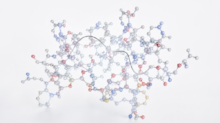
The proposal the AI judged most promising, "OAI-M1-03," targeted a difficult version of the reaction known as Chan–Lam coupling[1]. Chan–Lam coupling forms carbon-nitrogen bonds, and chemists use it to build structures found widely across drug molecules[1][2].
The reaction does not work equally well for every molecule, however. In particular, coupling boronic acids with so-called primary sulfonamides has historically given low yields[1]. Sulfonamides are an important family of molecules that appear in a wide range of medicines, including anticancer drugs, antimicrobials, and diuretics. Because synthesis is a major bottleneck in drug discovery, and scientists can only test the molecules they can make, making this reaction more reliable would broaden the range of candidate molecules they can explore.
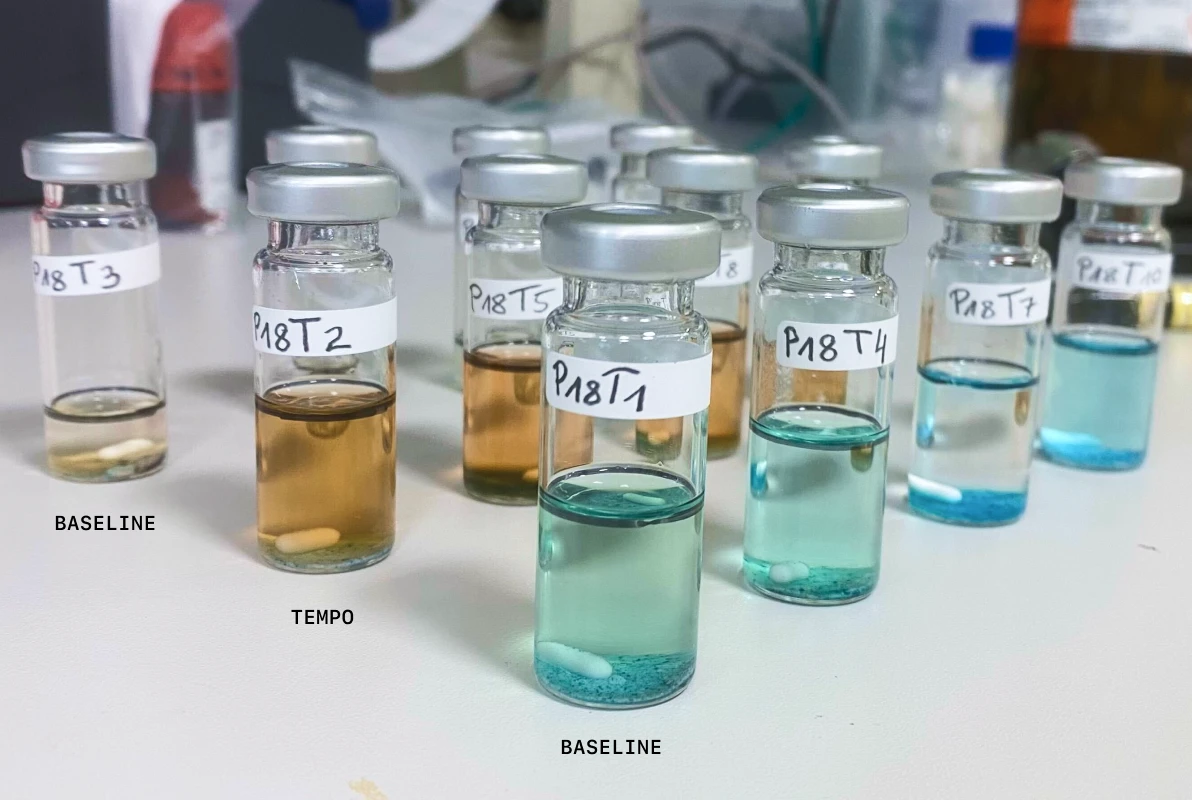
Starting from the open-ended goal, GPT-5.4 independently identified primary sulfonamides as a challenging but high-value target[1]. It then proposed that adding a mild oxidant, including one called TEMPO, might improve the reaction. Chemists found the suggestion both surprising and interesting.
Yields rose across more than ten thousand automated experiments
Across two cycles of experimentation in Maria Lab, the proposal produced a clear improvement[1]. Under the optimized conditions, yields improved for 88 percent of the boronic acids and 83 percent of the sulfonamides tested. The mean yield rose from 16.6 percent to 25.2 percent, and the share of reactions exceeding 30 percent yield grew from 15.6 percent to 37.5 percent.
The scale of the work mattered as well. Maria ran a total of 10,080 reactions across the two cycles[1]—more than a chemist running three reactions a day could complete in a decade. Chemistry results are easy to misread from only a few examples, and running so many reactions made it possible to single out TEMPO from among ten oxidants tested and to confirm both its effect and its limits.
A follow-up round, proposed after analysis of the first cycle's data, also found that TEMPO could be replaced by a cheaper analog, "4-hydroxy-TEMPO," with little loss in performance[1].
The result was not confined to microliter-scale screening. When human chemists reproduced representative reactions by hand at bench scale, yields rose for 11 of 14 substrate pairs, and 8 of those showed a more than twofold increase[1]. Because very small-scale experiments can produce apparent effects that vanish at larger scale, this replication is treated as important. Four external chemistry experts reviewed the preprint and supported the assessment that the result was novel and worth sharing.
What "near-autonomous" means—and its limits
OpenAI describes the whole process as "near-autonomous" rather than fully autonomous[1]. The important decisions were still made by human chemists. While the model proposed the key research ideas, humans provided high-level steering and judgment, corrected experimental details, helped prepare reagents and consumables, and reproduced the key experiments by hand. The largest human correction was an instruction to avoid the solvent dimethyl sulfoxide (DMSO), out of concern that it could react with the stronger oxidants used for comparison.
The three-month effort ran from the first prompt on March 4 to sharing the OAI-M1-03 results with independent experts on June 4[1]. Of the four proposals GPT-5.4 and Maria tested, OAI-M1-02 and OAI-M1-04 were experimentally confirmed, while OAI-M1-01 was disproven.
OpenAI is careful to scope what the result does and does not show[1]. It does not demonstrate that AI can run a chemistry research program end to end on its own; the work depended on specialized high-throughput infrastructure. There is no guarantee it transfers directly to other coupling reactions, other substrates, or manufacturing conditions, and understanding the mechanism and independent replication remain future tasks. OpenAI also notes that technology useful for medicine and materials science can be misused, and says it deliberately limited this work to a legitimate medicinal-chemistry problem that involved no toxins or chemical weapons. The model had undergone relevant evaluations with the United Kingdom's AI Security Institute (AISI) and was designed to refuse requests aimed at harmful applications.
Summary
OpenAI paired GPT-5.4 with Molecule.one's autonomous research system "Maria" to improve a difficult version of the Chan–Lam coupling used in drug discovery[1]. The AI identified primary sulfonamides as a hard target on its own and proposed the additive TEMPO; the mean yield rose from 16.6 percent to 25.2 percent, and the effect held up when human chemists reproduced it at bench scale. This is still a "near-autonomous" stage in which humans make the key decisions, and replication and the limits of its applicability remain open—but it is a concrete example of AI contributing across the research loop, from proposing a hypothesis to running and interpreting experiments.
Source: https://openai.com/index/ai-chemist-improves-reaction
Source: https://en.wikipedia.org/wiki/Chan%E2%80%93Lam_coupling