NVIDIA has published a batch of announcements covering creative production and physical AI to coincide with SIGGRAPH, which runs in Los Angeles through July 23[1]. Major content-creation applications are adding Model Context Protocol (MCP) support so AI agents can operate inside them, and the lineup also includes a microservice for detecting synthetic video and an edge-oriented world model called Cosmos 3 Edge. The keynote takes place on July 20 at 3:45 p.m. Pacific Time, with Neil Ashton, Edward Liu and Ming-Yu Liu discussing neural rendering and world models.
Creative Applications Line Up Behind MCP
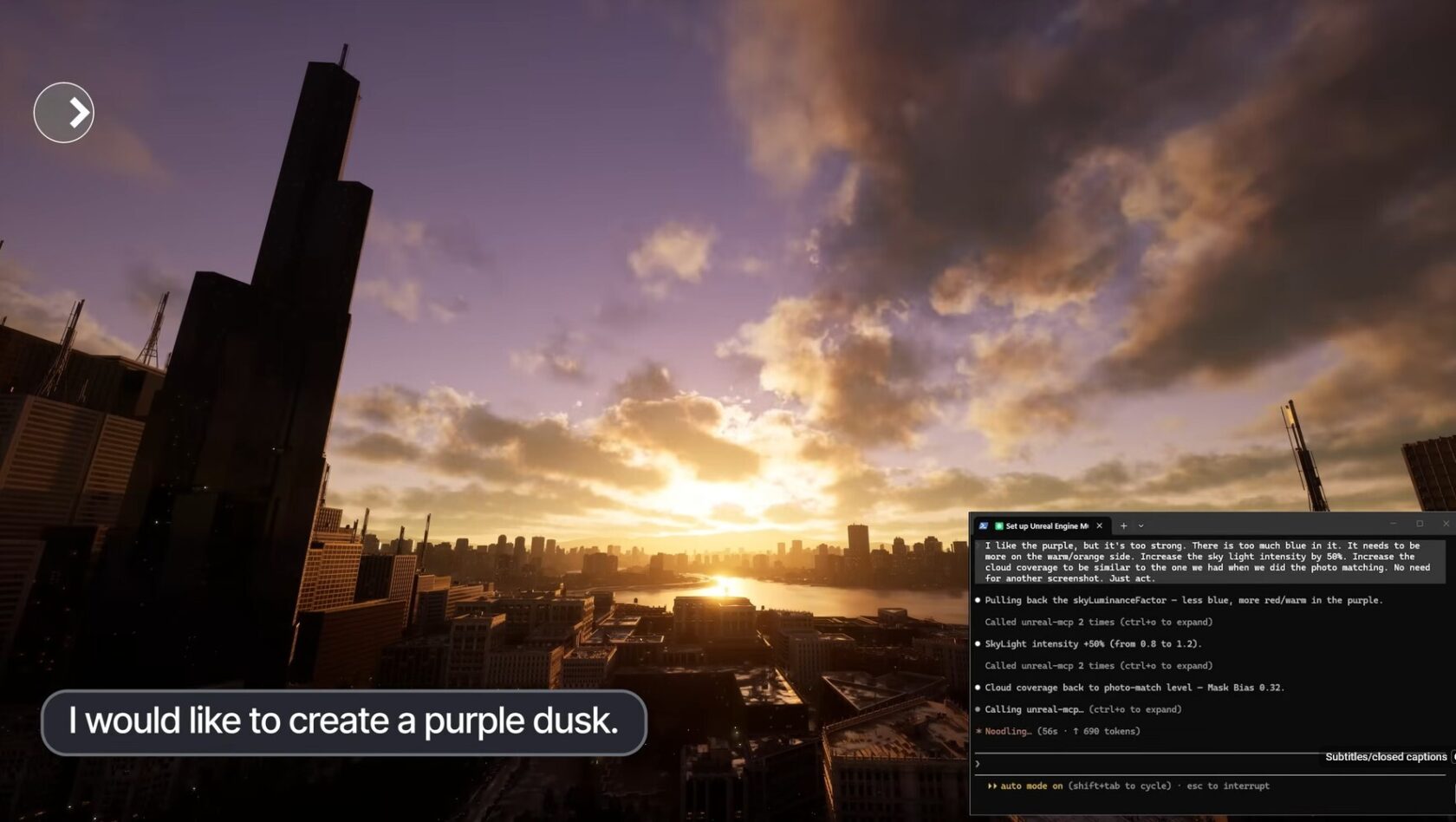
The largest share of the announcement goes to MCP support on the tools side. MCP is a common specification that lets AI agents connect to external applications and data, and in supported software an agent can take on jobs such as inspecting a scene or preparing an export. Typical uses include hunting for missing textures, surfacing inconsistent color management, preparing export variants, and validating a shot against studio pipeline rules. The key point is that creative decisions stay with the human while only the surrounding manual work is handed off[1].
The list of participants is broad. Adobe is expanding its creative agent across Firefly, Express and Creative Cloud, and offers the Adobe Express Developer MCP Server for developers. Affinity, part of Canva, has built an AI Connector for Claude that accepts natural-language instructions for repetitive work such as bulk renaming layers and artboards, resizing assets for multiple channels, and optimizing vector paths. Blender provides a lightweight MCP server through Blender Lab, while Boris FX Silhouette ships a server that exposes its FX Scripting API as MCP tools. Foundry's Griptape, SideFX's Houdini 22 and Unreal Editor round out the list.
A NIM Microservice That Spots Synthetic Video
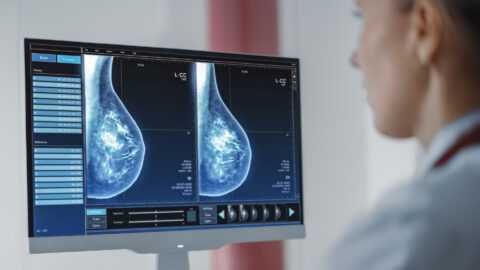
For newsrooms, NVIDIA announced the Synthetic Video Detector NIM microservice, which judges whether a video contains AI-generated content. It analyzes footage frame by frame and returns a classifier score. Editorial teams can use that score to decide which clips to review first or to quarantine questionable material. It is positioned as one more signal rather than a replacement for existing verification practice.
In NVIDIA's testing, accuracy reached up to 92 percent on uncompressed video, 87 percent at 15 percent compression and 82 percent at 50 percent compression. The company stresses that it keeps working after the compression, resizing, cropping and re-encoding that real workflows involve. Throughput is 22 milliseconds for 1080p video on RTX systems and roughly 30 milliseconds on L40 GPUs. Wowza is already embedding it into its Video Intelligence Framework, with plans to bring live-stream detection to more than 35,000 deployments across over 170 countries[1].
Cosmos 3 Edge Brings World Models to Edge Devices
On the physical AI side, NVIDIA released Cosmos 3 Edge, a 4-billion-parameter world model. It is an omnimodel that handles text, images, video, ambient sound and action, and its mixture-of-transformers architecture is optimized to run on hardware close at hand, including Jetson, RTX PRO, DGX and GeForce RTX GPUs. NVIDIA says it ranks first on the VANTAGE-Bench vision analytics benchmark within its parameter class.
Applications range from robot control and road-scene understanding for autonomous vehicles to video analytics for traffic monitoring and industrial inspection. Agile Robots, Doosan Robotics, Siemens and Skild AI are evaluating it for robotics, while Centific, Vaidio and YUAN are named on the vision analytics side. Cosmos 3 comes in Edge (4 billion), Nano (16 billion) and Super (64 billion) sizes, all published on Hugging Face, with inference and post-training frameworks and recipes on GitHub.
Super Agents That Run on a Desk
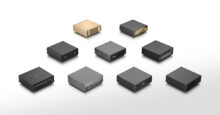
For the deskside DGX Station, NVIDIA outlined a configuration that runs autonomous agents locally in combination with NVIDIA Agent Toolkit. NemoClaw as an agent blueprint, the 550-billion-parameter open model Nemotron 3 Ultra, Omniverse libraries for physics simulation and 3D asset work, and the OpenShell runtime that keeps agents sandboxed all sit in a single box and run without an internet connection. The underlying GB300 Grace Blackwell Ultra Desktop Superchip delivers up to 20 petaflops of FP4 compute with 748GB of coherent memory. Up to two systems can be linked through the ConnectX-8 SuperNIC.
Outside parties are moving too. LangChain tuned Nemotron 3 Ultra for its Deep Agents harness, and Nous Research fine-tuned it for Hermes Agent and adopted it in production. The argument is that local execution with no per-token cost after the hardware purchase pays off when running large numbers of agents. DGX Station can be ordered from ASUS, Dell Technologies, Exxact, GIGABYTE, HP, MSI and Supermicro.
Twenty-One Papers Centered on Real-Time Behavior
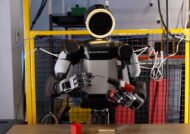
NVIDIA had 21 technical papers accepted. The emphasis has shifted from photorealism alone toward building worlds that behave according to physics and respond in real time. The flagship example, MotionBricks, is a real-time motion model trained on more than 350,000 motion clips, and the same model that animates an on-screen character also drives a physical Unitree G1 humanoid robot.
Others include GPC, which gives a single controller transferable motor skills learned from large-scale motion data; ArtiFixer, which turns messy real-world 3D captures into clean virtual scenes; and a new solver that reproduces hard-to-simulate materials such as snow, sand and elastic solids inside the Newton physics engine. All of the papers are openly available, and the code and models can be downloaded free of charge.
Summary
What NVIDIA laid out at this year's SIGGRAPH rests on four pillars: broader MCP support that lets AI agents drive creative software, synthetic video detection, a world model that runs at the edge, and an agent platform that stays entirely on local hardware. None of them are flashy generative demos; each is presented as a component to be dropped into existing production pipelines and robotics deployments. With all 21 papers and their code published, this is an announcement built for implementation.