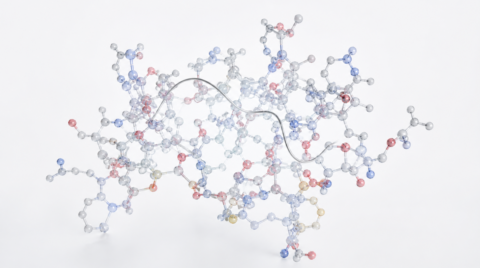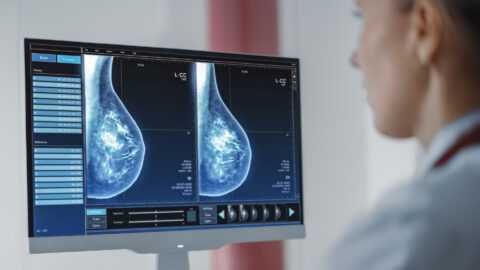

NVIDIA announced that its life-sciences AI toolset, the NVIDIA BioNeMo Agent Toolkit, now connects with Claude Science, the science research workbench unveiled by Anthropic[1]. Researchers can issue instructions in natural language and run demanding computations such as genomic analysis and protein structure prediction as GPU-accelerated workflows. The goal is an environment where scientists stay focused on the research itself, rather than on configuring models or building infrastructure.
NVIDIA BioNeMo Integrated into Claude Science
On June 30, 2026 (local time), Anthropic released Claude Science, an AI workbench for scientific research, and began a public beta the same day[2]. Its defining feature is letting researchers converse with agents (AI that carries out work autonomously) in natural language to handle everything from literature review to multi-step analysis and the drafting of figures and manuscripts within a single environment[2].
What Claude Science has built in as a resource callable from within the research flow is the NVIDIA BioNeMo Agent Toolkit[1]. The toolkit bundles NVIDIA-accelerated capabilities as "callable skills," and Claude Science selects the appropriate tool, prepares valid inputs, and executes the workflow as needed[1]. Execution can connect to NVIDIA compute resources deployed anywhere, bringing NVIDIA's models and libraries, along with microservices on the NVIDIA NIM inference platform, directly into the same environment where the research takes place[1].
In the life sciences, NVIDIA's technology is widely used across drug discovery, genomics, medical imaging, molecular design, and protein engineering. According to NVIDIA, 18 of the world's top 20 pharmaceutical companies use BioNeMo, a sign of how deeply it has penetrated the industry[1].
The "Accelerated Tools" Agents Rely On
AI agents reason, plan, and use tools to accomplish tasks. In the life sciences, those tools are the specialized computational workflows themselves[1]. An autonomous research agent must handle one step after another, such as fingerprinting compound libraries, narrowing down promising candidates, and analyzing genomic context, and each step depends on the speed of its computational tool. In other words, an agent can work no faster than the tools it uses[1].
The BioNeMo Agent Toolkit gives these agents fast tools. NVIDIA Parabricks, which handles genomic analysis, compresses work that once took hours down to minutes[1]. With RAPIDS-singlecell for single-cell analysis, preprocessing and clustering of 1.3 million cells reportedly shrank from 52 minutes to 25 seconds[1]. It also includes nvMolKit, which accelerates cheminformatics operations such as similarity search and conformer generation by up to 3,000x[1]. For models used in tasks like protein structure prediction, it provides access to life-sciences models such as Evo 2, Boltz-2, and OpenFold3[1][2].
These models are also offered as NVIDIA NIM microservices, in the form of ready-to-use inference endpoints (APIs)[1]. The toolkit itself is open and not tied to any particular agent framework by design, so the same scientific skills can be used across different research platforms. The toolkit and its skills are available through NVIDIA developer resources and GitHub[1].
A Concrete Example: Searching for Cancer-Target Inhibitors
One concrete example NVIDIA cites is the search for better inhibitors of common cancer targets[1]. Starting from a cancer-causing antigen mutation, a researcher asks Claude to design numerous inhibitor candidates. Claude Science works with the BioNeMo Agent Toolkit and NVIDIA NIM microservices to rapidly advance the prediction, optimization, and validation of inhibitors across a large pool of candidates[1].
Researchers can review the outputs, refine their questions, and decide the next step. An iterative loop spins between scientific reasoning and accelerated computational work, allowing researchers to stay focused on the science itself, NVIDIA explains[1].
How It Is Offered to Researchers
Claude Science is offered for macOS and Linux and is available on the Pro, Max, Team, and Enterprise plans[2]. It can display proteins and molecular structures natively on screen, and every result is reproducible and traceable down to the code[2]. It draws on more than 60 scientific databases, including UniProt, PDB, and ChEMBL[2].
Notably, Claude Science is not a new AI model but a workflow-focused application built on Claude models already in service (such as Opus 4.8)[2][3]. The emphasis is on fitting the real flow of a researcher's work rather than developing a new model[3]. Anthropic is offering discounted seats for academic institutions and nonprofit labs, and says it will provide credits worth up to 30,000 USD (about 4.9 million yen) each to as many as 50 research projects[2]. ※1 USD = 162 JPY
Workflows powered by the NVIDIA BioNeMo Agent Toolkit are available through Claude Science, which enters public beta today. During the beta, Anthropic is inviting researchers to give feedback on the additional domain specialists and integrations they need[1].
Summary
NVIDIA has connected its life-sciences AI toolset, the BioNeMo Agent Toolkit, with Anthropic's research workbench Claude Science. From natural-language instructions, researchers can call demanding computations such as genomic analysis and protein design as GPU-accelerated workflows. With tools like Parabricks and nvMolKit boosting execution speed, it is an effort aimed at building an environment where AI agents can operate at "the speed of science."
出典:https://blogs.nvidia.com/blog/claude-science-bionemo-agent-toolkit/
出典:https://www.anthropic.com/news/claude-science-ai-workbench