Neuralink announced on November 25, 2026, that it has received approval from the U.S. Food and Drug Administration (FDA) to launch the "LINK Pivotal Study" (LINK), a clinical trial of its implantable brain-computer interface (BCI), a device that lets people control computers with brain signals. The study is for people with severe paralysis due to amyotrophic lateral sclerosis (ALS), and the company has already opened enrollment. Neuralink describes it as the first pivotal trial for an implantable BCI in the United States.
The Study Tests Whether Participants Can Control Digital Devices by Thought
According to the company's announcement, LINK will evaluate the ability of participants to use Neuralink technology to control digital devices through thought. It focuses on functional outcomes that improve independence in daily life. The study will also continue to assess the long-term safety and reliability of the system across multiple clinical sites.
On the company's clinical trials page, the study is listed as "Pivotal trial" with a status of recruiting. It is open to adults living with ALS, and it is conducted only in the United States. The page says the trial looks at safety and at how well people can control digital devices with the implanted "N1 Implant."
Participant Numbers, Sites and Duration Have Not Been Disclosed
As of this writing, Neuralink has not disclosed how many participants the study will enroll, how many clinical sites will take part, or how long it will run. Enrollment is handled through the company's Patient Registry, which people can join from the clinical trials page.
| Item | Details |
|---|---|
| Study name | LINK Pivotal Study |
| Approved by | U.S. Food and Drug Administration (FDA) |
| Who can join | Adults with severe paralysis due to ALS |
| Location | United States |
| Main evaluations | Controlling digital devices by thought / independence in daily life / long-term safety and reliability |
| Participants and sites | Not disclosed |
The FAQ on the company's device-control trials says there is no cost to participate, and that travel and lodging for study-site visits are supported.
More Than 30 People Already Implanted in Early Studies
LINK builds on the early feasibility studies Neuralink has run in the United States, Canada and the United Kingdom. According to the company, more than 30 participants have been implanted in those studies, and they have logged thousands of hours of real-world BCI use in total.
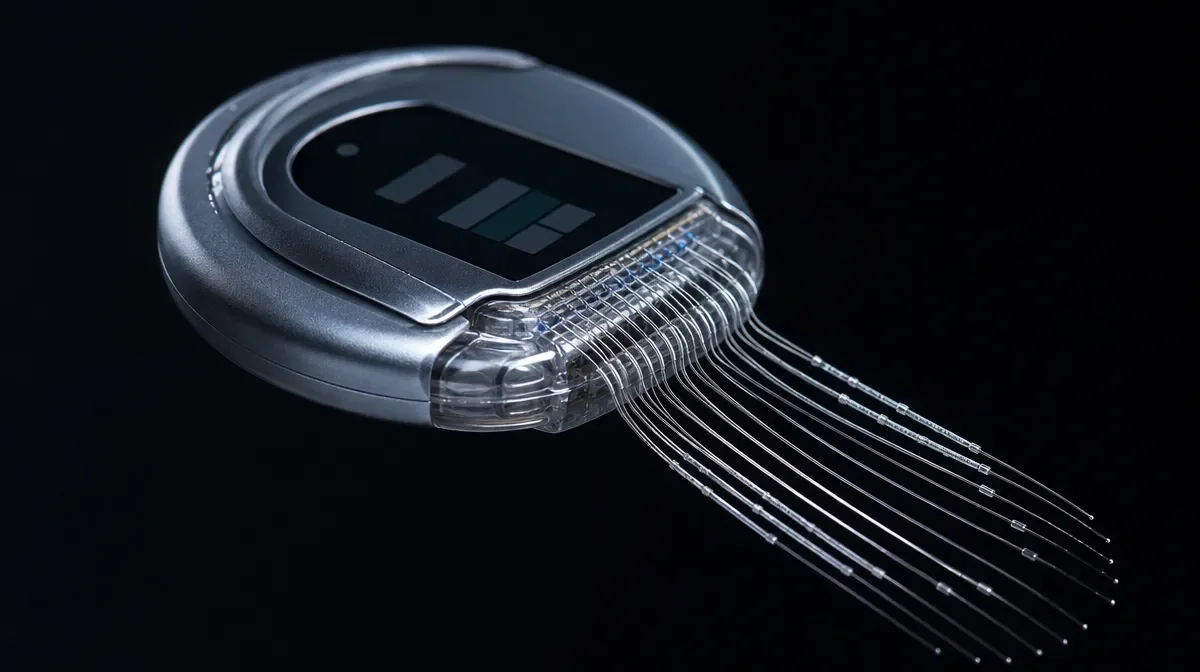
The early feasibility study is still recruiting separately as of this writing. It is Neuralink's first study of the "N1 Implant" and the "R1 Robot," a surgical robot that places fine electrode threads in the brain. It is open to adults with paralysis in all four limbs from spinal cord injury, ALS or brain stem stroke. The clinical trials page explains that participants learn to control a cursor simply by imagining moving their hand.
This Is a Step Before Marketing Approval, Not Marketing Approval Itself
A pivotal study generally refers to the late-stage trial that checks a medical device's safety and effectiveness before the company applies for approval to sell it. Neuralink likewise frames LINK as a study of safety and effectiveness.
In other words, this approval lets the company begin the study. It does not approve the device for sale or for general clinical use. Neuralink did not mention any plans to offer the device or run trials in Japan.
Our Take
It is significant that an implantable BCI has moved from small early-stage studies to a stage aimed at eventual marketing approval. A track record of more than 30 participants and thousands of hours of use likely indicates that the technology has become reasonably stable.
On the other hand, the number of participants, the evaluation criteria and the study duration have not yet been made public. Because the device is implanted in the brain, assessing long-term safety should take time, and it is hard to say when it could become widely available as a medical device. Even so, the study could add a new way for people who have lost the ability to speak or move their hands due to ALS to communicate.
Summary
Neuralink has received FDA approval to launch LINK, a pivotal study of its implantable BCI, and has begun enrolling participants. The study is for adults with severe paralysis due to ALS and will be conducted in the United States. As of this writing, the size and duration of the study have not been disclosed, and further announcements are expected.