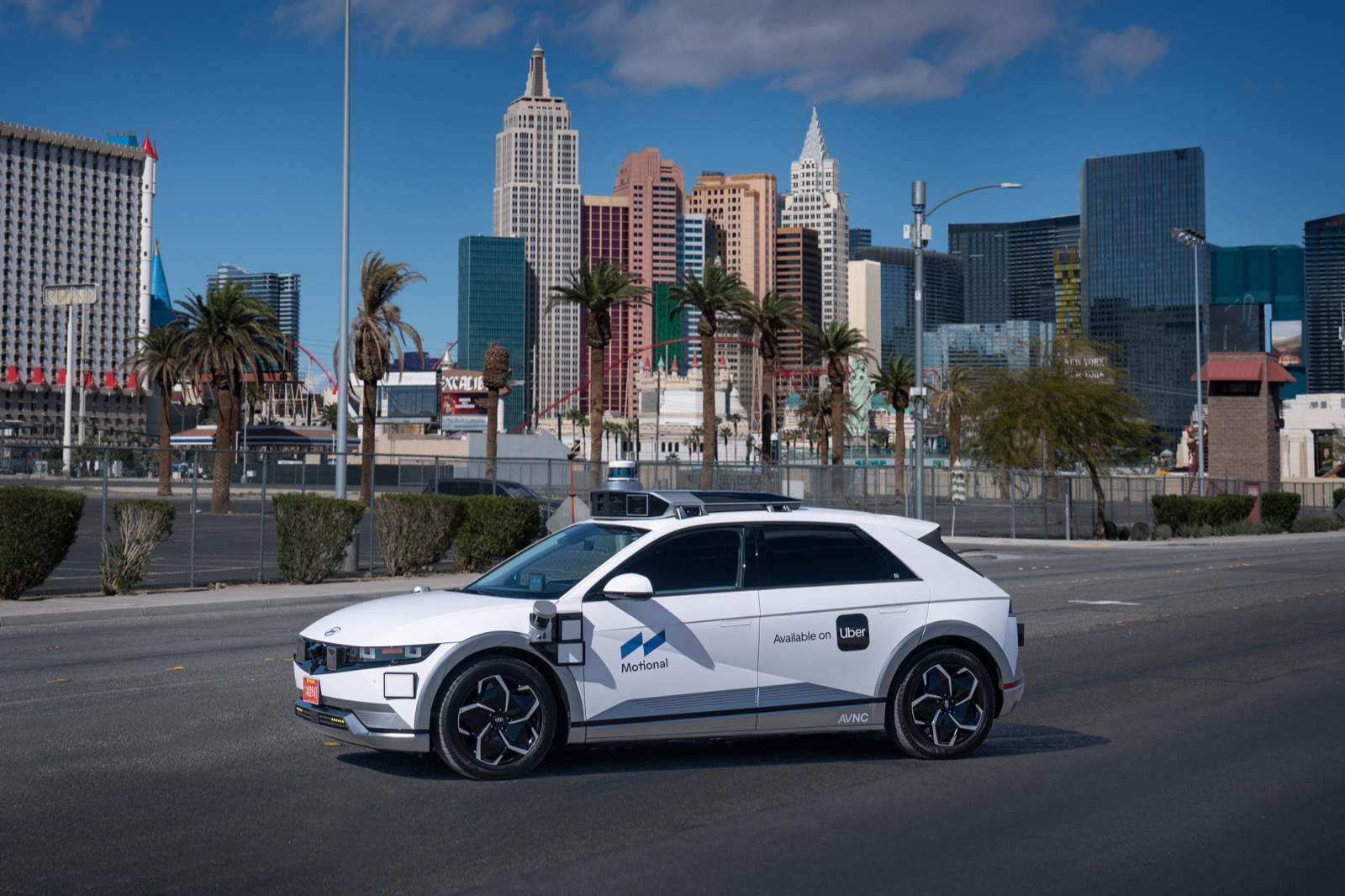
When an autonomous vehicle slows down on an empty road, passengers have almost no way to find out why. Researchers at Motional and MIT have built a system that translates the internal state of an onboard neural network into terms a person can read, and displays it in real time while the car is driving. The work appears in Nature and was validated on an actual vehicle, including public roads around Las Vegas.
Turning a black box into words
The method is called the Concept-Wrapper Network, or CW-Net. Modern self-driving systems increasingly depend on neural networks trained on large volumes of driving data, and those networks do not expose the reasoning behind their decisions. Engineers call this the black-box problem.
CW-Net converts that internal computation into human-readable concepts such as "Approaching Stopped Vehicle" or "Close to Cyclist." According to Motional, these concepts can be shown on a dashboard display, letting anyone in the car see which concepts are shaping the driving decision as it happens.
What matters is that the explanation is not a guess produced after the fact. The vehicle's final decision-making system takes the human-interpretable concepts themselves as input. If the car brakes, the concept that triggered it can always be identified. Motional describes this as a causally faithful explanation and draws a line between it and approaches that generate natural-language justifications, which can read convincingly without matching what the network actually did.
Why the car kept stopping near a traffic cone
Most explainable AI research has stayed inside simulated environments. This team instead installed CW-Net on a real autonomous vehicle, put an experienced safety operator in the driver's seat, and ran it on a private test track and on public roads around Las Vegas. The testing used an earlier experimental deep-learning planner that performed competitively but still had known weaknesses.
Two incidents illustrate what the system surfaced. In the first, the vehicle repeatedly stopped near a traffic cone. The operator assumed the cone itself was the cause, but removing it did not change the behaviour. The CW-Net display revealed the real reason: the experimental planner was hallucinating a stopped vehicle ahead, a pattern traced back to its training data. That let the team understand the fault, predict when it would recur, and resolve it.
The second involved a cyclist. The vehicle detected the cyclist and stopped as expected, but CW-Net showed that the experimental planner was not basing its decision on the cyclist at all. The safety operator responded by driving more cautiously around cyclists. Follow-up analysis confirmed the caution was warranted, since the braking in that case came from a safety backup system rather than the primary planner.
Adding explanations costs almost nothing in performance
Layering explanation onto an AI system usually costs speed and capability, and Motional acknowledges that risk. When CW-Net was benchmarked against leading autonomous driving algorithms, however, the gap in driving capability came in at less than 1 percent.
That number matters operationally, not just academically. A safety operator who can tell on the spot whether a stop was caused by a hallucinated vehicle or by a backup system taking over can file a far more precise report. It also changes how quickly an engineering team can isolate a fault, and being able to separate intended behaviour from a malfunction feeds directly into operational confidence.
Laura Major, CEO of Motional, argues that relying purely on end-to-end deep learning has limits. In her account, that approach can reach 80 to 90 percent, perhaps even 95 percent, but that is not enough to remove the driver or to earn the trust of cities, communities and customers.
A possible tool for regulatory compliance
As autonomous driving spreads into new markets and jurisdictions, pressure on operators grows with it. Regulators are asking for fuller accounts of how AI systems reach their decisions. Motional expects tools like CW-Net to move beyond the research stage and become a baseline requirement.
The scope is not limited to passenger cars. Autonomous drones and robotic surgery are cited as other safety-critical domains, both of which need ways for operators and developers to grasp a system's capabilities, limitations and unexpected behaviour.
Summary
CW-Net translates driving decisions into concepts a person can read, and feeds those same concepts into the decision-making step, so the explanation never drifts away from the actual behaviour. On public roads it exposed real problems, including a hallucinated stopped vehicle and a stop that was being made for reasons other than the ones assumed. The cost in driving capability stayed under 1 percent, which unsettles the premise that explainability must be traded against performance. As the conversation around autonomous driving shifts from accuracy and mileage toward the design of trust, whether a system can state its reasons may decide how far it gets in the real world.