
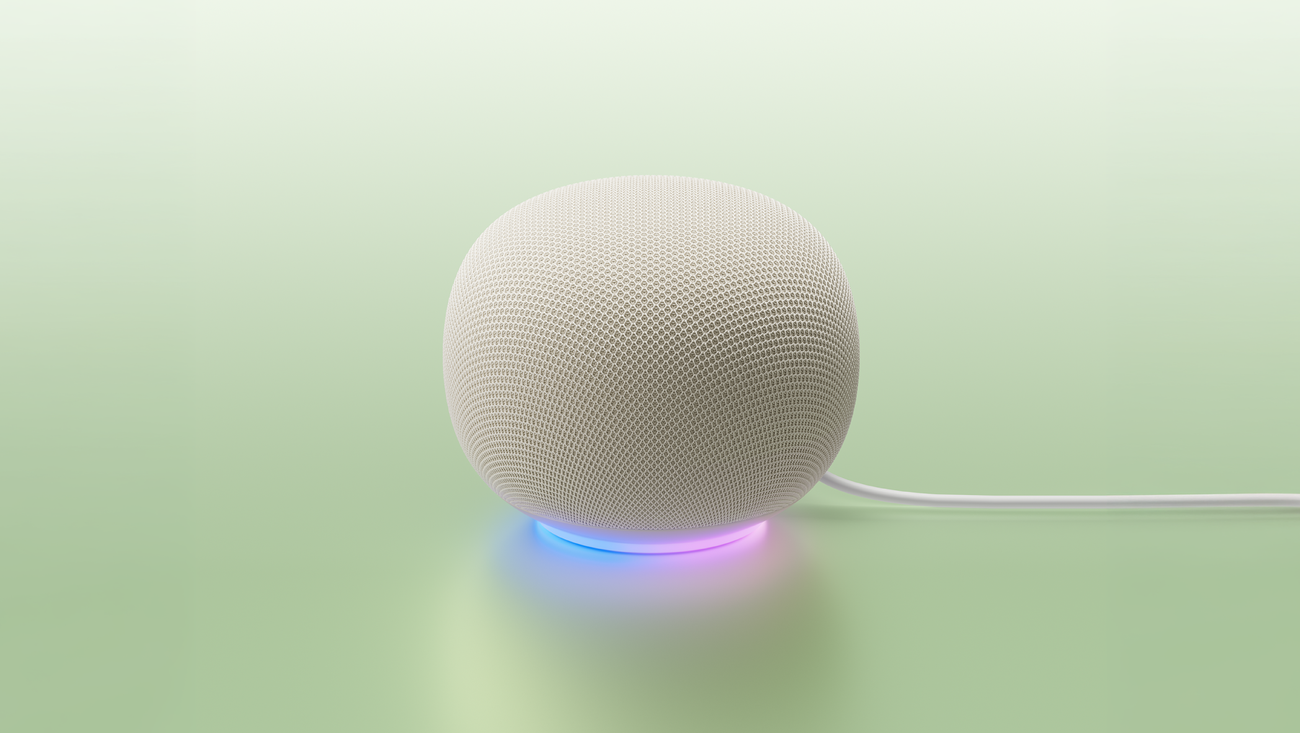
Google has launched the Google Home Speaker, a new smart speaker designed from the ground up around its conversational AI, Gemini. It went on sale in Japan on June 25, 2026, priced at 16,800 yen (tax included) on the Google Store, in two colors: Hazel and Porcelain. Its defining feature is a dedicated AI chip that lets the speaker process voice commands on the device itself. Where every previous Google speaker sent all audio to the cloud, this model handles basic operations locally, improving both response speed and privacy.
On-Device Voice Processing, and Google's First Speaker in Six Years
The Google Home Speaker is Google's first new smart speaker in roughly six years. It succeeds the now-discontinued Nest Mini and Nest Audio, and it is the first Google audio device built specifically for Gemini.
At its core is a dedicated NPU (Neural Processing Unit) that runs Gemini Nano, Google's on-device AI model, directly on the speaker. Earlier Nest speakers first sent captured audio to Google's data centers and then received the processed result. That round trip added several hundred milliseconds of latency and left the devices unusable without an internet connection. The new speaker completes standard voice commands on the device itself, and Google says response times run under 100 milliseconds. The same NPU simultaneously handles noise suppression and echo cancellation, making it easier to pick up a voice from across the room even while music is playing.
On-device processing also matters for privacy, because basic voice processing no longer sends data off the device. Earlier smart speakers repeatedly drew concern over recording conversations unintentionally. This model adds a physical microphone switch on the back that cuts power to all three far-field microphones. Because it is a physical switch rather than a software toggle, the microphones cannot be turned back on by voice — a reassuring touch.
What's Free, and the Monthly Google Home Premium
The core Gemini for Home features are available at no extra cost. There is no need to memorize fixed phrasing: you can control lights, timers, music playback, calendar checks, and more with requests close to how you would speak naturally. You can correct yourself mid-sentence, bundle several instructions at once, and ask follow-up questions without repeating "Hey Google" every time, all because the system is built on a large language model that infers intent. Continued Conversation, which briefly remembers the flow of a dialogue, has also expanded from English only to all supported languages.
The headline advanced features, however, are set aside for the paid Google Home Premium. In Japan, the Standard plan is 1,000 yen per month (10,000 yen per year) and the Advanced plan is 2,000 yen per month (20,000 yen per year). Standard includes three features: Gemini Live, for free-flowing conversations you can steer off-topic at will; Camera History Search, which lets you search footage from connected Nest cameras by voice; and Home Briefs, which summarizes what happened while you were out. Building smart home automations in natural language is also on the paid side. Note that units purchased before September 30, 2026 come with six months of Google Home Premium Standard free, so you can try the full feature set for a while.
Thread Support Makes It a Smart Home Hub
The Google Home Speaker is more than a voice assistant. It has a built-in controller for the Matter smart home standard and a Thread 1.3 border router for low-power mesh networking, making it a foundation that ties together devices throughout the home.
Thread is a low-power networking standard designed for small, battery-powered devices such as door locks, sensors, and light switches. A border router bridges that mesh network to the home's IP network, and without one, Thread devices cannot reach the internet. Matter is a common standard backed by Apple, Amazon, Google, SAMSUNG, and others that allows devices to be controlled across manufacturer boundaries. Because the speaker handles both roles in a single unit, it can serve as the center that unifies devices from different makers. It supports Wi-Fi 6 and Bluetooth 5.4, and pairing two units with a Google TV Streamer creates a home theater surround setup.
Audio, Hardware, and Where It Stands
For audio, the speaker uses a single 58mm full-range driver for 360-degree sound, and Google says the bass is about 2.5 times stronger than its predecessor's. Early overseas reviews were split, however. The improvement over the Nest Mini is real, but some noted that the Nest Audio, with its separate woofer and tweeter, sounds richer, and Bloomberg summed it up as "impressive AI, underwhelming audio quality."
In Japan, the price is 16,800 yen (tax included) on the Google Store. It competes with similarly priced rivals such as Amazon's Echo Dot Max and Apple's HomePod mini, but its built-in Thread border router — which lets it serve as the center of a smart home without an extra hub — is a strength unique to this device. The body stands about 8.6cm tall with a diameter of about 10.7cm and weighs roughly 400g, wrapped in fabric made with 37 percent recycled material. It draws power through an integrated USB-C cable and ships with a 30W USB-C adapter.
Summary
The Google Home Speaker is Google's first new smart speaker in six years, built around a dedicated AI chip that keeps voice processing on the device to balance response speed and privacy. Even for free, you can control a smart home through natural conversation, but the headline features such as Gemini Live and Nest camera search are set aside for the 1,000-yen-per-month Google Home Premium. Its built-in Thread border router, which also lets it act as a hub, is an appeal rivals lack, and together with the 16,800-yen price, it looks like a strong choice for anyone who wants to organize their home devices around Gemini.