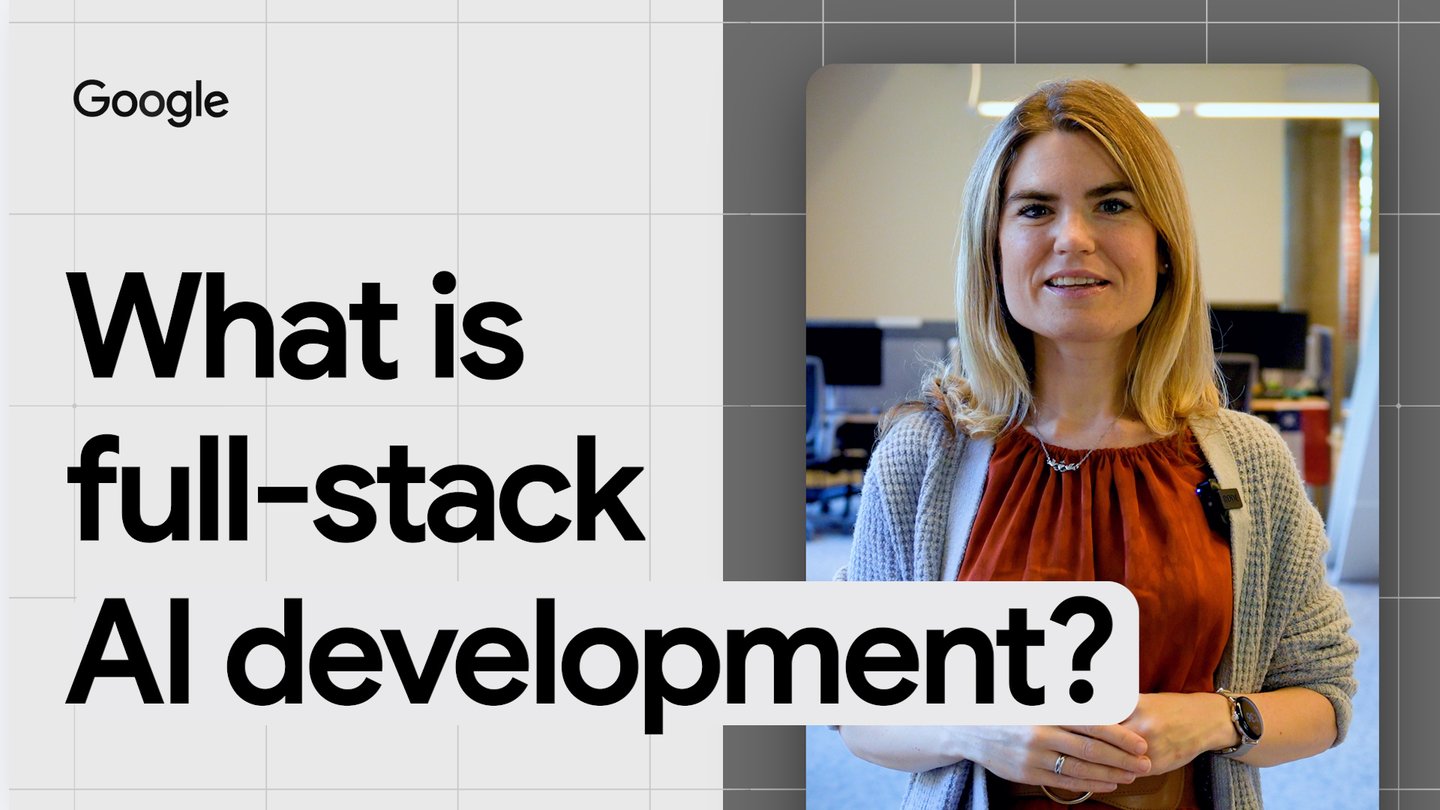
On August 21, Google published a video on its official blog explaining what the term "full-stack AI" actually means[1]. The explanation comes from Paige Bailey, an engineering lead at Google DeepMind, who breaks the idea into five layers: infrastructure, security, research, models and tooling, and products. A phrase borrowed from web development is now being stretched into a framework for describing how AI companies compete.
A Term Borrowed From Web Development
"Full-stack" started life in web development. It describes a person or a team able to handle both the front end, which users see, and the back end of servers and databases. The phrase has resurfaced lately alongside vibe coding, where developers lean on AI instead of writing every line themselves[1].
Google is applying that word to the whole of AI development. Unlike a company that supplies only models, or only cloud capacity, Google owns everything from chip design to the apps people open[1].
The Five Layers Google Names
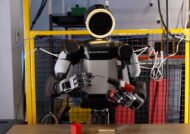
Bailey lists infrastructure, security, research, models and tooling, and products[1].
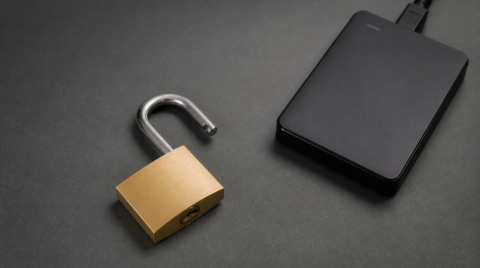
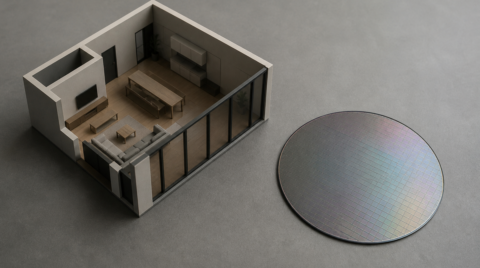
Infrastructure covers compute along with the networking and storage that tie it together. Security is the foundation protecting the data and permissions involved in both training and inference. Research produces new training methods and architectures. Models and tooling turn those results into something that runs, packaged as APIs and SDKs developers can call. Products are the exit point users touch directly, such as Search or the Gemini app[1].
Google's argument is not that each layer is individually strong, but that speed, security and usefulness only hold together when all five mesh[1]. A method born in research can be optimized for the company's own silicon straight away, and problems surfaced in products can be fed back into research. That is the case for vertical integration.
What Is Actually Happening at the Infrastructure Layer
Abstractions are hard to judge, so it helps to look at the bottom layer concretely. At Cloud Next 26 in April 2026, Google announced its eighth-generation TPUs and, for the first time, split them by purpose: TPU 8t for training and TPU 8i for inference[2].
TPU 8t uses Inter-Chip Interconnect to bind up to 9,600 TPUs and 2 PB of shared high-bandwidth memory into a single superpod, delivering 3x the processing power of the previous Ironwood generation and up to 2x better performance per watt[2]. TPU 8i, aimed at inference, uses a new Boardfly topology to connect 1,152 chips directly in one pod and triples on-chip SRAM so that KV caches sit entirely on silicon. Google claims 80 percent better performance per dollar than the prior generation[2].
Supporting technologies were refreshed at the same time, including Managed Lustre with 10 TB per second of throughput and Virgo Networking for very large deployments[2]. Being able to redesign the vessel that carries your research results is the concrete basis for calling yourself full-stack.
The Scale Behind the Argument
Roughly 75 percent of Google Cloud customers now use the company's AI products in their business. Over the past 12 months, 330 customers each processed more than one trillion tokens, and 35 reached 10 trillion[2]. Google's first-party models handle more than 16 billion tokens per minute through direct API use, up from 10 billion the previous quarter[2].
Running at that scale takes more than a clever model. Cost and latency have to fall together, which is the motivation behind investing in inference-specific silicon like TPU 8i. Drop any one of the five layers and the advantages of the rest cannot be fully realized.
Summary
Google's explainer defines full-stack AI as five layers, infrastructure, security, research, models and tooling, and products, and argues that their interlock is what delivers speed, security and usefulness in the finished product. The eighth-generation TPUs are a working example of how renewing the bottom layer widens the options available above it. As a way of framing its position against rivals, "full-stack" looks set to stay in Google's vocabulary for a while.
Source: https://cloud.google.com/blog/topics/google-cloud-next/welcome-to-google-cloud-next26