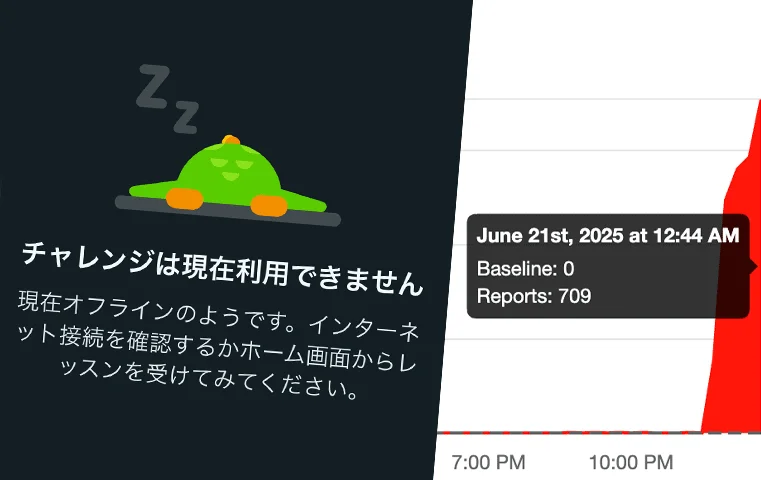

The U.S. Federal Aviation Administration (FAA) halted aircraft departures at every airport in the United States on the afternoon of November 13, 2026, Eastern Time, after a communications failure at its air route traffic control centers. The stop was lifted at 8:15 p.m. the same day (10:15 a.m. on November 14 JST), but more than 4,000 flights have been canceled. Delays and cancellations have continued since the stop ended, and a return to normal operations is expected to take time.
The Ground Stop Lasted Just Over Four Hours and Ended at 10:15 a.m. JST on November 14
The FAA issued the nationwide ground stop shortly before 4 p.m. Eastern Time on November 13 (shortly before 6 a.m. on November 14 JST). The FAA notice said the restriction was "due to extraordinary circumstances and for reasons of safety."
Transportation Secretary Sean Duffy said a communication issue was affecting the 22 air route traffic control centers that direct planes en route. At a later news briefing, he said the airspace had been reopened at 8:15 p.m. The FAA said in a post on X that it had thoroughly tested its systems before clearing flights to resume.
| Eastern Time (November 13) | JST (November 14) | Event |
|---|---|---|
| Shortly before 4 p.m. | Shortly before 6 a.m. | FAA halts departures at all U.S. airports |
| 5:50 p.m. | 7:50 a.m. | Cirium counts at least 600 flights that changed where they were going |
| 7:30 p.m. | 9:30 a.m. | FlightAware counts 10,079 delays and 4,238 cancellations |
| 8:15 p.m. | 10:15 a.m. | Ground stop lifted |
The stop applied to departing flights. According to a statement from Delta Air Lines, none of its flights departed while the stop was in effect, while flights already en route continued to their destinations.
Officials Blame Overloaded Network Equipment, and No Cyberattack Has Been Found
On the cause, Duffy said at a White House briefing that switches and routers "got overloaded with data, and they went down." He also said the air traffic control system is very old and still relies on analog telecommunications. He added, however, that the FAA did not lose all of its telecom or all of its radar.
Homeland Security Secretary Markwayne Mullin said that no cyberattack had been found so far. He also suggested that new equipment and technology had overwhelmed the older system.
One obvious question is whether the stop is connected to the Microsoft 365 outage that occurred on November 13. A Microsoft spokesperson said the company has no indication that the ground stop is related to its service disruption. Mullin also denied any connection.
As of this writing, no detailed investigation findings on the equipment or procedures that failed could be confirmed.
More Than 4,000 Flights Were Canceled and at Least 600 Changed Destination
FlightAware data showed 10,079 delays and 4,238 cancellations among U.S.-related flights as of 7:30 p.m. Eastern Time.
Flightradar24 data showed about 3,100 aircraft in the air and bound for U.S. airports when the stop began. According to aviation data firm Cirium, at least 600 flights had changed where they were going by 5:50 p.m. Of those, 496 returned to the airport they had departed from and 104 went to a different airport.
In a statement issued after the stop was lifted, Delta Air Lines said it was safely resuming operations but that it would take time to reset its operation, including the positioning of aircraft and crews. The airline said customers can change their flights at no extra cost. Duffy likewise said of the recovery, "It's going to be slow," while predicting that operations would be back to normal by the peak of Thanksgiving travel.
It Is the First Nationwide Stop Since January 2023, With an Aging Network in the Background
This is the first nationwide halt of departures since January 2023. The stop on January 11, 2023, was caused by an outage of the NOTAM system, which distributes information needed for flight operations, and lasted roughly 90 minutes.
Behind the incident is the aging communications network that supports air traffic control. The backbone network, known as FTI, was awarded to Harris Corp. in July 2002.
The budget debate is also ongoing. Congress approved $12.5 billion in 2025, and Duffy says another $30 billion is needed.
Travelers on Japan-U.S. Routes Should Check Their Flight Status
The specific impact on flights between Japan and the United States could not be confirmed as of this writing.
Cancellations and delays have persisted since the stop was lifted. Travelers booked on flights to or from the United States, or planning to connect within the country, should check their airline's flight status and rebooking information.
Our Take
The decision to halt departures itself appears to have been a reasonable, safety-first response. Continuing to launch flights while communications were unstable would only have added to the number of airborne aircraft that controllers had to handle.
That said, if the explanation of overloaded routers is accurate, the fact that 22 control centers were affected at the same time is serious. It suggests the network's redundancy may be inadequate. Several explanations of the cause have also been given, from overloaded equipment to an aging system to a mismatch between old and new equipment, so it will be necessary to wait for formal investigation findings.
Even so, given that departures resumed in just over four hours and that flights in the air were able to continue to their destinations, the damage can be said to have been contained. In the author's view, this outage is likely to add momentum to the budget debate over overhauling the air traffic control system.
Summary
The FAA halted departures at all U.S. airports for just over four hours after a communications failure, and more than 4,000 flights were canceled. Those affected are travelers booked on flights to or from the United States or planning to connect within the country. Duffy says the recovery will take time, and the details of the cause had not been established as of this writing.