Broadcom has entered talks with lenders to raise more than 60 billion USD in debt, with the proceeds earmarked for AI chips destined for Anthropic and other customers. Depending on the final terms, the package could reach 100 billion USD. It is a deal that shows how the financing of AI infrastructure is shifting away from cash reserves and equity toward the debt markets.
※1 USD = 159 JPY (as of August 21, 2026)
The Package Could Reach 100 Billion USD
The structure under discussion has two layers. A junior tranche of roughly 30 billion USD (about 4.8 trillion yen) sits alongside a senior secured tranche of about 60 billion to 70 billion USD (about 9.5 trillion to 11.1 trillion yen), which together add up to roughly 100 billion USD (about 15.9 trillion yen).
Blackstone and Apollo Global Management are named as the firms weighing participation. Broadcom is expected to guarantee a portion of the senior side.
A great deal remains unsettled. The final split between the junior and senior tranches, the size of the Broadcom guarantee, and the timing of issuance have all yet to be fixed. None of the parties involved, Broadcom, Anthropic, Apollo or Blackstone, has commented.
Anthropic Is Not the One Buying the Chips
What makes the arrangement interesting is that the flow of money and the ownership of the hardware are deliberately separated. The bonds would be issued by a special purpose vehicle created for the transaction, so the borrowing sits on the vehicle's books rather than on a parent company's balance sheet.
The investors are the ones who buy the chips. The hardware is then leased to Anthropic, which lets the company secure compute capacity without carrying an enormous capital expenditure on its own balance sheet. In effect, it rents the silicon rather than buying it.
That is also why the Broadcom guarantee matters. In the first transaction, completed in June, the backstop allowed the senior tranche to earn an investment grade rating, which brought borrowing costs down.
Still Only One Twentieth of a 20 Gigawatt Target
Broadcom, Apollo and Blackstone formed a partnership called AI XPV in June. Its opening deal raised 35 billion USD (about 5.6 trillion yen) to expand Anthropic's computing capacity using Broadcom custom chips and networking equipment.
The partnership's stated goal is to finance more than 20 gigawatts of computing power for leading AI labs by 2028. The capital required is estimated in the hundreds of billions of dollars, and 20 gigawatts is roughly equivalent to the output of 20 nuclear power plants.
The first 35 billion USD covers one gigawatt. Measured against the target, the partnership has funded about one twentieth of what it set out to do. The current talks over more than 60 billion USD are the second move toward closing that gap.
Broadcom Has Become the Alternative to Nvidia
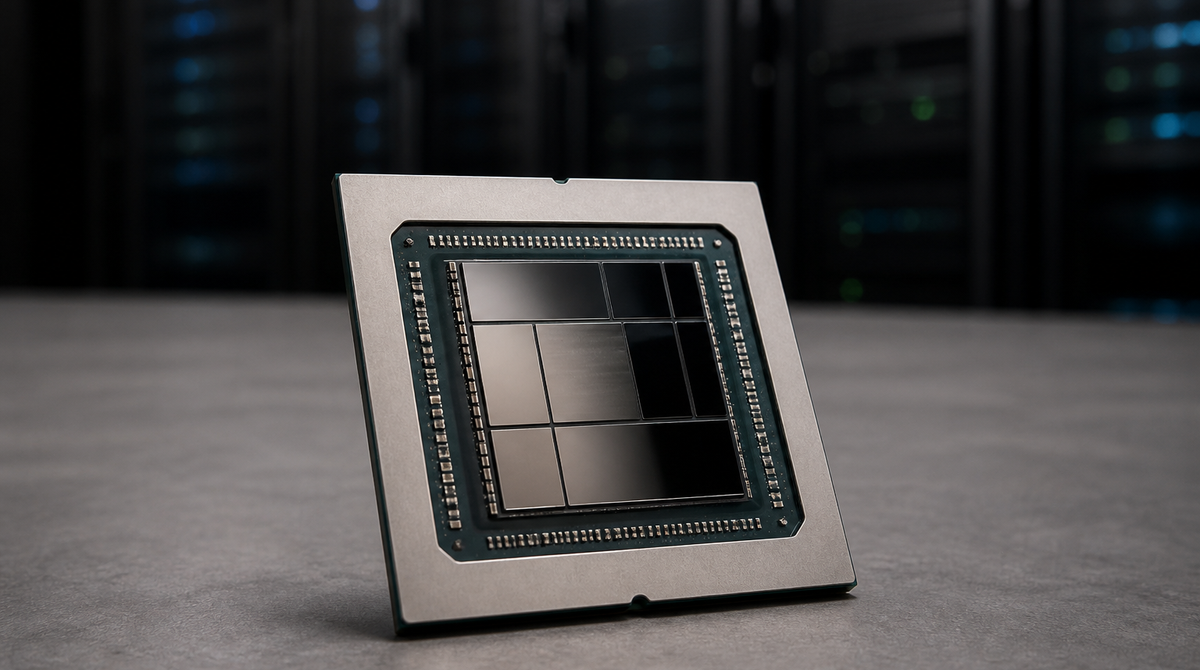
Broadcom does not sell GPUs under its own brand. It supplies custom silicon built to a customer's design requirements, and it works on chips for Alphabet and Meta while holding supply agreements with Anthropic and OpenAI. Companies looking to reduce their dependence on Nvidia tend to take this custom route.
The scale keeps growing. The chief executive said in March that AI chip revenue should exceed 100 billion USD (about 15.9 trillion yen) next year. In July the company signed a 200 billion USD (about 31.8 trillion yen) agreement with Samsung covering memory, foundry services and advanced packaging through 2030. Its agreement with Apple is worth more than 30 billion USD (about 4.8 trillion yen).
Broadcom shares rose as much as 1.1 percent in late trading after the report, and the stock is up 5.2 percent so far this year.
AI Infrastructure Built on Debt
Similar structures have surfaced repeatedly this summer. Nvidia announced that a coalition including BlackRock and Goldman Sachs was lining up more than 500 billion USD (about 79.5 trillion yen) for the AI build-out. Alphabet, Amazon and Microsoft have all turned to debt markets to fund their AI capital spending.
Regulation has begun to catch up as well. Staff at the Securities and Exchange Commission agreed this month that data center securitisation falls outside the risk retention rules of the Dodd-Frank Act. At the same time, the guarantees that AI companies provide are a form of credit that does not show up plainly, and bond traders have been weighing roughly 70 billion USD (about 11.1 trillion yen) of what has been described as shadow credit backstops. The guarantee Broadcom would attach to the senior tranche is exactly that kind of commitment.
Securing compute is drifting away from being a question about chip design and manufacturing and toward being a question about ratings and collateral structures. Who owns the chips, and who carries the repayment risk. A financial blueprint has joined the list of factors that will shape the AI race.
Summary
Broadcom has entered talks with lenders over more than 60 billion USD in debt, and the package could reach 100 billion USD. It would combine a junior tranche of about 30 billion USD with a senior tranche of about 60 billion to 70 billion USD, with bonds issued by a special purpose vehicle so that investors buy the chips and lease them to Anthropic. AI XPV, the partnership Broadcom formed with Apollo and Blackstone in June, aims to finance more than 20 gigawatts of computing power by 2028, but only one gigawatt has been funded so far. None of the companies has commented, and neither the terms nor the timing has been settled.