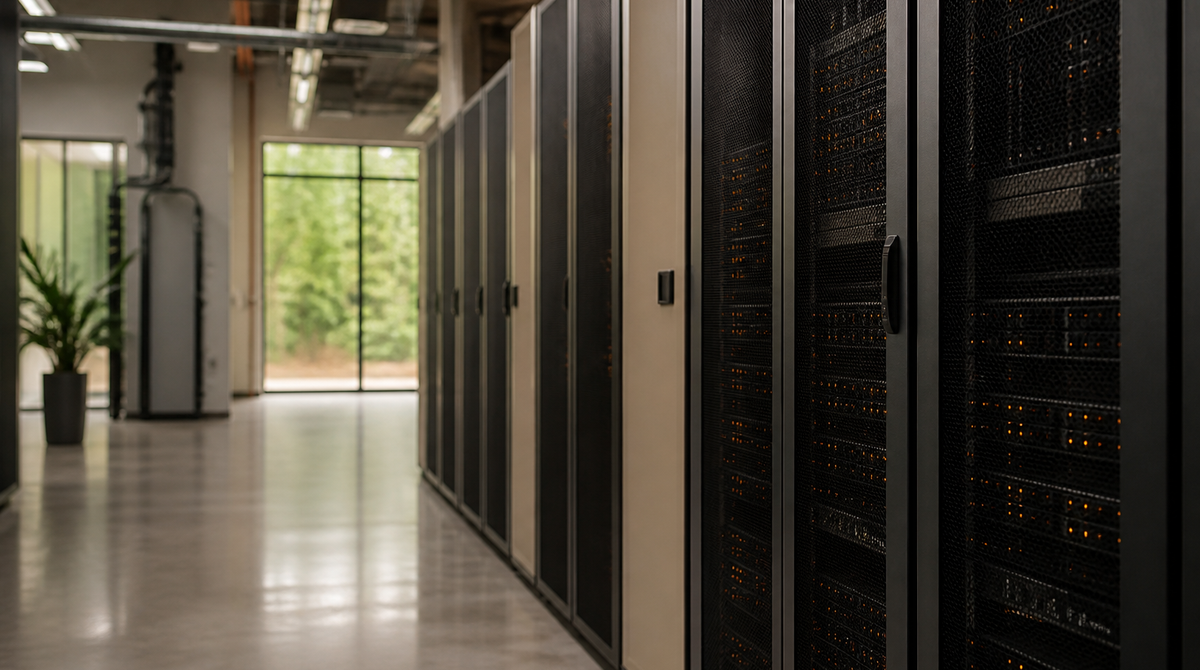
Anthropic has reportedly closed a major agreement to rent computing capacity from Nscale, a UK-based AI infrastructure company. The deal is worth roughly 45 billion USD (about 7.1 trillion yen) over six years, covering 460 megawatts at a data center under construction in West Virginia. The site is expected to come online at the end of 2027, running NVIDIA's next-generation Vera Rubin GPUs.
※1 USD = 159 JPY
Contracts Are Now Measured in Megawatts, Not Server Counts
The striking part of this deal is that what Anthropic is renting is described in electrical power rather than in racks or servers. 460 megawatts is roughly what 345,000 US homes draw at any one time. For AI infrastructure, the ceiling is rarely how many GPUs you can buy — it is whether you can secure enough power to cool them and keep them running. That is why the numbers in these contracts are now watts.
Divide 45 billion USD across six years and it works out to about 7.5 billion USD (about 1.19 trillion yen) per year. A single model developer will be paying that much in rent, every year, for one site. Vera Rubin is the architecture NVIDIA has positioned as its next flagship, and the late-2027 start lines up with when its volume production is expected to ramp.
Anthropic Stepped into the Slot Microsoft Vacated
The site is Nscale's large West Virginia campus, named Monarch. It spans 2,250 acres — roughly 9.1 square kilometers — and is said to be capable of housing more than 8 gigawatts of computing capacity in theory. The 460 megawatts Anthropic has locked in is only a slice of that.
There is a backstory to the land. In March 2026, Nscale signed a letter of intent with Microsoft to supply 1.35 gigawatts of compute at the same Monarch campus. According to reports, Microsoft walked away from that arrangement over the summer, and Anthropic moved into the opening. Data center land and grid capacity are visibly changing hands between operators.
The power plan is unusual as well. Working with heavy equipment maker Caterpillar, Nscale intends to install G3500 series natural gas generator sets on site, targeting 2 gigawatts of self-generated power by the first half of 2028. Rather than queuing for a grid connection, the plan is to build the generation alongside the halls. Developing the full site including its power infrastructure is estimated at around 71 billion USD (about 11.3 trillion yen), of which roughly 47 billion USD (about 7.5 trillion yen) is the chips themselves.
A Year That Began with "Inevitable Strain"
Anthropic's motivation is no mystery. Earlier this year the company acknowledged that rising demand for Claude had placed inevitable strain on its own infrastructure, degrading reliability and performance during peak hours. Everything since has pointed in one direction: lock down compute. It has signed a run of large agreements with partners including AMD, SpaceX, Google, and Broadcom, and the Nscale deal sits on that same line.
The backdrop is an IPO. Anthropic filed its prospectus confidentially with the SEC in June and has begun preliminary meetings with prospective investors. When a company has to justify a valuation reported at 965 billion USD (about 153 trillion yen), how much compute it has reserved and how far out becomes a talking point alongside model quality. Long-term contracts are heavy fixed costs on paper, but in a supply-constrained market, simply having the capacity locked in gets framed as a competitive edge.
The other side of that is timing. These commitments are effectively paid ahead of use. Those 460 megawatts will not start drawing power until late 2027, and if model efficiency improves sharply or demand grows more slowly than assumed, reserved capacity can turn into dead weight.
Summary
Anthropic is paying roughly 45 billion USD over six years for compute from Nscale, taking 460 megawatts at the Monarch campus in West Virginia and running NVIDIA Vera Rubin from late 2027. It inherited a slot Microsoft stepped away from, at a site that plans to generate its own natural gas power. With an IPO approaching, the megawatts Anthropic has secured are themselves part of the story it tells investors.