On April 16, 2026, Anthropic released its flagship model Claude Opus 4.7 for general availability. Compared to the previous model Opus 4.6, performance has been raised across coding, long-running agent work, and image understanding. Pricing stays the same, and the API model name is claude-opus-4-7.
For users who have been working with Claude every day, this is a major upgrade that's been a long time coming.
What's New — Channels and Pricing
Opus 4.7 is available the same day on Claude's consumer products (Claude.ai, Claude Code, etc.) and the Anthropic API, plus Amazon Bedrock, Google Cloud's Vertex AI, and Microsoft Foundry.
Pricing stays unchanged from Opus 4.6: 5 USD per 1 million input tokens (about 783 yen at 1 USD = 156 yen) and 25 USD per 1 million output tokens (about 3,920 yen at 1 USD = 156 yen). Since you can use equal-or-better performance at the same price, existing Opus 4.6 users get something close to a de facto price cut.
Benchmarks and Field Reports Both Hit New Highs
The size of the benchmark gains is one of the largest seen across recent Claude generations. On SWE-bench Verified, the standard for code-fix tasks, Opus 4.7 records 87.6%, up 6.8 points from Opus 4.6's 80.8%. On the harder SWE-bench Pro, it scores 64.3% (the previous generation: 53.4%), a jump of about 11 points.
Source: Vellum, "Claude Opus 4.7 Benchmarks Explained"
Field feedback is concrete too. Notion reports a 14% accuracy improvement over Opus 4.6 on a multi-step workflow evaluation, with tool errors cut to one-third. Cursor disclosed that 4.7 reaches 70% on its own CursorBench (Opus 4.6: 58%). On Databricks' OfficeQA Pro, errors are down 21% versus 4.6. On Harvey's BigLaw Bench for legal work, it hits 90.9% in the high-effort setting — clean gains across domains. On XBOW's vision-accuracy benchmark for autonomous penetration testing, Opus 4.7 records 98.5%, leaping from Opus 4.6's 54.5%.
How Claude Code Has Evolved
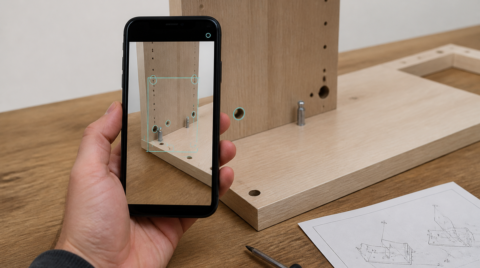
On the image-processing side, Opus 4.7 can now directly read images up to 2,576 pixels on the long edge — around 3.75 megapixels — more than triple the resolution of the previous model. Improvements target cases where pixel-level accuracy matters, like computer-use agents reading dense screenshots, or extracting data from complex technical diagrams.
The granularity of reasoning effort has also been expanded. A new xhigh level has been added between the existing high and max, letting you fine-tune the balance between latency and reasoning depth on hard problems. In Claude Code, the default coding effort has been raised to xhigh, and a new slash command /ultrareview opens a dedicated session for sitting down and thoroughly reviewing changes. Pro and Max users get 3 free uses, and Max users also unlock auto mode, which lets long-running tasks run uninterrupted.
Migration considerations are spelled out as well. Opus 4.7's tokenizer has been updated, and the same input may consume anywhere from 1.0× to 1.35× more tokens. On top of that, high-effort settings are designed so that thinking volume increases later in agent-style tasks, so output tokens tend to grow too. Anthropic recommends control via task budgets (public beta) and the effort parameter, and suggests measuring token behavior with real traffic before going to production.
Summary
Claude Opus 4.7 is an unhesitating update that — at the same price — pushes coding, vision, and long-running agents all upward. Beyond the headline 87.6% on SWE-bench Verified, deployment reports from major products like Notion, Cursor, Databricks, and Harvey carry real weight. If you've already built Opus 4.6 into your workflow, the recommended path is to first try the effects of xhigh effort and task budgets, then switch over your production systems.